
Government takes cognizance of BharatNet project delay

The Phase-I to connect 1,00,000 GPs by laying underground Optical Fibre Cable (OFC) is being implemented through three CPSUs

GN Bureau | March 15, 2017

#broadband connectivity   #Manoj Sinha   #egov   #BharatNet   #internet  


The government has taken cognizance of the delay in BharatNet project and has taken corrective measures, the Lok Sabha was informed.
 
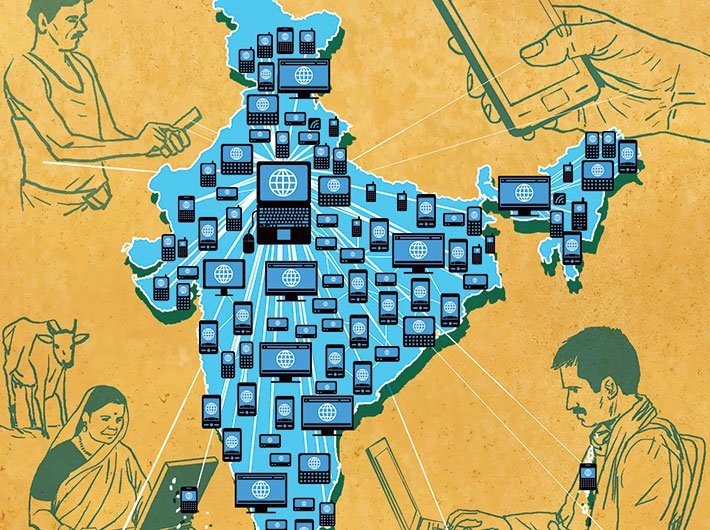
Union minister Manoj Sinha said that BharatNet project is being implemented with the objective to create network infrastructure for providing Broadband connectivity of 100 Mbps to all Gram Panchayats (GPs) (approx. 2,50,000) in the country. Bharat Broadband Network Limited (BBNL) is the special purpose vehicle (SPV) to implement, operate and manage the project.
 
 
The Phase-I to connect 1,00,000 GPs by laying underground Optical Fibre Cable (OFC) is being implemented through three CPSUs namely, BSNL, RailTel & PGCIL. Non-discriminatory access is to be provided to the service providers for provision of services.
 
The minister said that the government has taken cognizance of the delay in the project and identified the reasons for delay and taken corrective actions:
 
Reasons for delay:
 
  1. Delay in the initial commencement of project due to field survey of GPs to assess the cable route and length, and pilot testing of the technology model.
  2. Implementation of the project only through three CPSUs namely, BSNL, RailTel and PGCIL
  3. Connectivity to GPs only by laying underground OFC.
  4. Inadequate quality of BSNL fibre between Block and Fibre Point of Interconnect (FPOI) being used to connect GPs.
  5. Centralised procedure of procurement and sourcing of equipment through BBNL.
     
Corrective actions taken:
  1. Telecom Commission approved revised implementation strategy on 30.04.2016. According to revised strategy:
    Implementation of the project is to be done in phases; Phase-I to connect 1,00,000 GPs by following the current methodology to connect by underground OFC; Phase-II to connect remaining GPs through optimal mix of underground/ aerial OFC, radio and satellite media.
    Implementation of Phase-II through States and private sector in addition to CPSUs.
  2. Replacement of BSNL’s existing fibre wherever the quality of the cable is not adequate.
  3. Work front for Phase-I has been increased to 1,25,000.
  4. Decentralised procurement of equipment through implementing CPSUs in addition to Bharat Broadband Network Ltd. (BBNL).
  5. Empowered Committee under Secretary (T), Steering Committee under Administrator, USOF and State-level Committees have been set up for monitoring of the progress and resolution of issues.
  6. Operation & Maintenance (O&M) and revenue sharing arrangement between BBNL and BSNL has been approved by DoT.
  7. For laying of aerial OFC, advance funding to conduct GIS mapping of electricity poles has been provided to seven states.
 
The other projects being implemented by Universal Services Obligation Fund (USOF) to augment mobile and internet connectivity are:
 
  1. Scheme to provide mobile connectivity in Left Wing Extremist (LWE) areas is under implementation through BSNL. So far, a total of 2186 mobile towers out of 2199 locations in ten states as identified by MHA and approved by the Cabinet, have started radiating.
  2. Other schemes funded by USOF include comprehensive telecom development plan for the North Eastern Region to provide mobile connectivity in 8621 uncovered villages, mobile connectivity in 172 uncovered villages in Andaman & Nicobar Islands, sub-marine OFC connectivity from mainland India (Chennai) to Port Blair, augmentation of satellite bandwidth in Andaman & Nicobar Islands and Lakshadweep Islands, augmentation of OFC network from district to sub-district headquarters in North East.


Comments


Other News

Urban Blind Spot: Animals, governance, and the cost of ignoring coexistence

India’s cities are expanding at an unprecedented pace, absorbing people, infrastructure, and economic activity at scale. What urban governance frameworks have been slower to absorb is a reality already playing out on the ground: animals are an inseparable part of urban life. From community dogs and p

How India uses AI in the field of culture and languages

* India is institutionalising AI for culture and languages through national platforms such as BHASHINI, Anuvadini, Gyan Bharatam and Adi Vaani etc. * AI is being used to make cultural and knowledge assets usable by digitisation of manuscripts, translation of academic content, and in

India improves position on Network Readiness Index

India has improved its position by four slots and is now placed at 45th rank in the Network Readiness Index 2025 (NRI 2025) report prepared by Portulans Institute, Washington DC.   The report, released on February 4, maps the network-based readiness landscape of 127 economies based on th

Framework for India-US Interim Agreement announced

India and the United States on Saturday announced they had agreed on an interim framework for an interim trade agreement, indicating a broad roadmap of the opening of the markets and reduction in trade tariffs on both sides. In a message on X, prime minister Narendra Modi said, “Great

India’s quiet rise as the world’s `Third Pole`

A silent re-calibration is going on in the international system, which is becoming more polarized, volatile, and entered of spheres of influence. The world does not evolve in the new era of bipolar competition of the United States and China, nor does it evolve on the setback of Russia in the role of a spoi

‘Tariff king’ to trade partner: Why Trump’s sudden U-turn surprises India

On February 2 at around 10 PM, Sergio Gor, who had become US ambassador to India just three weeks ago, posted a cryptic message on his official handle on X, stating, “President Trump just spoke with Prime Minister Modi. STAY TUNED….” This created a buzz across media in India as the two l


Archives

Current Issue

Opinion

Facebook Twitter Google Plus Linkedin Subscribe Newsletter

Twitter







