
Report cash deposits of Rs 10 lakh or more: CBDT to banks

Following demonetisation, Central Board Direct Taxes has issued a notification which spells out when banks need to report to them

GN Bureau | January 20, 2017

#demonetisation   #CBDT   #banks   #cash deposits   #banking  


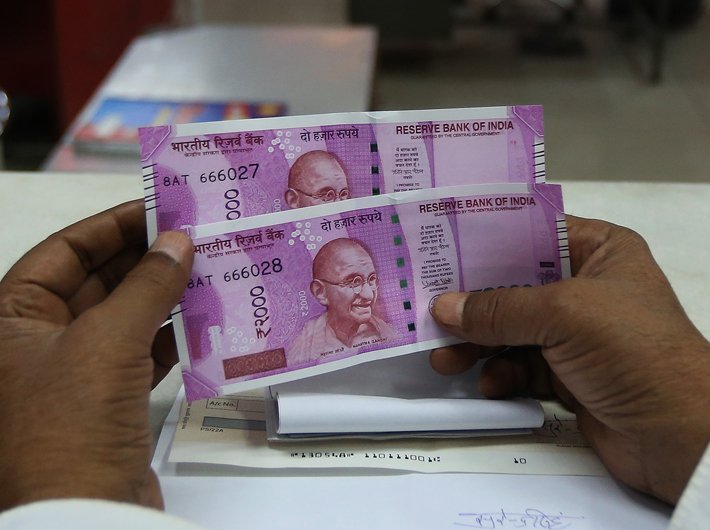
Central Board Direct Taxes has asked banks to report cash deposits aggregating to Rs 10 lakh or more in a financial year, in one or more accounts (other than a current account and time deposit) of a person.

A notification has made it clear when the banks need to report to CBDT.
 
One or more time deposits (other than a time deposit made through renewal of another time deposit) of a person aggregating to Rs 10 lakh or more in a financial year of a person needs to be reported.
 
Payments made by any person of an amount aggregating to— (i) Rs 1 lakh or more in cash; or (ii) Rs 10 lakh or more by any other mode, against bills raised in respect of one or more credit cards issued to that person, in a financial year.
 
 
Receipt from any person of an amount aggregating to Rs 10 lakh or more in a financial year for acquiring bonds or debentures issued by the company or institution (other than the amount received on account of renewal of the bond or debenture issued by that company) also needs to be reported.
 
The banks need to tell the IT department when receipt from any person of an amount aggregating to Rs 10  lakh or more in a financial year for acquiring shares (including share application money) issued by the company.
 
Receipt from any person of an amount aggregating to Rs 10 lakh or more in a financial year for acquiring units of one or more schemes of a Mutual Fund (other than the amount received on account of transfer from one scheme to another scheme of that Mutual Fund).
 
 
Receipt from any person for sale of foreign currency including any credit of such currency to foreign exchange card or expense in such currency through a debit or credit card or through issue of travellers cheque or draft or any other instrument of an amount aggregating to Rs 10 lakh or more during a financial year.
 
Purchase or sale by any person of immovable property for an amount of Rs 30 lakh or more, or valued by the stamp valuation authority referred to in section 50C of the Act at Rs 30 lakh or more.
 
Cash deposits during the period November, 9, 2016 to December 30, 2016 aggregating to (i) Rs 12,50,000 or more, in one or more current account of a person; or (ii) Rs 2,50,000 or more, in one or more accounts (other than a current account) of a person.


Comments


Other News

AI: Code, Control, Conquer

India today stands at a critical juncture in the area of artificial intelligence. While the country is among the fastest adopters of AI in the world, it remains heavily reliant on technologies developed elsewhere. This paradox, experts warn, cannot persist if India seeks technological sovereignty.

RBI pauses to assess inflation risks, policy transmission

The Reserve Bank of India (RBI) has begun the new fiscal year with a calibrated pause, keeping the repo rate unchanged at 5.25 per cent in its April Monetary Policy Committee (MPC) meeting. The decision, taken unanimously, reflects a shift from aggressive policy action to cautious observation after a signi

New pathways for tourism growth

Traditionally, India’s tourism policy has been based on three main components: the number of visitors, building tourist attractions and providing facilities for tourists. Due to the increase in climate-related issues and environmental destruction that occurred over previous years, policymakers have b

Is the US a superpower anymore?

On April 8, hours after warning that “a whole civilisation will die tonight,” US president Donald Trump, exhibiting his unique style of retreating from high-voltage brinkmanship, announced that he agreed to a two-week ceasefire with Iran. The weekend talks in Islamabad have failed and the futur

Machines communicate, humans connect

There is a moment every event professional knows—the kind that arrives without warning, usually an hour before the curtain rises. Months of meticulous planning are in place. And then comes the call: “We’ll also need a projector. For the slides.”   No email

Why India is entering a ‘stagflation lite’ phase

India’s macroeconomic narrative is quietly shifting—from a rare “Goldilocks” equilibrium of stable growth and contained inflation to a more fragile phase where external shocks are beginning to dominate domestic policy outcomes. The numbers still look reassuring at first glance: GDP


Archives

Current Issue

Opinion

Facebook Twitter Google Plus Linkedin Subscribe Newsletter

Twitter






