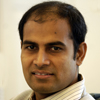
Bahubali turned controversial MP puts his thoughts in his autobiography, says he was fighting against the system
A bahubali (musclemen) once upon a time turned politician now, former member of parliament Pappu Yadav (officially Rajesh Ranjan) has now shown the hand that held the trigger once can wield a pen as well. The four-time MP this week launched his autobiography – ‘Drohkal Ka Pathik’ – in Hindi.
Among many bahubalis who took to politics for a shelter, Yadav presents his case differently, showing why he is head and shoulders above other musclemen. The man from the backwaters of Bihar, Purnea, who allegedly ruled the roost by unleashing terror for nearly two decades, also stirred a controversy with the ‘moneygate’ scandal that rocked parliament in 2008.
Having been acquitted in CPI(M) leader Ajit Sarkar’s murder case by Patna high court, is he trying to rebrand and relaunch himself for the upcoming general elections and fill up the gap created by Lalu Yadav’s jail term and fill in the caste (read Yadav) politics? Does not seem unlikely, as politicians such as Ramvilas Paswan, Mulayam Singh Yadav, Jagdish Tytler and Digvijaya Singh graced the occasion.
The assortment of netas at the launch function was perhaps in keeping with Pappu Yadav’s own party-hopping during his political career! Besides the politicians, acclaimed filmmaker Muzaffar Ali and noted Hindi literary giant and critic Namwar Singh also joined him on the podium (“I salute this rebel,” Namwar said during his address). The book has a single-page appreciation for the man infamous for creating a reign of terror in Kosi region of Bihar from former editor of Hans, Rajinder Yadav, who passed away recently.
From graduating in the field of crime by selling film tickets in black and extorting money from small shopkeepers, Yadav has allegedly done it all. While the book does not touch on these incidents, it extols his ‘virtues’ – how he was instrumental in removing porn movies in theatre and got English banned in the city of Purnea.
In between trying to don a different image – that of the ‘messiah of the poor’ – Yadav also stoked other controversies. The book claims that the UPA, NDA and even the BSP offered money to go for and against the trust vote in 2008. At the time, Yadav had claimed that the Congress and the BJP had offered large sums of money. He also alleged that in 2001 the then finance minister, Yashwant Sinha, offered money to three MPs of his Indian Federal Democratic Party to join the NDA.
Sinha has denied Yadav’s claims.
Yadav, however, did not have any answer to the question what took him so many years to reveal these details.
Besides ‘moneygate’, another controversy that has dogged Yadav relates to his age. Born in 1967, he entered Bihar assembly at the age of 23, while Article 173 of the Constitution says a person should be not less than 25 years to be a member of legislative assembly. The book mentions that Yadav changed his age through an affidavit while filing his nomination for the elections.
Through his book, Yadav has tried to present other facets of his personality: how he fought against the system and prejudices of the upper castes, how he came into limelight, his self-claimed struggle for social justice and even his marriage. The book says he fought for the poor, portraying a new-age Robin Hood ion Bihar. During his heydays, Yadav had more than two dozen cases registered against him. He was in jail for 12 years.
Yadav comes from Purnea, which till date conjures up the image of famous Hindi writer Phanishwar Nath Renu’s 1950s masterpiece ‘Maila Aanchal’ in which he wrote how the place faced problems like backwardness, illiteracy, grief, ignorance, superstition, social exploitation, pain and struggle, malaria and black fever. He also represented Madhepura constituency in Lok Sabha. Both places still lie low on social indicators.
While the guests called him courageous, open hearted and one who stands for what he believes in while applauding the bahubali-turned-legislator-turned writer, the question is, does the nation need to emulate Pappu Yadav’s brand of social work and politics?
(With inputs from Pankaj Kumar)