
Manu Joseph’s ‘Why the Poor Don’t Kill Us’ offers unflinching and yet darkly hilarious diagnosis of the malaise
GN Bureau | September 17, 2025
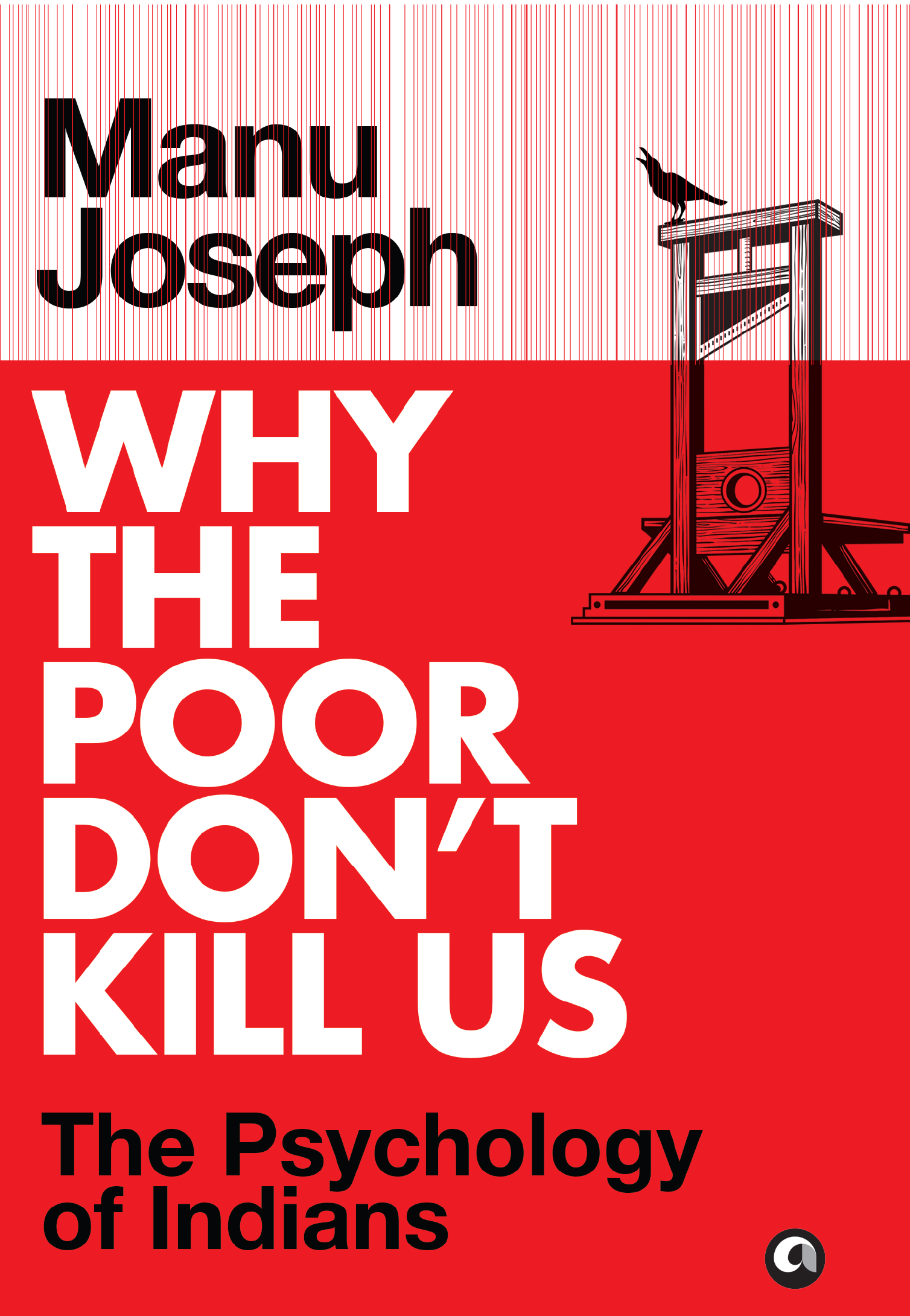
Why the Poor Don’t Kill Us: The Psychology of Indians
By Manu Joseph
Aleph Books, 280 pages, Rs 599
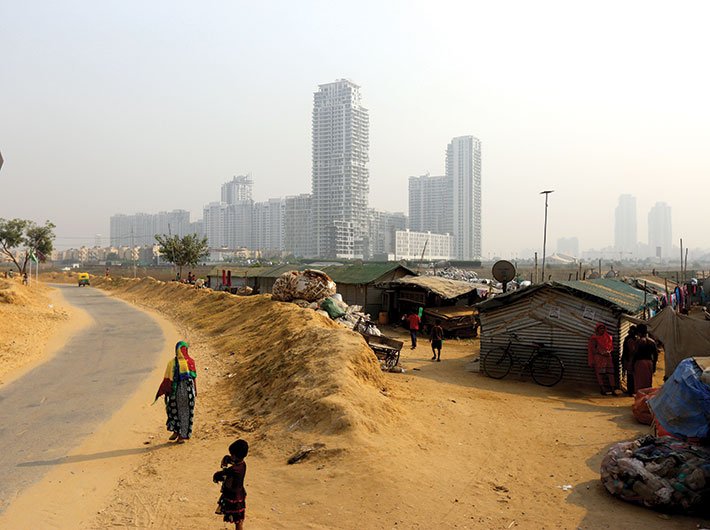
 Thomas Piketty, the renowned French economist, brought the subject of economic inequality to high debates more than a decade ago with his book, ‘Capital in the Twenty-First Century’. In 2017-2018, he and Lucas Chancel went through a lot of taxation data of India, and wrote the paper, ‘Indian income inequality, 1922-2015: From British Raj to Billionaire Raj?’. They found that “the share of national income accruing to the top 1% is at its highest since the creation of the Indian Income tax act in 1922. The top 1% of earners captured less than 21% of total income in the late 1930s, before dropping to 6% in the early 1980s and rising to 22% in the recent period.”
Economic inequality is of course a worldwide phenomenon, and a direct outcome of capitalism, economists would tell you. But India, being India, is an outlier in this respect. It has among the highest, if not the highest, figures for inequality, depending on how the data is interpreted.
Data apart, this inequality is too in-your-face to be missed. The pandemic created havoc everywhere, but it was only here that it left the billionaires richer and the rest poorer. Those who have it like to flaunt it, rubbing, as if, salt in the wounds of the have-nots. And yet, this large majority of the poor trudge on, not complaining beyond a few clichés, and not certainly doing anything more.
This theme has been explored in academics and more so in the arts – think of ‘Sadgati’, Prem Chand’s short story that inspired a film by Satyajit Ray. Manu Joseph, an accomplished novelist (‘Serious Men’, ‘The Illicit Happiness of Other People’, and ‘Miss Laila, Armed and Dangerous’) could have tackled this topic in fiction. But he is also a columnist with a contrarian angle.
In his new book, first non-fiction, he explores why the poor of India don’t rise in revolt against the rich despite all the above. His diagnosis of the malaise is unflinching and yet darkly hilarious.
“This book is about how Indians behave, framed narrowly by a mystery – why is there peace between the classes in one of the most unequal regions on Earth?” He writes in ‘author’s note’.
The poor know how much we spend in a single day, on a single meal, the price of Atlantic salmon and avocados. ‘Why,’ he asks, ‘do they tolerate it? Why don’t they crawl out from their catastrophes and finish us off? Why don’t little men emerge from manholes and attack the cars? Why don’t the maids, who squat like frogs beside kitchen sinks, pull out the hair of their conscientious madams who never give them a day off? Why is there peace?’
‘Why the Poor Don’t Kill Us’ shows us in pitiless detail just how hypocritical and exploitative people of privilege are, and it also shows us how and why they get away with it. It’s a sharp, witty, and perceptive critique of the many faults of the India we live in.
As for the question raised in the title, among the reasons Manu offers in brief, highly readable chapters are: India’s chaos and ugliness protect us (meaning the people-like-us), the poor are the worst enemies of the poor, politics provides a highly effective steam-venting mechanism, and lastly, they are not as miserable as we think.
India’s southwest monsoon ended with a 13% rainfall deficit in 2026, its weakest performance in a decade, raising concerns over agricultural production, water security and the upcoming rabi season. With El Niño expected to persist into early 2027, experts warn that declining soil moisture, dep
For over a decade, India’s e-commerce story has rested on a simple premise: platforms connect buyers and sellers, while data fuels efficiency, personalisation, and scale. However, as the market matured, its structure has revealed a growing imbalance. E-commerce platforms, especially marketplace ent
The interaction between active Western Disturbances, increased atmospheric moisture and the region’s complex topography aswell as global warming are important factors behind intense rainfall in the Himalayas, leading to flash floods in Nepal, according to meteorologists. Nepal
Last summer, the two of us spent several weeks in rural Madhya Pradesh with a non-profit that works on gender justice through women’s self-help groups. We went in with a notebook full of laws. The Protection of Women from Domestic Violence Act. The Dowry Prohibition Act. Free legal aid for every wo
Digital payments have become a reflex for urban India, but the confidence earned in paying has not yet carried over to borrowing. That is the central finding of `How Urban India Pays Report 2026`, released by Pahlé India Foundation in collaboration with Amazon Pay. Based on a survey of 5,149 consu
Commerce and industry minister Piyush Goyal has called upon businesses in India and the United Kingdom to translate the opportunities created by the India-UK Comprehensive Economic and Trade Agreement (CETA) into expanded trade, investment, partnerships and job creation. Addressing the Bu










