
In ‘The Laws of Thought’, Tom Griffiths writes the exciting story of a quest that has given us thinking machines
GN Bureau | May 18, 2026
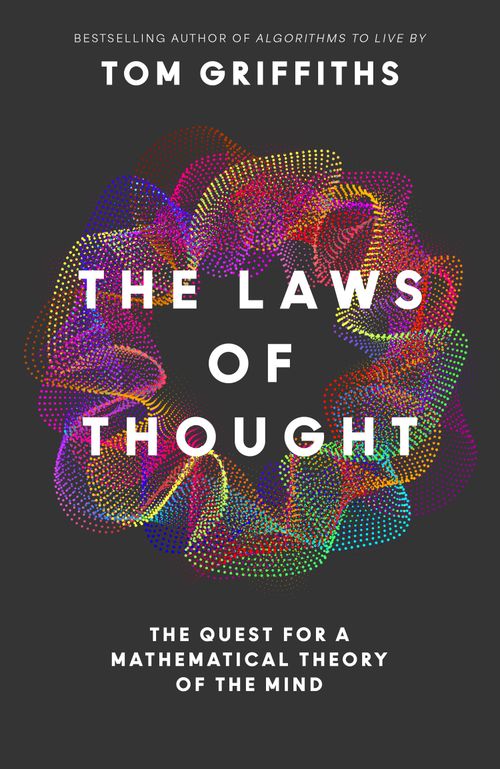
Tom Griffiths is one of those scientists working at the cutting edge of cognitive science and AI. He is a professor of psychology and computer science at Princeton University, and directs the Computational Cognitive Science Lab and the Princeton Laboratory for AI. His first book for general readership ‘Algorithms to Live By: The Computer Science of Human Decisions’ (co-authored with Brian Christian) applied computer science to daily life. His new work, ‘The Laws of Thought: The Quest for a Mathematical Theory of the Mind’ (HarperCollins) is a more ambitious, historical, and philosophical exploration. It shifts the focus from “how to act” to “how we work”. It presents a narrative history of cognitive science and a deep dive into the three competing frameworks that try to explain human intelligence.
 Griffiths’ central question is, “Is there a ‘physics’ of the mind?’ We all understand the external world, with its “Laws of Nature”. Concepts such as gravity, force, entropy were formalized by scientists like Newton and Maxwell. But are there laws governing the internal world, that is, something like ‘Laws of Thought’? For 300 years, a quest has been going on to find a mathematical language for the mind, from Enlightenment philosophers to modern Large Language Models (LLMs). This book tells the story of that quest to formalize human thinking using mathematical frameworks. It is the story of how mathematics has been used to understand human cognition, from historical logic to modern AI systems.
Dr. Ananda Shankar Jayant, a Padma Shri awardee, inspired audiences for decades through her mastery of Bharatanatyam and Kuchipudi. But it was her journey through cancer that taught some of life`s most powerful lessons in courage and resilience.
Swami Vivekananda for Our Times Edited and compiled by Rajiv Sikri, with Introduction by S. Gurumurthy Rupa Publications, 552 pages, Rs 695
India`s economic ambitions are increasingly defined by the industries of the future. Semiconductors, electronics, artificial intelligence and advanced manufacturing dominate policy conversations. Yet one of India`s largest employment-intensive sectors continues to occupy a surprisingly marginal place in ec
Despite the awareness campaigns on sanitation across India, open defecation (OD) is practised openly and widely in both rural and urban areas. Research shows that rural respondents are well aware of the negative impacts of OD, yet this awareness does not lead to toilet construction or use. In rural North I
The Supreme Court recently described homemakers as “nation builders” and fixed a notional monthly income of Rs 30,000 for them in motor accident compensation cases. The judgment was not about wages. It was about compensation. Yet it inadvertently raised a larger economic question: If a homemake
After months of rising tensions, the United States and Iran have reached a memorandum of understanding called the "Islamabad Agreement." This agreement allows for the immediate reopening of the Strait of Hormuz without tolls and provides Iran with relief from sanctions, depending on its complianc





