
AI looking to rejig Rs 10,000 crore debt under RBI’s new scheme

The Scheme for Sustainable Structuring of Stressed Assets (S4A) has been introduced by RBI in June this year

GN Bureau | October 18, 2016

#stressed assets   #debt   #RBI   #Air India  


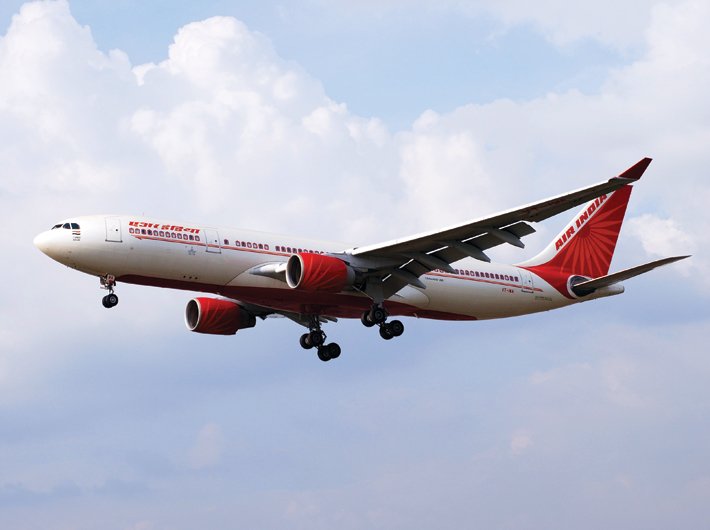
  National carrier Air India, which is making operational profit now, is looking to rejig debt worth Rs 10,000 crore under the scheme for sustainable restructuring of bad assets floated by the Reserve Bank of India (RBI). 

 The Scheme for Sustainable Structuring of Stressed Assets (S4A) has been introduced by RBI in June this year to further strengthen the ability of lenders to tackle stressed assets and provide an avenue for reworking the financial structure of entities facing genuine problems.
 
 According to a news report, Air India is actively looking at the possibility of availing ‘S4A’ to rejig debt to the tune of at least Rs 10,000 crore. In case the proposal gets a green signal, it would be for the first time that a public sector undertaking is availing the scheme. Air India, which has been in the red for the past many years, has posted an operating profit of Rs 105 crore in the last fiscal, first time in a decade. The carrier is also working on ways to bring down its overall debt burden, especially with respect to significant interest outgo.
 
 At present, the airline’s debt is estimated to be more than Rs 50,000 crore. A consortium of 19 lenders have extended loans to the national carrier. While overall performance of the carrier in the last fiscal has been better compared to the last few years, an extensive diligence needs to be carried out before applying for the scheme, the news report added. 
 
The airline is surviving on Rs 30,000 crore bailout package from the government that is spread over 10 years. Over Rs 22,000 crore has been provided to Air India under the turnaround plan which includes financial support towards repayment of principal as well as interest on government-guaranteed loans taken for aircraft acquisition.
 

Comments


Other News

The women India doesn`t count enough

She runs a tailoring shop from a single room in her house. Every morning she stitches school uniforms, answers queries on WhatsApp, collects payments through UPI and orders fabric online. Officially, she still belongs to India`s informal economy. Yet her enterprise is no longer disconnected from the formal

“Cancer is just a mind game”

Dr. Ananda Shankar Jayant, a Padma Shri awardee, inspired audiences for decades through her mastery of Bharatanatyam and Kuchipudi. But it was her journey through cancer that taught some of life`s most powerful lessons in courage and resilience.

Why Swami Vivekananda is the pathfinder for our times

Swami Vivekananda for Our Times  Edited and compiled by Rajiv Sikri, with Introduction by S. Gurumurthy Rupa Publications, 552 pages, Rs 695  

Five ways to realise the potential of India’s handicraft and handloom sector

India`s economic ambitions are increasingly defined by the industries of the future. Semiconductors, electronics, artificial intelligence and advanced manufacturing dominate policy conversations. Yet one of India`s largest employment-intensive sectors continues to occupy a surprisingly marginal place in ec

Beyond toilets: Why open defecation persists in rural India

Despite the awareness campaigns on sanitation across India, open defecation (OD) is practised openly and widely in both rural and urban areas. Research shows that rural respondents are well aware of the negative impacts of OD, yet this awareness does not lead to toilet construction or use. In rural North I

What unpaid nation builders want from policymakers

The Supreme Court recently described homemakers as “nation builders” and fixed a notional monthly income of Rs 30,000 for them in motor accident compensation cases. The judgment was not about wages. It was about compensation. Yet it inadvertently raised a larger economic question: If a homemake


Archives

Current Issue

Opinion

Facebook Twitter Google Plus Linkedin Subscribe Newsletter

Twitter






