
Contemporary India in MoUH: a journalistic guide

What to expect (and what not to expect) in a novel that is also a compendium of recent eventful decades

GN Bureau | June 6, 2017

#Literature   #The Ministry of Utmost Happiness   #Arundhati Roy   #Culture  


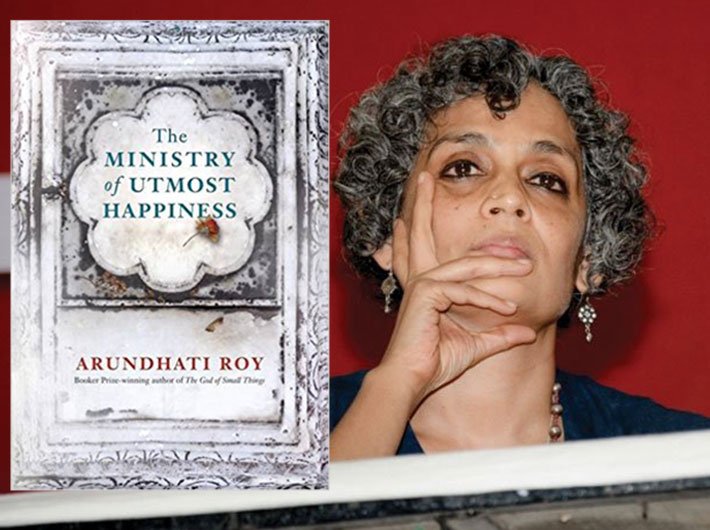
The Ministry of Utmost Happiness, Arundhati Roy’s new novel in two decades, reads like non-fiction at time – in a welcome sense, in a non-post-truth kind of way. Its characters have been painstakingly picked for their knack of running headlong into headline-making events, thus providing the author an opportunity to weave in those events in her larger narrative. An exhaustive list of the real-world events making an appearance in this novel that someone is bound to call necessary reading for our times.
 
Events in the novel:
 
  • The 1975-77 Emergency proclaimed by Indira Gandhi
  • Anti-Sikh riots in Delhi in 1984 following the assassination of prime minister Indira Gandhi
  • The Union Carbide gas leak tragedy in Bhopal in 1984
  • The destruction of the Babri Mosque in 1992
  • The prime ministership of Atal Bihari Vajpayee, Manmohan Singh and Narendra Modi, with descriptions of their body language and speeches
  • The 9/11 terrorist attack in the US
  • The train burning at Godhra, Gujarat, in 2002, and the following communal riots (especially in Ahmedabad, described for some reason as the capital of the state)
  • The anti-corruption protests at Jantar Mantar, Delhi, in 2011
  • An Arvind Kejriwal lookalike named Mr Aggarwal
  • Mob attacks and lynching on cow/beef issues, including one in Una, Gujarat, in 2016
  • Kashmir, from the rise of insurgency to today, a thorough history
  • The Maoist insurgency in parts of India, an intimate history
  • Not to mention the references to much more
 
The recent history is recapped so exhaustively that young UPSC aspirants too may find the novel useful. There is almost a penchant for ticking off all headlines, so much so that a reader can complain why some events were not included, if for nothing else than for sake of complete listing.
 
Events that did not make the cut:
 
  • The terrorist bombings in Mumbai, 1993
  • Several other terrorist attacks in various parts of the country between then and 2008
  • The terror attacks in Mumbai in 2008
 

Comments


Other News

India faces critical shortage of skin donors amid rising burn cases

India reports nearly 70 lakh burn injury cases every year, resulting in approximately 1.4 lakh deaths annually. Experts estimate that up to 50% of these lives could be saved with adequate access to skin donations.   A significant concern is that around 70% of burn victims fall wi

Not just politics, let`s discuss policies too

Why public policy matters Most days, India`s loudest debates stop at the ballot box. We can name every major leader and recall every campaign slogan. Still, far fewer of us can explain why a widow`s pension is delayed or how a government school`s budget is actually approved. That

When algorithms decide and children die

The images have not left me, of dead and wounded children being carried in the arms of the medics and relatives to the ambulances and hospitals. On February 28, at the start of Operation Epic Fury, cruise missiles struck the Shajareh Tayyebeh school – officially named a girls’ school, in Minab,

The economics of representation: Why women in power matter

India’s democracy has grown in scale, but not quite in balance. Women today are active participants in elections, influencing outcomes in ways that were not as visible earlier. Yet their presence in legislative institutions continues to lag behind. The Nari Shakti Vandan Adhiniyam was meant to addres

India will be powerful, not aggressive: Bhaiyyaji

India is poised to emerge as a global power but will remain rooted in its civilisational ethos of non-aggression and harmony, former RSS General Secretary Suresh `Bhaiyyaji` Joshi has said.   He was speaking at the launch of “Rashtrabhav,” a book by Ravindra Sathe

AI: Code, Control, Conquer

India today stands at a critical juncture in the area of artificial intelligence. While the country is among the fastest adopters of AI in the world, it remains heavily reliant on technologies developed elsewhere. This paradox, experts warn, cannot persist if India seeks technological sovereignty.


Archives

Current Issue

Opinion

Facebook Twitter Google Plus Linkedin Subscribe Newsletter

Twitter






