If BIMSTEC is to be more than "SAARC minus Pakistan", it needs roots in the everyday lives and imaginations of its citizens
The international order is drifting into a dangerous grey zone as the very powers that built today's multilateral system begin to chip away at it. The United States has increasingly walked away from global rules and forums when they no longer suit its interests, while China has rushed to fill the vacuum on its own terms through initiatives such as the Belt and Road. The latest spike in US-Iran tensions in the Strait of Hormuz, through which a large share of the world's oil and gas flows, shows what this drift means in practice: disrupted shipping, higher insurance costs and volatile prices. For countries around the Bay of Bengal, these are not distant tremors. When a crisis in a narrow West Asian strait can raise fuel, fertiliser and freight costs in our ports within weeks, it is clear that our economic security cannot rest on distant choke points and big-power bargains.
BIMSTEC offers one way of reducing this dependence. It brings together seven countries—Bangladesh, Bhutan, India, Myanmar, Nepal, Sri Lanka and Thailand—around the Bay, home to 1.73 billion people and a combined GDP of roughly US$ 5.2 trillion. Its geography is its logic. Himalayan hydropower flows to coastal industry, Bay fisheries feed regional markets, and sea lanes bind South and South-East Asia. Crucially, it does all this without Pakistan or China in the room. That means regional cooperation is no longer hostage to India-Pakistan hostility, nor overshadowed by Chinese leverage, as it so often is in other forums.
This membership is deliberate. India has increasingly framed BIMSTEC as a viable alternative when Islamabad's obstructionism blocks SAARC initiatives. Meanwhile, policymakers warn against giving China observer status, noting Beijing's interest in joining and its record of divide-and-rule diplomacy in ASEAN and the EU. In other words, BIMSTEC is one of the few spaces where the Bay states can talk candidly about cross-border roads, power lines, trade facilitation or visa schemes on their own terms, rather than as subplots in Washington's or Beijing's strategic narratives. For smaller and mid-sized economies, this kind of "small-group multilateralism" can be far more responsive than waiting for consensus among dozens of powers in distant capitals.
A Quarter-Century of Underperformance
Yet, more than a quarter-century after the 1997 Bangkok Declaration, BIMSTEC's performance has fallen short of its promise. A permanent Secretariat was established in Dhaka only in 2014, seventeen years after inception. The first Charter came in 2022. The Master Plan for Transport Connectivity lists 267 projects totalling about $124 billion across roads, railways, and ports, but only a fraction has moved beyond the paper stage. Intra-BIMSTEC trade still hovers around 6-7% of the bloc's total trade, a tiny share compared with ASEAN, despite repeated commitments to a Free Trade Agreement first mooted in 2004 and still not concluded.
The sixth BIMSTEC Summit, hosted by Thailand in April 2025 after a seven-year gap, acknowledged the gulf between ambition and reality. Leaders adopted the "Bangkok Vision 2030", promising to build a "Prosperous, Resilient and Open" BIMSTEC and rationalised cooperation into seven pillars. An Energy Centre has been operationalised in Bengaluru, and a memorandum of understanding on grid interconnection has been signed to deepen cross-border electricity trade. But core problems remain—stalled FTA talks, weak implementation of connectivity, an under-resourced Secretariat, and no dedicated development fund akin to ASEAN's. In a world where a flare-up in Hormuz or the Red Sea can so quickly disturb energy and shipping flows to Asia, this slow pace looks less like routine delay and more like a strategic blind spot.
Beyond the Acronym
Yet charters and connectivity plans are not enough. If BIMSTEC is to be more than "SAARC minus Pakistan", it needs roots in the everyday lives and imaginations of its citizens. Historically, the Bay of Bengal was a single buzzing world of traders, pilgrims and migrants. Buddhism, Hinduism and Islam all rode its monsoon winds, and echoes of that shared past still linger in architecture, food and language from Kandy to Yangon. Modern borders and competing nationalisms have thinned that sense of connection. Restoring it is where people-to-people ties matter.
BIMSTEC has, to its credit, begun to move in this direction. The 2018 Kathmandu Summit declaration explicitly called for deeper people-to-people contacts and proposed forums for parliamentarians, universities, cultural organisations and the media. A dedicated BIMSTEC Network of Policy Think Tanks now exists, as do fledgling schemes for student and academic exchanges. People-to-people linkages in the BIMSTEC sub-region humanise regional cooperation beyond state-centric approaches and are essential to building a shared regional identity.
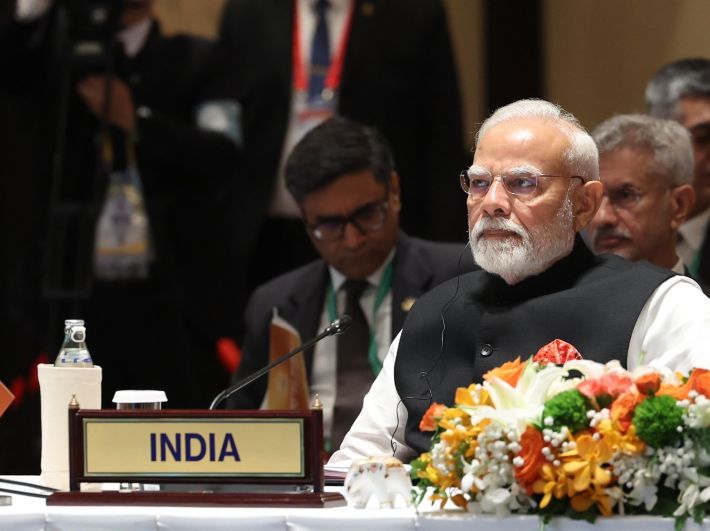
The Bangkok Vision 2030 goes a step further by calling for fostering a "Bay of Bengal identity" alongside more conventional goals such as trade, connectivity, and climate resilience. This thinking clearly shapes India's recent initiatives. At the 2025 summit, prime minister Narendra Modi announced a BIMSTEC Athletics Meet and the first BIMSTEC Games in 2027 to mark the organisation's thirtieth year, as well as a traditional music festival, a Young Leaders' Summit, a hackathon and a Young Professionals Programme. The idea is simple but powerful—to get young people in Assam, Chattogram, Colombo or Chiang Mai to see each other less as distant foreigners and more as neighbours across a common sea.
That sense of being "citizens of the Bay" is not a sentimental flourish. It is the social foundation for everything else BIMSTEC seeks to do. Cross-border trade is easier when border communities trust each other. Disaster response is faster when people expect help to flow both ways after the next cyclone. Energy-sharing agreements are more durable when downstream and upstream populations understand each other's constraints. People-to-people initiatives, tourism circuits, cultural festivals, student mobility, and media exchanges turn an acronym into a community.
Building Blocks and Bonds
Putting BIMSTEC on a revival path, therefore, means strengthening both infrastructure and human connections. On the infrastructure front, members must move beyond chasing a perfect FTA and instead secure a practical preferential trade deal for key goods, pair it with real trade facilitation measures, and fast-track a few flagship connectivity projects. These should address today’s geopolitical risks—modern ports, coastal shipping lanes, and land corridors across the Bay that cut reliance on far-off choke points like the Strait of Hormuz. On the human front, they must bolster the Secretariat, establish a modest BIMSTEC development fund, and make people-to-people initiatives a core priority rather than an afterthought.
If those steps are taken in the next couple of years, BIMSTEC's thirtieth anniversary in 2027 need not be a hollow celebration. It could mark the moment when the countries around the Bay of Bengal begin to look less upwards, to a distracted Washington or an overbearing Beijing, and more sideways, to each other, as partners in a shared regional home. In a world where distant confrontations in narrow straits can unsettle life in our coastal towns, building such neighbourhood resilience is not lofty diplomacy. It is common sense for the citizens of the Bay.
Balhasan Ali is an Assistant Professor at TISS Hyderabad. Atul Kriti is a PhD Research Scholar in Public Policy at TISS Hyderabad. Views are personal.