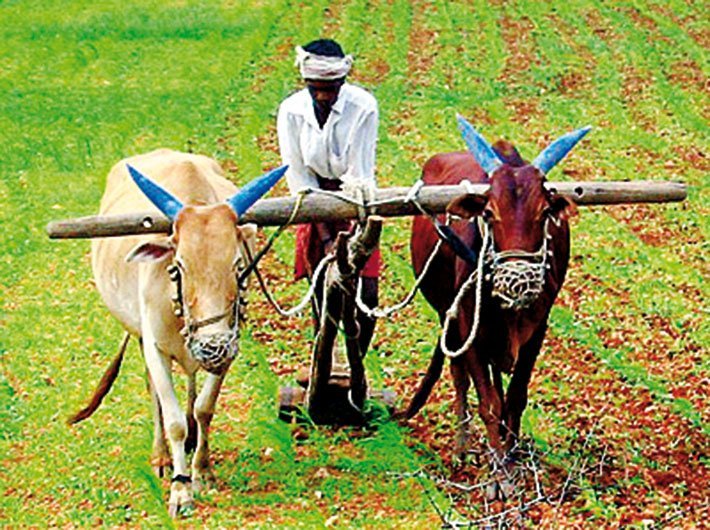
Despite denials, it is clear that the government is thinking about taxing agriculture income
The tax net needs to be expanded and the rich farmers must pay up their taxes. This week saw quite a bit of going back and forth over this prickly issue after Niti Aayog member Bibek Debroy batted for taxing agricultural income.
Niti Aayog vice chairman Arvind Panagariya, however, said that there was no question of taxing agricultural income. Finance minister Arun Jaitley said that the central government has no plan to impose a tax on agricultural income.
That should have put an end to matter. But, it did not.
Now, chief economic adviser Arvind Subramanian too has called for a tax on agricultural income. It is an indication that the top echelons of the government are toying with the idea, but perhaps not knowing how to go about it.
Taxing farm income is fiscal prudence, yet it is more of a political issue rather than an economic one. The political compulsions are quite clear since it may give ammunition to the opposition at a time when distressed farmers are killing themselves. Villagers, cutting across castes and communities, are a massive vote bank and the decision may end up riling them.
It would not be out of place to mention that a whopping Rs 8,000 crore was received in the cooperative banks across the country within first four days of demonetisation. This shows the kind of money which is available in the agricultural sector.
Subramanian has shown the way ahead on the way to implement it, when he asked why none of the 29 state governments had done it (since agriculture is a state subject, and the centre has no say in it). He then went on to give the answer: "Our political discourse doesn't allow us to do that". The economist argued the government shouldn't concern itself what the source of income was and there was certainly no harm in taxing rich farmers too, reported
NDTV
Has Subramanian spoken out of turn? It does not look like that.
Two respected economists airing their views on this controversial subject – one after the other – shows that the government is serious about it.
A 2004 World Bank report “Taxing agriculture in a developing country: A possible approach” by Indira Rajaraman said that agriculture is a hard-to-tax sector everywhere. “In developing countries like India, the task becomes even harder. Books of accounts are not maintained except in the plantation sector. Cash transactions not routed through the banking system pose barriers to verification and assessment of self-declared income. Together these add up to an insurmountable information vacuum.”
The finances have to improve and if a significant chunk of people don’t pay taxes, yet draw all the benefits, then it puts a huge strain. Taxing the rich would set the ball rolling and help improve tax revenues.
The Narendra Modi government has already crossed the half way mark and is fast approaching the three-year milestone. It does not have much time if it wants to tax the rich farmers.
In India, as per section 10(1), agricultural income earned by the taxpayer in India is exempt from tax. Agricultural income is defined under section 2(1A) of the Income-tax Act. As per section 2(1A), agricultural income generally means:
Any rent or revenue derived from land which is situated in India and is used for agricultural purposes.
Any income derived from such land by agriculture operations including processing of agricultural produce so as to render it fit for the market or sale of such produce.
Any income attributable to a farm house subject to satisfaction of certain conditions specified in this regard in section 2(1A).
Last year too, Biju Janata Dal leader B Mahtab, had asked: “Does it make any sense providing support to the big farmers, not taxing the agriculture produce of the farmers is one thing but not taxing the companies who are earning thousands of crores of rupees?”
Trinamool Congress member Saugata Roy too had last year said that rich farmers should be brought under the tax net to widen the tax base.
The views aired by Debroy and Subramanian are quite like test balloons and there has not been any major opposition to it.
It is indeed the right time to start taxing the rich farmers.