
On DeMo, yet another goal post change

FM counts benefits which happen to be different from original objectives

GN Bureau | June 1, 2017

#Finance Minister   #Finance Ministry   #Arun Jaitley   #Narendra Modi   #Demonetisation   #Economy  
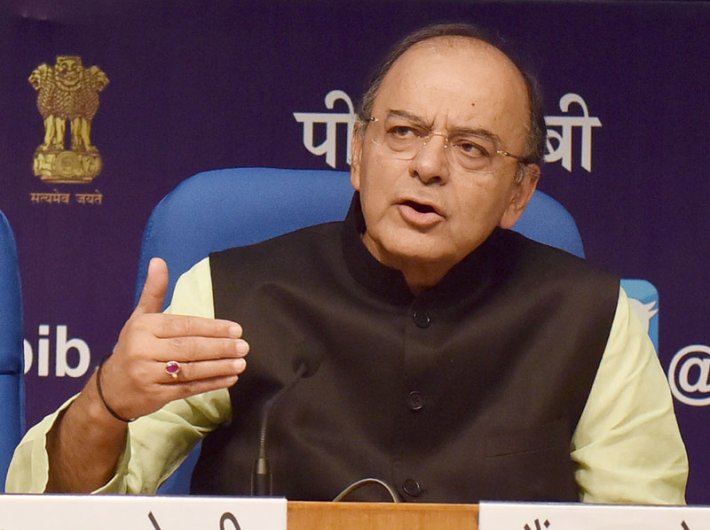
  Arun Jaitley, union minister for finance, corporate affairs and defence, addressing a press conference on the achievements of the ministry of finance during 3 years of NDA government
Arun Jaitley, union minister for finance, corporate affairs and defence, addressing a press conference on the achievements of the ministry of finance during 3 years of NDA government


Some think there is only one way to score a bull’s eye, by hitting the bull’s eye. Then there are creative souls, who first shoot, and then draw a bull’s eye around the mark.
 
When it was announced, demonetisation was supposed to counter (a) black money, (b) terrorism, and (c) counterfeits. Prime minister Narendra Modi’s November 8 Address to the Nation does not mention the word ‘cashless’.
 
Addressing the press on the completion of three years of the NDA government, finance minister Arun Jaitley on Thursday counted three benefits of demonetisation: (a) increase in cashless transactions, (b) increase in the taxpayer base, and (c) the message that it’s not safe to have cash transactions.
 
Of course, the two benefits on the tax aspect (b and c) are part of the drive towards eliminating unaccounted money – but they could’ve been achieved without subjecting the 1.2 billion people to untold suffering. The first benefit, drive towards cashless transaction, is welcome, but again it did not need such grave push, and it is already petering out too.
 
Indeed, demonetisation is blamed for a slowing down of the economy: Wednesday’s CSO announcement put the GDP growth in the quarter ending in March 2017 at 6.1 – lowest in this government’s term. This is something many economists and opposition leaders including former prime minister Manmohan Singh had feared.
 
However, the government is not ready to believe. Jaitley told the press that some slowdown was visible even prior demonetisation. Since GDP growth rate in the previous quarter was a healthy 7.0, it would need some torture of selective data to find that slowdown – not to mention the explanation of the fact that this slowdown has been spoken of only now and not before.

Comments


Other News

Not just politics, let`s discuss policies too

Why public policy matters Most days, India`s loudest debates stop at the ballot box. We can name every major leader and recall every campaign slogan. Still, far fewer of us can explain why a widow`s pension is delayed or how a government school`s budget is actually approved. That

When algorithms decide and children die

The images have not left me, of dead and wounded children being carried in the arms of the medics and relatives to the ambulances and hospitals. On February 28, at the start of Operation Epic Fury, cruise missiles struck the Shajareh Tayyebeh school – officially named a girls’ school, in Minab,

The economics of representation: Why women in power matter

India’s democracy has grown in scale, but not quite in balance. Women today are active participants in elections, influencing outcomes in ways that were not as visible earlier. Yet their presence in legislative institutions continues to lag behind. The Nari Shakti Vandan Adhiniyam was meant to addres

India will be powerful, not aggressive: Bhaiyyaji

India is poised to emerge as a global power but will remain rooted in its civilisational ethos of non-aggression and harmony, former RSS General Secretary Suresh `Bhaiyyaji` Joshi has said.   He was speaking at the launch of “Rashtrabhav,” a book by Ravindra Sathe

AI: Code, Control, Conquer

India today stands at a critical juncture in the area of artificial intelligence. While the country is among the fastest adopters of AI in the world, it remains heavily reliant on technologies developed elsewhere. This paradox, experts warn, cannot persist if India seeks technological sovereignty.

RBI pauses to assess inflation risks, policy transmission

The Reserve Bank of India (RBI) has begun the new fiscal year with a calibrated pause, keeping the repo rate unchanged at 5.25 per cent in its April Monetary Policy Committee (MPC) meeting. The decision, taken unanimously, reflects a shift from aggressive policy action to cautious observation after a signi


Archives

Current Issue

Opinion

Facebook Twitter Google Plus Linkedin Subscribe Newsletter

Twitter






