
Speak up people, if you want to be heard

The scrapping of the controversial steel flyover in Bengaluru is a fine example of what civil society can do.

rahul

Rahul Dass | March 2, 2017 | New Delhi

#civil society   #citizen protests   #Karnataka   #Bengaluru   #steel flyover  
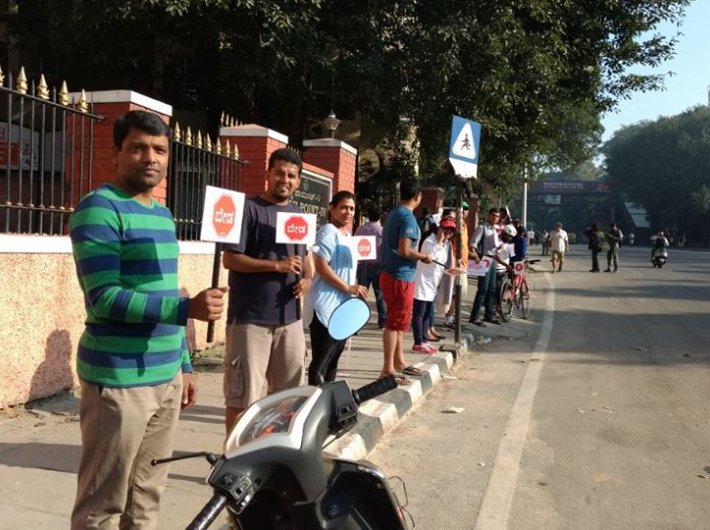
Citizens stand in front of Chalukya Hotel to say no to steel flyover

Bengaluru’s overly ambitious steel flyover project, which would have led to 800 trees being sliced and diced, has been dropped. Karnataka minister KJ George said the decision was taken as the BJP was trying to cash in on allegations that the project involved an alleged kickback.
What was left unsaid was the people of Bengaluru were up in arms over the project that would have cost the exchequer more than Rs 1,700 crore and would have led to the drastic reduction in the much-needed green canopy.
 
The credit for the project’s scrapping goes entirely to the common people who decided that they would not allow their city to be taken for a ride. In a city like Bengaluru where traffic is a nightmare, a flyover would be a welcome step. However in this case, citizens’ protests have resulted in scrapping of the project. Enough is enough, they said. They stood their ground, even though the state government seemed to be too keen to push ahead.
 
The civic mobilisation was unprecedented in the recent months and showed the true prowess of what a people’s movement can do.
On October 28 last year, the Chennai bench of the National Green Tribunal stayed the 6.9-km project from Chalukya Circle in the city centre to Hebbal junction in the northern suburb, connecting the international airport road at Devanahalli and National Highway 4 towards Hyderabad.
 
Four months later, it has finally been dropped.
 
India has seen a string of such movements. These people’s movements focused on key issues.
 
Chipko movement, Koel Karo, Save Silent Valley, Narmada Bachao Andolan are just some of the excellent instances of people who came together to take up and issue and did not hesitate to take on the might of the state.
 
These movements remained, as far as possible, apolitical, which gave it a distinct hue.
In the more recent years, Anna Hazare’s campaign against corruption demanded the enactment of the Jan Lokpal Bill. The movement was a huge success. It is another matter that it led to the birth of the Arvind Kejriwal led Aam Aadmi Party (AAP), which is a political party.
 
In 2011, people packed the sprawling Ramlila Maidan in the national capital. It was a sea of humanity and people turned up on their own. They did not have to be invited. It was unique because residents of Delhi are normally considered indifferent to social issues. They came on two-wheelers, in cars, buses and the metro. They stayed there from morning till evening. The crowd would thin out at night, but people would always be present.
 
Policemen present at the spot told me that in the evening when they go back home, they change out of their khaki uniform, wear civil dress and come back to the site with their families.
 
India needs social movements that will shake up old and rigid mindsets and give a fresh direction to where this country is headed to.
 
No movement can be a success without people’s participation. Anna Hazare showed us, Bengaluru showed us. It is here that you and I count. Staying silent won't help. If you want to be heard, speak up. Otherwise, it may be too late.
 

Comments


Other News

MDR on UPI: Can sustainability come without weakening the network?

The extraordinary transaction volumes and value (₹29.82 Lakh crore in August 2026 alone) of the Unified Payments Interface (UPI) have made it not only an Indian success story, but a global one. In 2024, UPI accounted for nearly 49% of the world’s real-time payment transaction volume, with more th

The Xi-Trump summit: The unending rivalry

Diplomacy is akin to an art, wherein the summitry, conflict resolution and negotiations form apt constituents of the entire context of deal making and “playing for keeps” in the international arena. The Xi-Trump summit in Washington last week, in which the American president broke all conside

“Indians, yet treated like outsiders”

Moving to Delhi-NCR for education can be an exciting experience for students from Northeast India. It gives us a chance to meet new people, experience a different culture and become more independent. But living away from home also comes with challenges that people who have not experienced them may not al

Import duty on major edible oils cut

The government has reduced the Basic Customs Duty (BCD) on major imported crude edible oils with a view to moderating domestic edible oil prices, providing relief to consumers and mitigating inflationary pressures arising from the sharp increase in international edible oil prices.  

From pyramid to platform: BRICS agenda for Global South

In his opening address at the 18th BRICS Summit in New Delhi on September 12, prime minister Narendra Modi did something India`s diplomacy has been building towards for three years: he moved the ‘Voice of the Global South’ from a slogan to a work plan. Addressing the leaders, he argued that t

How to realise the full transformative potential of PM-JAY

The Pradhan Mantri Jan Arogya Yojana (PM-JAY), a welfare scheme which covers approximately 45 crore beneficiaries across India, provides cashless health cover of Rs. 5 lakh per family per year. It is the largest health insurance scheme which helped crores of poor families by reducing out-of-pocket expend

Upcoming Conferences


-->

Archives

Current Issue

Opinion

Facebook Twitter Google Plus Linkedin Subscribe Newsletter

Twitter






