A loan waiver can clear yesterday’s debt, but it cannot pay for today’s failed crop or protect tomorrow’s harvest. Maharashtra’s latest dry spell is a test of whether the state is managing droughts or merely paying for them
A prolonged dry spell across several parts of Maharashtra has revived old anxieties about Kharif crop losses, shrinking farm incomes and rising rural indebtedness. The concern is sharpest in Marathwada and Vidarbha, and it has placed the state’s agricultural relief and climate-resilience policies under renewed scrutiny.
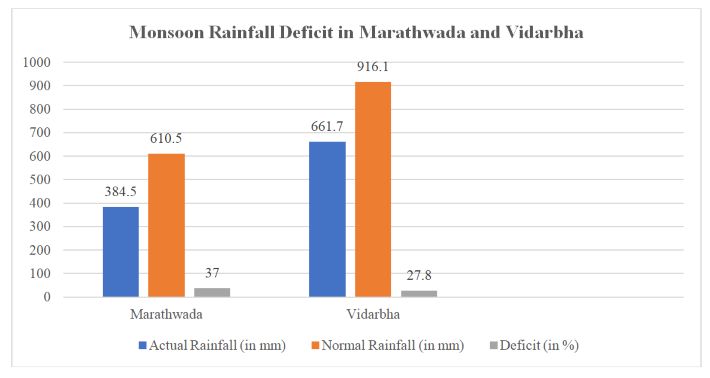
The pattern this season has been unsettling. Heavy rainfall earlier in the monsoon was followed by long stretches with little or no rain. Reports indicate that 20 of Maharashtra’s 36 districts recorded rainfall deficits of at least 20%, while some areas went more than 30 consecutive days without significant rain. Because the dry spell arrived as Kharif crops approached critical stages of growth and harvest, its timing has made it far more damaging than the seasonal totals alone suggest.
The state government has described the situation in several districts as drought-like and ordered preliminary assessments of crop losses, to be followed by official panchnamas. Authorities have also been directed to address drinking-water and fodder requirements and to provide additional electricity support to farmers. These are necessary steps. But they also raise a larger question: does Maharashtra’s policy framework help farmers adapt to climate variability, or does it mostly respond after the damage is done?
A dry spell does not end in the field; it ends in the household
It is tempting to measure a drought in millimeters of missing rain. Its real cost is better measured in household balance sheets. Prolonged dry spells damage crops and reduce output. Lower output reduces farm income, which makes it harder for farmers to repay agricultural loans. Under that pressure, families cut household spending, postpone investment in the farm, borrow again or sell assets to meet immediate needs.
This is where the hidden socioeconomic cost lies. A farmer who spends less on seeds, fertilizer and irrigation this year enters the next season weaker than before. A family that sells livestock or land to survive one bad monsoon has less to fall back on when the next one comes. Each shock, in other words, raises the farmer’s exposure to the following one. Drought is therefore not a one-season event but a process that can quietly push households into a cycle of debt and lower productivity. This chart shows the rainfall deficit in Marathwada and Vidarbha regions.
The cost to the government is still unclear, because crop-loss assessments are ongoing. The state may have to spend on crop-loss assistance, fodder, water supply, employment support, and irrigation and water-conservation works. The final bill will depend on the extent of crop damage and the support that affected farmers and rural households need. But the cost borne by households, in lost assets and lost opportunities, will not appear in any budget document.
A loan waiver is not a drought policy
The dry spell has inevitably turned attention to Maharashtra’s 2026 farm-loan waiver. The Punyashlok Ahilyadevi Holkar Shetkari Karjamukti Yojana 2026 offers a complete waiver of eligible outstanding crop loans of up to ₹2 lakh, subject to the scheme’s conditions. It was initially announced with an estimated outlay of ₹36,585 crore, covering around 55.72 lakh farmers. Later government reporting referred to an outlay of about ₹40,000 crore and roughly 56 lakh beneficiaries as implementation estimates evolved.
It is important to be precise here. The loan waiver is not the financial cost of the current dry spell; the scheme was approved earlier in 2026. Its timing, however, matters. For farmers facing crop losses and falling incomes, a lighter debt burden can provide some breathing space.
But a loan waiver and a drought response do different jobs. A waiver addresses debt that already exists. Crop-loss compensation and crop insurance address losses from the current season and the risk of future ones. A farmer may have last year’s loan written off and still face ruin from this year’s failed crop. Treating the waiver as a substitute for timely assessment, prompt insurance payouts and adequate compensation would be a serious policy mistake. The effectiveness of the overall response will depend on all of these working together, and on measures that reduce farmers’ dependence on uncertain rainfall in the first place.
Relief that misses the most vulnerable is not relief
Public debate often focuses on how much the government spends. The more important question is who actually receives support. A farmer with an eligible institutional crop loan can benefit directly from a waiver. Another farmer, facing identical crop losses but relying on moneylenders or other informal credit, may receive nothing comparable. Ironically, those outside the formal credit system are often the poorest and the most exposed.
The impact of a drought also differs sharply between marginal and large farmers, between irrigated and rainfed farmers, between those with and without crop insurance, and between households with diversified incomes and those that depend entirely on agriculture. A uniform relief package applied to such unequal circumstances will inevitably help some farmers far more than others.
This is especially relevant for Marathwada and Vidarbha, where farming is heavily dependent on the timing and distribution of monsoon rainfall. In these regions, the impact of a climatic shock is shaped by irrigation access, cropping patterns, landholding size, access to credit, market prices and farmers’ capacity to adapt. The question there is not simply whether rainfall has declined, but whether households have the means to absorb that decline. Relief should be judged by whether it reduces that vulnerability, not by the size of the headline number.
Stop paying for droughts after they happen
None of this argues against immediate relief. When crops fail, farmers need help quickly, and Maharashtra’s first priority must be to complete crop-loss assessments and ensure that eligible farmers receive support without unnecessary delays. Delayed compensation often forces farmers to borrow at high interest in the meantime, undoing much of the benefit of the relief itself.
But a state that spends repeatedly on post-disaster relief while underinvesting in prevention will keep paying for the same crisis. Long-term investment in irrigation, water conservation, reliable crop insurance, climate-resilient seeds, timely agricultural information, better market access and diversified rural livelihoods can reduce the scale of future losses. Each element plays a distinct role: a loan waiver eases existing debt; compensation helps farmers recover crop losses; insurance reduces production risk; fair prices improve farm revenue; and irrigation and water conservation reduce dependence on uncertain rainfall. No single instrument can do the work of all the others.
Climate variability is no longer an occasional disruption for Maharashtra’s farmers; it is becoming the normal operating condition of rainfed agriculture. Policy must accept that reality. Building resilience before the shock is usually cheaper and fairer than compensating after it, and it protects precisely those farmers who are least visible in relief statistics.
The real test of agricultural policy, therefore, is whether today’s relief can become tomorrow’s resilience. For a farmer, resilience ultimately means being able to withstand a bad season without losing the financial capacity to cultivate the next one. Until Maharashtra’s policies are designed around that goal, every dry spell will continue to be a crisis rather than a challenge the state is prepared to meet.
Pavan Mahure and Dr. Barun Kumar Thakur are Research Scholar and Associate Professor, respectively, at Economics Department, FLAME University, Pune. Views are personal.
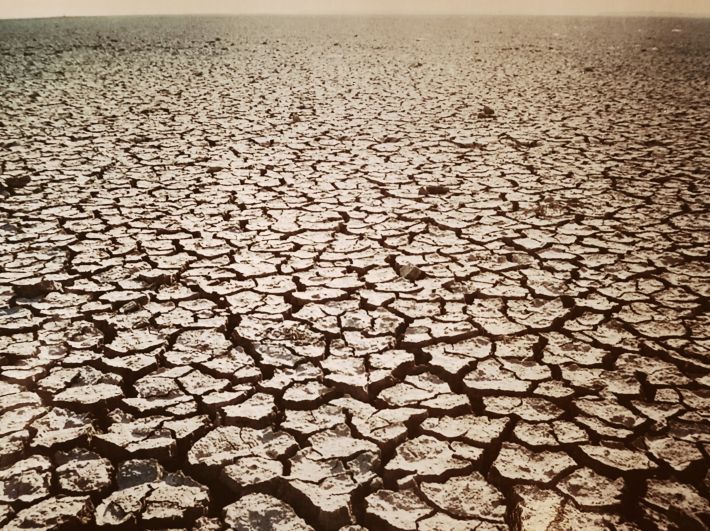
Photo credit: https://commons.wikimedia.org/wiki/File:Runn_of_Katch_-_India.jpg