
Cabinet approves modified UDAN

For a period of ten years from FY 2026-27 to FY 2035-36 with a total outlay of Rs.28,840 crore

GN Bureau | March 25, 2026

#Aviation   #UDAN  
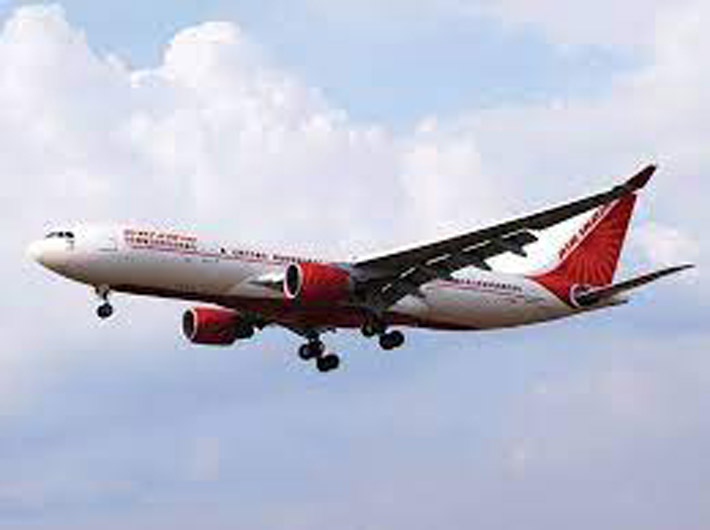
(File photo: Governance Now)

The union cabinet chaired by prime minister Narendra Modi has approved the launch and implementation of the Regional Connectivity Scheme – Modified UDAN for a period of ten years from FY 2026-27 to FY 2035-36 with a total outlay of Rs.28,840 crore with the budgetary support of the Government of India.
 
Impact:
Enhanced regional air connectivity to underserved and unserved areas.
Boost to economic growth, trade and tourism in Tier-2 and Tier-3 cities.
Support affordable air travel for common citizens.
Improved emergency response and healthcare access in remote and hilly regions.
Greater viability and sustainability for regional aerodromes and airline operators.
Promotion of the indigenous aerospace sector under Atmanirbhar Bharat.
Progress towards Viksit Bharat 2047 goal.

The key components of the scheme are as under:
 
(a) Development of Aerodromes (CAPEX)
Under the Modified UDAN Scheme, it is proposed to develop 100 airports from existing unserved airstrips to enhance regional connectivity, in line with the Viksit Bharat 2047 vision of infrastructure expansion and transforming India into a globally competitive aviation ecosystem with a total outlay of Rs.12,159 crore over the next eight years.
 
(b) Operation & Maintenance (O&M) of Aerodromes
Given the high recurring O&M costs and limited revenue streams for Regional Connectivity Scheme (RCS)-only aerodromes, the Scheme proposes to provide O&M support for three years capped at Rs.3.06 crore per annum per airport and Rs.0.90 crore per annum per heliport/water aerodrome, estimated at Rs.2,577 crore for around 441 aerodromes.
 
(c) Development of Modern Helipads
To address connectivity challenges in hilly, remote, island and aspirational regions, the Scheme proposes developing 200 modern helipads at Rs.15 crore each, amounting to a total requirement of Rs.3,661 crore over the next eight years (inflation-adjusted), focused on priority and aspirational districts to improve last-mile connectivity and emergency response.
 
(d) Viability Gap Funding (VGF)
Under the Regional Connectivity Scheme, airline operators receive financial support in the form of VGF for operating awarded routes. Recognising the need for longer market development, VGF support to airline operators is proposed amounting to Rs.10,043 crore over 10 years.
 
(e) Atmanirbhar Bharat Aircraft Acquisition
To address the shortage of small fixed-wing aircraft and helicopters required for operations in remote and difficult terrains and to advance the Atmanirbhar Bharat vision, the scheme also proposes to procure two HAL Dhruv helicopters for Pawan Hans and two HAL Dornier aircraft for Alliance Air.
 
Background:
The original UDAN Scheme was launched in October 2016 with the objective of making air travel affordable and strengthening connectivity to Tier-2 and Tier-3 cities.

Over nine years of implementation:
663 routes have been operationalised across 95 airports, heliports and water aerodromes (as on 28 February 2026).
More than 3.41 lakh flights have been operated, carrying 162.47 lakh passengers.
Connectivity has been established in remote, hilly and island regions, boosting tourism, healthcare access and emergency services.
The scheme has fostered growth in regional airlines and diverse fleet operations, laying a strong foundation for the Modified UDAN Scheme.

Comments


Other News

How Rafi, Raj Kapoor helped pave the way for a great uranium deal

There`s a certain moment in diplomacy that`s too personal to be captured in a communiqué, too small to make the front page, but more revealing than the front page. This week, prime minister Narendra Modi reached Tashkent and, amid the pomp of state visits, managed to evoke the old Bollywood tunes

Distinguishing Fish 1 and Fish 2: The pragmatism behind India’s WTO ratification

 India became the 123rd WTO member to ratify the multilateral Agreement on Fisheries subsidies (AoFS) when it deposited the Instrument of Acceptance for Phase 1 on July 20, 2026. The ratification is restricted to disciplining Illegal, Unreported and Unregulated fishing (IUU), protection for overfished

The 7% growth problem: Why the next 7% will be harder

India has become accustomed to hearing the 7% growth number. It is now less a milestone than an expectation. Yet the paradox is becoming clearer: maintaining 7% growth may be considerably harder than achieving it once. India’s real GDP grew 7.7% in FY2025–26, following growth of 6.5% in FY202

The Constitution cannot be altered: Justice Abhay Oka

Justice Abhay Oka, who retired from the Supreme Court in May 2025, has said that the Constitution of India cannot be altered. Explaining the landmark Kesavananda Bharati judgment (1973) on the basic structure of the Constitution, he said, “This is one judgment that has saved democracy in India.&rdq

How the flora and fauna evolved in the Indian subcontinent

Mammals of India  By A.J.T. Johnsingh and P.O. Nameer HarperCollins India in association with Bombay Natural History Society  

India`s renewable race is moving beyond megawatts

When Shell bought Sprng Energy in 2022, India`s renewable energy market appeared to offer precisely what global energy majors were seeking: scale, growth and a place in one of the world`s largest energy transitions. Four years later, Shell is selling the same business to Aditya Birla Group for an enterpris

Upcoming Conferences


-->

Archives

Current Issue

Opinion

Facebook Twitter Google Plus Linkedin Subscribe Newsletter

Twitter






