
Call to strengthen PPP audit

Audit of PPP projects should be mainstreamed and included as a component of regular audits, says guidance note for auditors

GN Bureau | January 24, 2017
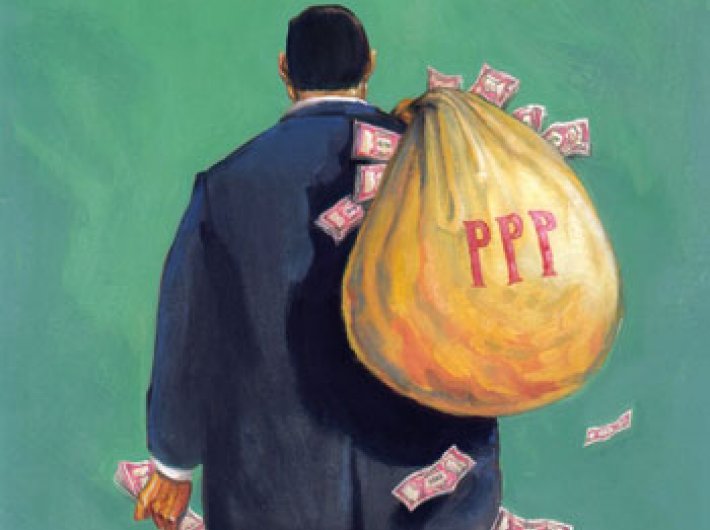

#PPP. public-private partnership   #audits  


Public Private Partnership (PPP) models have been extensively employed in infrastructure sector, which include transport, energy, water, sanitation, social and commercial infrastructure. In addition, with the evolving governance structure, the nation’s wealth/natural resources are also being dealt by private parties for delivery of public goods and services, said a guidance note in the January issue of the Journal of Government Audit and Accounts.
 
The guidance note “Compliance audit of Public Private Partnership arrangements” said that since these PPP arrangements/structures along with the governmental organisational hierarchies implement government policies, receive, collect or expend public money these collectively comprise our audit universe.
 
 
Given the proliferation of PPP arrangements and their growing significance, the compliance audit of PPP arrangements needs to be strengthened. The objective of this guidance note is, therefore, to mainstream the planning and conduct of compliance audits of these PPP arrangements on a regular basis, it said.
 
 
The Compliance Auditing Guidelines provide the broad dimensions for evaluation of the high risk areas as also the various documents/literature and aspects that should be reviewed for assessment of risk.
 
A guideline for compliance audit of PPP arrangements comprising a) a fact sheet for maintaining database of PPP arrangements, b) indicative risk parameters and c) indicative checklist for audit of PPP arrangements has been prepared to facilitate risk assessment and conduct of regular compliance audit of PPP arrangements by field offices.
 
 
The guidance note said that audit of PPP arrangements had been a focus area of concern as this involves access to the records of private parties. The supreme court, in its judgement dated April 17, 2014, has allowed audit access to records of the private concessionaire in revenue share contracts to ensure that there is no ‘unlawful gain’ to the private concessionaire and no ‘unlawful loss’ to the government/ public entity.

 
The guideline draws attention to the following: a) Audit of PPP projects should be taken up as per the mandate provided under the supreme court judgment. b) Audit of PPP projects should be mainstreamed and included as a component of regular audits. c) Audit should develop capacity and build specialisation in audit of PPP arrangements.
 
It went on to say that PPP models have been extensively employed in infrastructure sector in the country. These PPP infrastructure projects includes transport, energy, water, sanitation and social and commercial infrastructure. In addition to the PPPs in infrastructure, the government has entered into partnerships with the private sector for exploitation of valuable, monopolistic natural resources.


Comments


Other News

The women India doesn`t count enough

She runs a tailoring shop from a single room in her house. Every morning she stitches school uniforms, answers queries on WhatsApp, collects payments through UPI and orders fabric online. Officially, she still belongs to India`s informal economy. Yet her enterprise is no longer disconnected from the formal

“Cancer is just a mind game”

Dr. Ananda Shankar Jayant, a Padma Shri awardee, inspired audiences for decades through her mastery of Bharatanatyam and Kuchipudi. But it was her journey through cancer that taught some of life`s most powerful lessons in courage and resilience.

Why Swami Vivekananda is the pathfinder for our times

Swami Vivekananda for Our Times  Edited and compiled by Rajiv Sikri, with Introduction by S. Gurumurthy Rupa Publications, 552 pages, Rs 695  

Five ways to realise the potential of India’s handicraft and handloom sector

India`s economic ambitions are increasingly defined by the industries of the future. Semiconductors, electronics, artificial intelligence and advanced manufacturing dominate policy conversations. Yet one of India`s largest employment-intensive sectors continues to occupy a surprisingly marginal place in ec

Beyond toilets: Why open defecation persists in rural India

Despite the awareness campaigns on sanitation across India, open defecation (OD) is practised openly and widely in both rural and urban areas. Research shows that rural respondents are well aware of the negative impacts of OD, yet this awareness does not lead to toilet construction or use. In rural North I

What unpaid nation builders want from policymakers

The Supreme Court recently described homemakers as “nation builders” and fixed a notional monthly income of Rs 30,000 for them in motor accident compensation cases. The judgment was not about wages. It was about compensation. Yet it inadvertently raised a larger economic question: If a homemake


Archives

Current Issue

Opinion

Facebook Twitter Google Plus Linkedin Subscribe Newsletter

Twitter






