
Cut government stake below 50% in banks: Assocham

“While we seek more autonomy for the banks, we from the industry must also set certain standards for us for ensuring clean and best banking and business practices

GN Bureau | February 19, 2018

#Banking   #PNB fraud   #Assocham   #Punjab National Bank   #Nirav Modi  
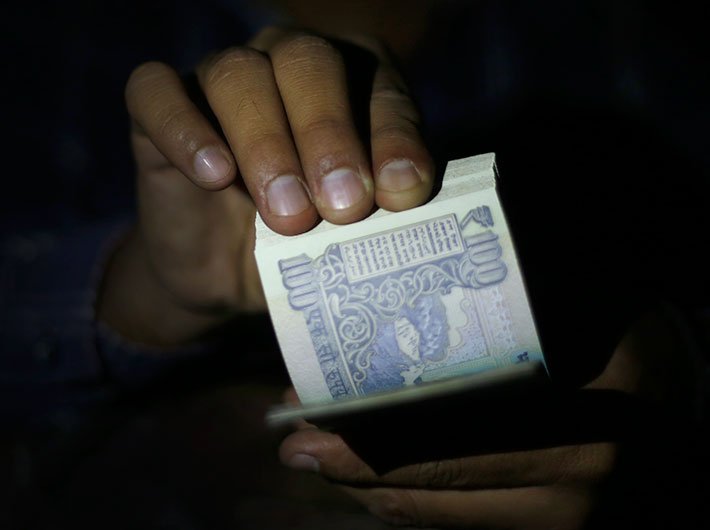
Representational image

The Punjab National Bank's fraudulent transactions worth Rs 11,300 crore should act as a strong trigger for the government for reducing its stake to less than 50 percent in the banks which should then be allowed to work on the lines of private sector lenders with a full sense of accountability to their shareholders protecting interest of depositors, the Assocham said.

"The PSU banks, ironically, are slipping from one crisis to the other and there is a limit the government can keep bailing them out at the cost of taxpayers' money, even if it is the principal shareholder in these lenders,” it said.

“The top banking positions are treated as extension of a government job and the senior most management spend bulk of their quality time, receiving and implementing directions from the bureaucrats even for innocuous issues. In the process, the core banking functions, including all important risk mitigation and management, take a back seat. The problem has become more grave with the banking adopting to new technologies which can prove both boon and bane, depending on how effectively they are implemented,” an official statement from Assocham read.

Once the government equity in the banks is reduced below 50 percent, there would be much more autonomy along with accountability and responsibility of the senior management. The boards should then be truly taking the policy decisions while the CEOs would run the banks with full authority, coupled with the commensurate responsibility, instead of looking towards the bureaucrats for directions.  

Assocham general secretary DS Rawat said, “There is an onus on India Inc as well. There are two sides of a coin. If one side represents the bank managements, the other side, which involve the borrowers, represents India Inc. Any unsavoury incident leaves both sides of the coin smudged. It is time the industry also did some introspection. While we seek more autonomy for the banks, we from the industry must also set certain standards for us for ensuring clean and best banking and business practices.”

He called upon the Reserve Bank of India to take a lead and engage with the industry in finding ways to do a clean business in the entire financial sector, be it the public sector or private sector banks or even the non-banking finance companies.
 

Comments


Other News

India faces critical shortage of skin donors amid rising burn cases

India reports nearly 70 lakh burn injury cases every year, resulting in approximately 1.4 lakh deaths annually. Experts estimate that up to 50% of these lives could be saved with adequate access to skin donations.   A significant concern is that around 70% of burn victims fall wi

Not just politics, let`s discuss policies too

Why public policy matters Most days, India`s loudest debates stop at the ballot box. We can name every major leader and recall every campaign slogan. Still, far fewer of us can explain why a widow`s pension is delayed or how a government school`s budget is actually approved. That

When algorithms decide and children die

The images have not left me, of dead and wounded children being carried in the arms of the medics and relatives to the ambulances and hospitals. On February 28, at the start of Operation Epic Fury, cruise missiles struck the Shajareh Tayyebeh school – officially named a girls’ school, in Minab,

The economics of representation: Why women in power matter

India’s democracy has grown in scale, but not quite in balance. Women today are active participants in elections, influencing outcomes in ways that were not as visible earlier. Yet their presence in legislative institutions continues to lag behind. The Nari Shakti Vandan Adhiniyam was meant to addres

India will be powerful, not aggressive: Bhaiyyaji

India is poised to emerge as a global power but will remain rooted in its civilisational ethos of non-aggression and harmony, former RSS General Secretary Suresh `Bhaiyyaji` Joshi has said.   He was speaking at the launch of “Rashtrabhav,” a book by Ravindra Sathe

AI: Code, Control, Conquer

India today stands at a critical juncture in the area of artificial intelligence. While the country is among the fastest adopters of AI in the world, it remains heavily reliant on technologies developed elsewhere. This paradox, experts warn, cannot persist if India seeks technological sovereignty.


Archives

Current Issue

Opinion

Facebook Twitter Google Plus Linkedin Subscribe Newsletter

Twitter







