Rapid intensification of the very severe cyclone highlights the combined influence of warmer seas and El Nino, with experts stressing the need for stronger disaster preparedness and climate-resilient infrastructure
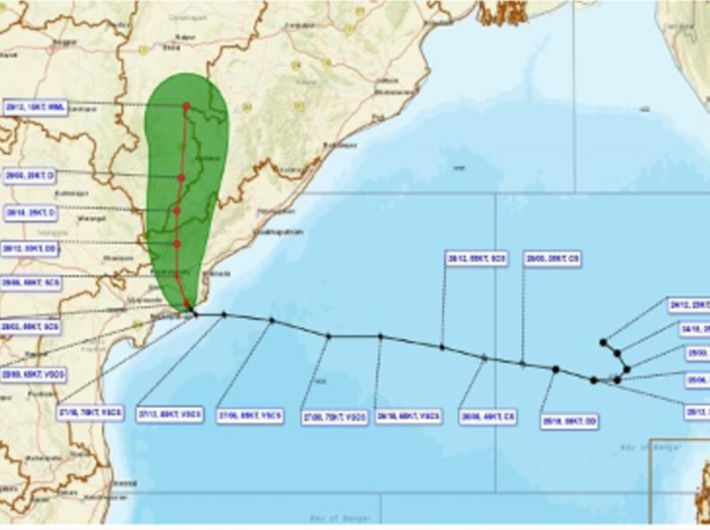
Cyclone Arnab made landfall along the Andhra Pradesh and Yanam coasts in the early hours of Wednesday as a very severe cyclonic storm, with maximum sustained wind speeds of 125–135 kmph and gusts reaching 150 kmph. Its rapid intensification has raised concerns about how warmer oceans, global warming and El Niño conditions may influence tropical cyclones and extreme rainfall.
According to the IMD, Arnab developed into a tropical depression on Saurday and strengthened into a cyclonic storm within 36 hours. By Monday, it had been upgraded to the ‘very severe’ category.
Warmer oceans fuel storm intensity
Meteorologists point to elevated sea surface temperatures and increased atmospheric moisture as factors that may have contributed to Arnab’s intensification.
“Warmer-than-normal sea surface temperatures and potential influence of El Nino conditions may have contributed to its intensity. While global warming does not cause El Niño, the background warming adds to the extra heat and intensifies the impacts of the extreme weather systems,” said Dr KJ Ramesh, former director general of the IMD.
India’s post-monsoon season is a major cyclone-forming period, with cyclogenesis typically peaking in December. Sea surface temperatures of around 27°C are generally favourable for cyclone formation, although atmospheric conditions and the depth of warm ocean water also influence storm development.
Akshay Deoras, research scientist at the National Centre for Atmospheric Science, University of Reading, UK, said conditions in the Bay of Bengal were highly favourable for cyclogenesis.
Warmer atmospheric conditions increase moisture availability, potentially intensifying rainfall. Deoras warned that these conditions could lead to more spells of intense rainfall associated with Cyclone Arnab.
Record ocean temperatures heighten concerns
The cyclone comes amid exceptionally warm global ocean conditions. According to figures cited in the report, global ocean surface temperatures averaged 1.10°C above the long-term average in September 2026, marking a fourth consecutive monthly record.
Elevated temperatures were recorded across the tropical Pacific, as well as parts of the Atlantic, Indian and Southern oceans. Data from the US National Oceanic and Atmospheric Administration indicated that sea surface temperatures in the central equatorial Pacific were around 30°C from October 22.
Oceans absorb approximately 93% of the excess heat trapped by the climate system. Warmer waters can provide additional energy and moisture to tropical cyclones, potentially increasing rainfall intensity and influencing storm structure. However, sea surface temperatures alone do not determine a cyclone’s strength.
Figures cited in the report suggest that 38% of North Indian Ocean cyclones underwent rapid intensification from 2000 onwards, compared with 22% in the north western Pacific. Rapid intensification presents a major forecasting challenge because storms can strengthen significantly within 24 hours.
Andhra Pradesh remains highly vulnerable
Andhra Pradesh faces recurring cyclone threats, particularly during October and November. According to IMD data cited in the report, 184 cyclones of all categories, including depressions, crossed the coast between 1891 and 2019.
State government figures indicate that approximately 2.9 million people are vulnerable to cyclones, while 3.3 million live within 5 km of the coastline. The state has experienced more than 60 cyclones since 1975, with storms, heavy rainfall and flooding repeatedly damaging infrastructure and disrupting livelihoods.
Dr Kirishna S Vatsa, member and head of department at the National Disaster Management Authority, said India had improved its ability to reduce cyclone-related deaths through timely forecasts and preparedness measures. However, economic losses remain a major concern.
“Cyclones, these days, are no longer limited to coastal hazards, as we can now see them impacting inner parts of the states as well. We need to keep investing in preparedness to curb economic losses,” he said.
El Nino and global warming reshape storm patterns
Global tropical cyclone activity was above average in September 2026, according to NOAA figures cited in the report. Nineteen tropical storms formed worldwide, nine reached tropical cyclone strength and six attained major tropical cyclone intensity.
The Eastern North Pacific recorded eight tropical storms during September, seven of which became hurricanes and five reached major hurricane status. Hurricane Polo rapidly intensified to Category 5 strength, becoming the basin’s second-most intense hurricane on record by pressure, behind Hurricane Patricia in 2015.
A World Weather Attribution report found that El Niño strongly influenced Hurricane Polo, although climate change had a greater estimated influence. The analysis suggested that the storm’s potential intensity under prevailing El Niño conditions was approximately 14 times more likely than under neutral conditions.
The report also found that comparable rainfall extremes had become about six times as likely and approximately 57% wetter in the study region, although substantial uncertainty remains around these estimates.
Preparedness must go beyond forecasting
Experts stress that reducing disaster losses requires climate-resilient infrastructure alongside effective forecasting and evacuation systems. Anjal Prakash, professor of public policy at FLAME University and an author with the Intergovernmental Panel on Climate Change, called for stronger electricity grids, flood-resilient roads, resilient housing, crop insurance and business continuity plans.
He highlighted the vulnerability of farmers, informal workers and small businesses, which often lack adequate insurance and recovery support. Infrastructure planning must also account for cascading risks, such as power outages and transport disruptions following cyclones.
As warmer oceans and climate variability influence storm patterns, Cyclone Arnab highlights the need for sustained investment in preparedness. For vulnerable coastal states, the priority is not only to save lives through timely warnings but also to protect infrastructure, livelihoods and communities from mounting economic losses.