
Dalal Street recovers from pandemic panic

India's fundamentals strong, global factors impacting stock market: CEA

geetanjali

Geetanjali Minhas | March 13, 2020 | Mumbai

#BSE   #stock market   #finance   #chief economic advisor   #Krishnamurthy Subramanian  


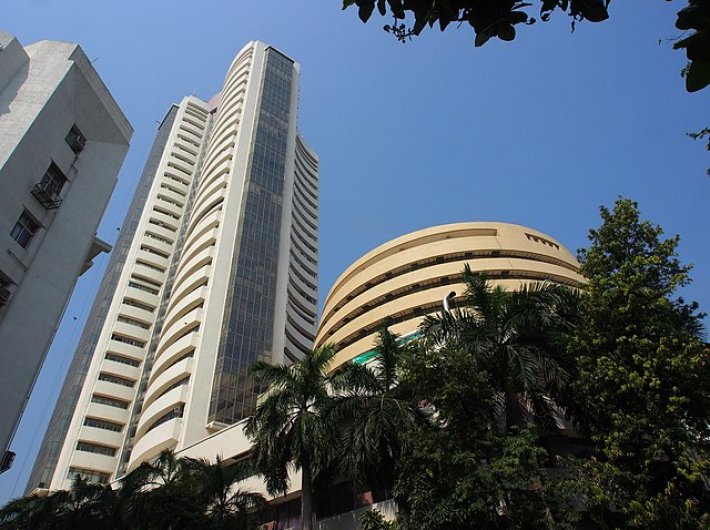
The stock markets in India, continuing the free fall of the past few days following the Covid-19 outbreak fears, plunged further Friday morning. The two leading indices, Senses and Nifty, both hit their lower limits in the early trade, forcing the trading to be halted for 45 minutes, though stocks recovered smartly later in the day.

Sensex closed comfortably at 34,314.74 (up by 1,536.60 over the previous close), and and Nifty closed at 10,023.65, up by 433.50 over the previous close.

Krishnamurthy Subramanian, chief economic advisor to the finance ministry, said that the fall in the stock market was below the global average and current developments in the market were related to global factors. He said that purchasing power in rural areas was going up, there was moderation in inflation and it could come down. The market reaction was not reflecting the economic fundamentals as India had adequate foreign reserves, he argued. 

In the pre-opening session, BSE Sensex fell by more than 3,000 points and Nifty hit the 10% lower circuit. Sensex tanked 2548.94 points to 30,229.20 in the opening session and Nifty opened below 9000 at a record low. NSE Nifty 50 hit the 10% lower circuit and plunged by 729.95 points to 8860.20. Sensex traded 1,860 or 5.68% lower at 31,095 and Nifty fell to 9,058 level, declining 531 points or 5.54%.

At 9.35 a.m. Nifty and Sensex had the largest fall since February 1, 2017 and April 24, 2017 respectively. Concurrently, Nifty Bank was the lowest since April 21, 2017; Nifty Midcap, lowest since June 24, 2016; and Nifty Smallcap was lowest since May 15, 2014.

With a volatile market and halt in trading, the market watchdog SEBI rushed in and held a meeting with exchange officials. However, the both indices have now sharply turned turning green soon.

After hitting a record low in the early trade the Indian rupee too recovered and was trading at 74.05 against the US dollar. The rupee touched a record low of 74.50 in the initial trade on worries over the coronavirus pandemic.

Gaurang Shah, Senior Vice President, Geojit Financial Services, said what happened today was an overreaction and the markets were not going to shut down nor the economy would go in reverse gear or GDP have negative numbers. “If you are a long-term investor, this is a good time to invest in the market and valuations look extremely attractive. I have been telling investors to buy frontline and large cap companies of specific sectors. The way we have corrected I would not be surprised to see a similar recovery in the market. For the short term, no one can say when the Coronavirus effect will subside or the numbers come down. It has already played havoc not only in India but the world over. Don’t trade for short and medium term, this type of volatility will stay,” he said.
 

Comments


Other News

New pathways for tourism growth

Traditionally, India’s tourism policy has been based on three main components: the number of visitors, building tourist attractions and providing facilities for tourists. Due to the increase in climate-related issues and environmental destruction that occurred over previous years, policymakers have b

Is the US a superpower anymore?

On April 8, hours after warning that “a whole civilisation will die tonight,” US president Donald Trump, exhibiting his unique style of retreating from high-voltage brinkmanship, announced that he agreed to a two-week ceasefire with Iran. The weekend talks in Islamabad have failed and the futur

Machines communicate, humans connect

There is a moment every event professional knows—the kind that arrives without warning, usually an hour before the curtain rises. Months of meticulous planning are in place. And then comes the call: “We’ll also need a projector. For the slides.”   No email

Why India is entering a ‘stagflation lite’ phase

India’s macroeconomic narrative is quietly shifting—from a rare “Goldilocks” equilibrium of stable growth and contained inflation to a more fragile phase where external shocks are beginning to dominate domestic policy outcomes. The numbers still look reassuring at first glance: GDP

Labour law in India: A decade of transition

The story of labour law in India is not just about laws and codes, but also about how the nation has continued to negotiate the position of the workforce within its economic framework. The implementation of the Labour Codes across the country in November 2025 marks a definitive endpoint in the process. Yet

Time for India to build genuine resilience in energy security

There is a strip of water barely 33 kilometres wide between Iran and Oman that connects the Persian Gulf to the rest of the world`s oceans. For most of India`s history, it was a distant geographic fact. Since late February, it has been a kitchen problem.   The Strait of Hormuz. T


Archives

Current Issue

Opinion

Facebook Twitter Google Plus Linkedin Subscribe Newsletter

Twitter






