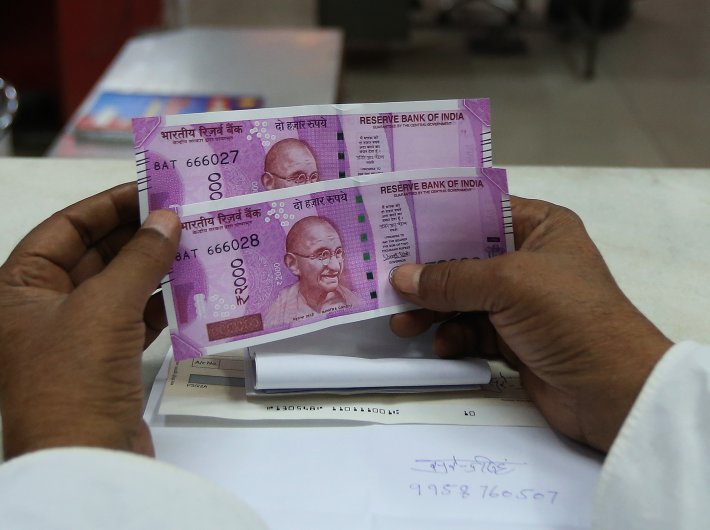
While you are in queue to get your cash replaced at banks and post-offices or awaiting your turn at ATMs, we present a quick reading list that might give you certain idea on demonetisation, black money and chosing the cashless path
Can you imagine a day without cash? The answer is an obvious ‘no’. The rustle of notes and jingle of coins still have the power to light up any face. In fact, more than 99 percent of transactions by volume are still in cash payments in India, according to a McKinsey Global Insights report. Some argue that this overdependence on physical money is due to challenges like inaccessible banking services, lack of infrastructure to support non-cash payment and internet connectivity, which continue to persist, especially in the rural and remote regions of India. Others say that Indians are simply cash-obsessed. But this obsession is costing a fortune to the economy. The Reserve Bank of India (RBI) and commercial banks annually spend Rs 21,000 crore ($3.5 billion) to print and circulate currency notes and coins, and to keep them safe. Citizens of Delhi alone spend Rs 9.1 crore – and 60 lakh hours – to withdraw and manage cash, according to a 2015 report by the Institute for Business in the Global Context.
Read the full story on Case against cash
If banning high denomination currency notes can curb black money, the whole problem would have been solved in 1978 – when the Morarji Desai government did it.Banning Rs 500 and Rs 1,000 notes will certainly bring out all the hoarded cash. But after the cleaning-up operation is over in December, there is simply no way to stop generation of fresh black money – with new Rs 500 and Rs 2,000 notes. In other words, the Modi government move is bold indeed, but do not expect the scourge to go down by even one percent from next year. For that, far bolder decisions are needed, which are yet to come – from this government or its predecessors. Here is a sampler of the possible and real surgical strikes:
Read here : Surgical strike? This was aspirin for cancer
Sahil got a shock when the bank employee told him that one of the 20 notes of Rs 500 he had brought to deposit was a counterfeit. He was also embarrassed – at being fooled as well as being possibly taken for a criminal. He first argued that he did not know, a common man like him could not be expected to cross-check all the security parameters (there are 14 of them, to be precise), and the bank should accept the note. The Safdarjung Enclave branch of Central Bank of India refused.Sahil was lucky, though. His father, who runs a small confectionery shop in Arjun Nagar of south Delhi, managed to catch the customer who had passed the dubious note on to him. Now was the customer’s turn to be shocked and embarrassed, but he changed the note.
Black money, since the colonial times, has been the elephant in the room: it is everywhere and yet rarely talked about. In recent years, however, the middle class has become more strident in demanding action and it has led to a couple of large-scale public agitations. In Narendra Modi’s election campaign too, recovering black money was a much-talked about promise. Closer to the mid-point of its term, the government has attempted to combat the underground economy with the Income Declaration Scheme (IDS), first announced in the budget 2016.
The first sneak peek we Indians got of what our dear high-denomination notes are doing when we are not looking. In a controversial sting operation, Tehelka magazine caught then BJP president Bangaru Laxman happily accepting a wad of cash – Rs 1 lakh in currency notes of Rs 100 only – from the journalist who posed as a defence-deal middleman. That was just for the “new year party”. For “party donation”, he promised Rs 5 lakh. But what will we do by banning Indian currency, when Laxman preferred to receive the promised amount in dollars?
Notes and coins returned from circulation are deposited at the offices of the Reserve Bank. The Reserve Bank then separates the notes that are fit for reissue and those which are not fit for reissue. The notes which are fit for reissue are sent back in circulation and those which are unfit for reissue are destroyed after processing shredded. The same is the case with coins. The coins withdrawn are sent to the Mints for melting.
Although I am not an expert on economy, I do understand that the latest step taken by the Narendra Modi-led NDA government has created a lot of noise and will play a significant role in combating black economy. This move, however, will alone not be enough. The demonetisation of Rs 500 and Rs 1,000 currency notes can certainly prove to be a game-changer and can affect the Indian economy. But will it actually prove to be a big blow to the black economy, only time will tell. Let us first understand what black economy is, how it affects our economy and what really can be done about it.
The Brisbane Exhibition and Convention Centre hosted a show recently entitled Delivering Global Economic Resilience. The introductory performer, Angel Gurria, is director general of Organisation for Economic Cooperation and Development (OECD). Countries are sovereign and can decide how much to tax their residents: some tax them less, so rich people and businesses go and set up headquarters in such tax havens, and avoid taxes in tax-hungry nations. That is inconvenient for governments that like to spend a lot on children, old people, armies, etc., – typically, governments of rich countries, whose trade union OECD happens to be. Their nationals change their residence, go and live in a tax haven like Switzerland or Ireland. That is very uncomfortable for expensive governments of rich countries
Anjali Thakur, a resident of Indirapuram, Ghaziabad is getting married on November 15. Her wedding preparations are on full swing. However, as the government has scrapped Rs 500 and Rs 1000 notes, it has become a challenge for her to complete tasks that have to be dealt in cash. “The timing of scrapping these notes is really bad. The wedding season has just started. I am getting married in 5 days, how am I supposed to go to the bank, stand in long queue for the whole day and then go for shopping? I don’t have time for all this. There is so much to do,” she says.