
Did demonetisation impact terrorism?

It seems to be business as usual for the naxals in Chhattisgarh as well as the terrorists in Kashmir

GN Bureau | November 23, 2017

#Terrorism   #Narendra Modi   #Demonetisation   #Terror Funding  
Representational image

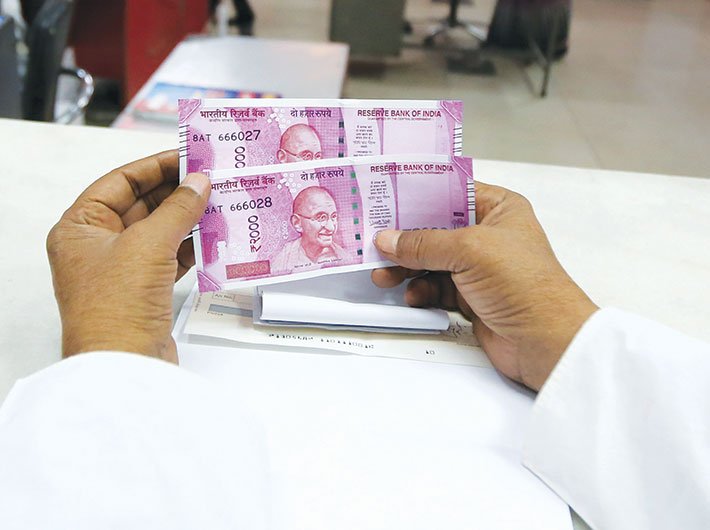
The government has repeatedly said that note ban has had a huge impact on terrorism. But, ground reports seem to indicate otherwise.

To effectively battle terrorism in Kashmir as well as in Chhattisgarh were cited among a string of reasons for banning Rs 500 and Rs 1000 currency notes on November 8, 2016.

Prime minister Narendra Modi said on December 28, 2016 that the demonetisation drive destroyed terrorism, drug mafia, human trafficking and the underworld in a trice.

Even union minister Arun Jaitley said in August that demonetisation left Maoists and separatists in Jammu and Kashmir “fund starved”, and it has greatly reduced the number of protesters taking part in stone-pelting in the border state.

“Stone-pelters used to gather in thousands on the streets of Kashmir before demonetisation was announced, but now not even 25 come together for such agitations. After demonetisation, separatists in Jammu and Kashmir and also Maoists in States like Chhattisgarh have become fund-starved,” said Jaitley.

However, documents found in Abhujmad in Chhattisgarh show that the naxals exchanged demonetised Rs 500 and Rs 1000 notes adding up to Rs 2 lakh.

D M Awasthi, special director general, anti-naxal operations, told The Indian Express that at least 20 pages of handwritten accounts, spanning several years, were recovered after an encounter in the jungles of Abhujmad. A postscript in the ‘balance sheet’, maintained by the Nelnar area janatana sarkar (“local government”), for 2017 states: “Note bandi ke dauran 2 lakh jama kiya manta (Deposited 2 lakh during note ban).”

Even in Kashmir, there have been a string of bank robberies, indicating that terrorist groups may be trying to improve their finances which were hit following the note ban. Stone pelting lately is clearly down, however sporadic terror attacks are still taking place. Demonetisation does not seem to have broken the back of terror groups and their financiers.

Minister of state for home affairs, Hansraj Gangaram Ahir, had however informed parliament that as per reports of agencies, the demonetisation of bank notes of Rs.500 and Rs.1000 denomination resulted in significant positive impact on most theatres of violence in the country.

“Since illegally held cash forms the major chunk of terrorist funding, after the demonetisation, most of the cash held with the terrorists turned worthless. Demonetisation also led to instant extinguishment of Pak-printed high quality fake Indian currency notes. It also adversely affected the hawala operators,” said the minister.


Comments


Other News

Why civilization is a precarious thing

The Decline of Hindu Civilization: Lessons from the Past By Shashi Ranjan Kumar Rupa Publications, 416 pages, Rs 995

End of an era: BJP poised to rule Mumbai after 25 years

The BJP-led Mahayuti alliance was set for a decisive victory in the Maharashtra municipal corporation elections, consolidating its dominance across Maharashtra’s urban landscape. As per the latest trends from the vote counting on Friday afternoon, the state`s ruling coalition was leading in 19 of the

Startup India initiative: A decade of building India’s innovation backbone

* With over 2 lakh DPIIT-recognised startups as of December 2025, India stands firmly as one of the world’s largest startup ecosystems. * A decade of Startup India has built a full-lifecycle support system spanning ideation, funding, mentorship, and scale-up. * Around 50% of DPIIT-r

How toll policies are redefining the highway journeys

With the phenomenal growth in National Highways, queues at toll plazas used to affect commuters. However, over the last decade, tolling has undergone a major technological transformation, bringing faster movement and significant ease for road users. Building on this progress, year 2025 saw further people-c

From vulnerabilities to empowerment: Building resilience for small and marginal farmers

India’s small and marginal farmers are at the centre of a paradox in agrarian economy. They are the backbone of the food economy, but they are the most vulnerable stakeholders within agricultural economy. Among the 126 million farmers in India today, nearly makes 86% operate on small and marginal hol

Concerns over Mumbai air pollution ahead of Marathon

Environmental organisation Awaaz Foundation has flagged serious concerns over deteriorating air quality in Mumbai and the potential health risks it poses to participants of the Tata Mumbai Marathon scheduled for January 18. It has urged civic and pollution control authorities to conduct advance air quality


Archives

Current Issue

Opinion

Facebook Twitter Google Plus Linkedin Subscribe Newsletter

Twitter






