
Here's how poll bound Punjab performs in primary education

Majority of schools had leaking roofs, broken doors and windows and damped walls

GN Bureau | October 6, 2016

#Punjab   #Right to Education   #RTE   #New Education Policy   #Education  
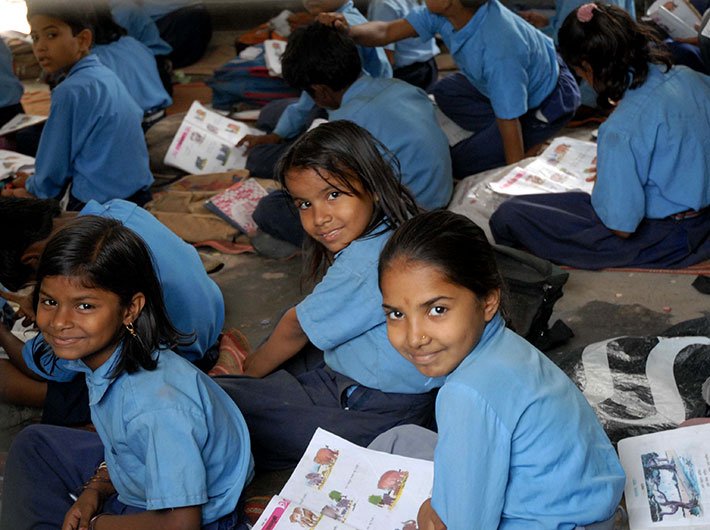
Picture for representational purpose only

Punjab, set for the assembly polls in 2017, presents a dismal picture of elementary education in its rural belt. A NITI Aayog sponsored study conducted by Guru Arjan Dev Institute of Development Studies highlights the following points:


  • Majority of rural schools were found without proper furniture for students. Only 6.96 percent schools had benches and 68.74 percent had desks for  their  children.


  • Many schools were without toilets, well-equipped, libraries, kitchen for mid-day meals, playgrounds.


  • 15.82 percent schools had only two class rooms for running classes up to class 5.


  • Apparently, these  schools manage with conducting combined classes or teach in open spaces even in extreme weather conditions.


  • 83.32 percent school buildings were quite old and were in dilapidated conditions and needed immediate repairs and renovations.


  • Even the newly built schools were found in bad shape due to lack of annual maintenance funds/grants.


  • Majority of schools had leaking roofs, broken doors and windows and damped walls.


  • Some schools were found to be managed by a single teacher.


  • Some schools did not have funds for purchasing benches, blackboards, chairs, desks etc. and to pay even electricity bills. There is no annual maintenance grant for buildings.


  • Some of the schools did not want to run mid-day meal scheme due to non-availability/delay of funds, lack of utensils, non-availability/shortage of food grains, lack of cooking utensils, lack of drums, bins etc.


  • Only 2.95 percent and 2.79 percent schools had Science and Computer labs, respectively.


  • Academic performance was also shocking. Average marks obtained by students up to class 5 (primary level) was merely 31 percent. Nearly one-fourth of the students were not able to open up their score/ accounts, that is, got zero marks.


  • In upper primary classes (classes 6 to 8), none of the students  got A, B or C Grades in the surprise test just before the final examinations. About 97 percent students received less than 35 percent marks.


See full report here

Comments


Other News

Wisdom stories that don’t preach but encourage reflection

The Foundation Of A Fulfilling Life: Lessons from Indian Scriptures Deepam Chatterjee Aleph Books, 264 pages, Rs 899  

Citizens of the Bay: Why BIMSTEC matters now

The international order is drifting into a dangerous grey zone as the very powers that built today`s multilateral system begin to chip away at it. The United States has increasingly walked away from global rules and forums when they no longer suit its interests, while China has rushed to fill the vacuum on

PM salutes armed forces on one year of Operation Sindoor

Prime minister Narendra Modi on Thursday saluted the courage, precision and resolve of the armed forces on the completion of one year of Operation Sindoor.   The PM said that the armed forces had given a fitting response to those who dared to attack innocent Indians at Pahalgam.&

Supreme Court judge strength to go up by four to 37

The strength of the Supreme Court is set to go up from 33 judges to 37 judges, paving the way for a more efficient and speedier justice. The Union Cabinet on Tuesday approved the proposal for introducing The Supreme Court (Number of Judges) Amendment Bill, 2026 in Parliament to amend The Sup

BJP set to capture West Bengal

The political map of the country is set to be redrawn with the BJP set to win the West Bengal assembly elections, apart from Assam and the union territory of Puducherry. In Kerala, meanwhile, the Congress-led UDF is set to regain power. The filmstar Vijay-led TVK has emerged as the front-runner in Tamil Na

Beyond LPG: Is PNG ready for India’s next cooking fuel transition?

India, the second-largest importer and consumer of LPG after China, faces growing pressure due to supply constraints. Most of India`s LPG imports transit through the Strait of Hormuz, a focal point of global turmoil. Given that LPG forms the backbone of household kitchens and the restaurant industry, any s


Archives

Current Issue

Opinion

Facebook Twitter Google Plus Linkedin Subscribe Newsletter

Twitter






