Over 32,000 job matches generated through India's first ward-level AI livelihood census
A first-of-its-kind AI-enabled skill census conducted in Mumbai's H-West Ward has identified a potential livelihood pipeline of nearly 22,000 candidates, generated over 32,000 provisional job matches while revealing that 71.2 per cent of surveyed homemakers are willing to join the workforce, according to the Impact Report of the Saksham Skill Census.
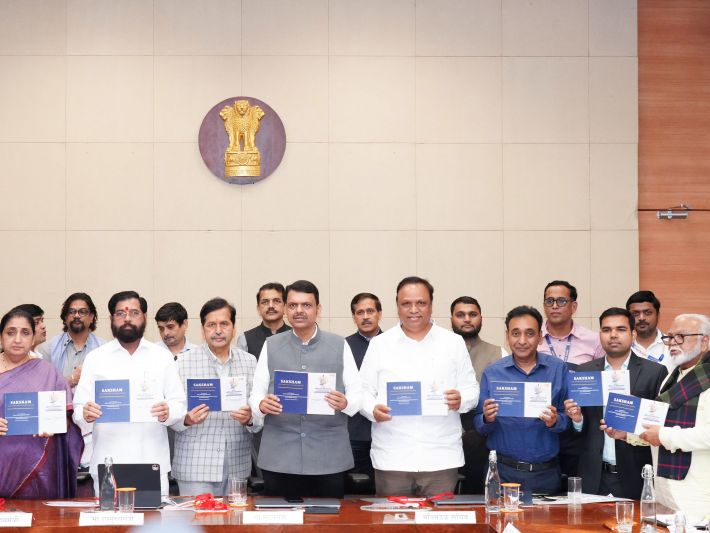
The census, conducted between March and July 2026 across Bandra West, Santacruz West and Khar West, covered 59,824 households, creating 44,982 individual candidate profiles, while engaging 1,018 employers and mapping 54 training institutions. Officials said the exercise has resulted in India's first ward-level, AI-enabled livelihood database. The report was unveiled by Maharashtra chief minister Devendra Fadnavis during the State Cabinet meeting at Mantralaya on Tuesday.
Among the most significant findings is the profiling of 6,891 women homemakers, first such exercise in the district's history. Of these, 71.2 per cent expressed a willingness to work, and the first batch of 100 women has already begun earning between Rs4,000 and Rs 10,000 per month through home-based digital gig work.
The census also brought more than 6,000 residents from previously underserved communities, including homemakers and Persons with Disabilities, into formal employment, skilling and self-employment pathways. The data has created opportunities for Recognition of Prior Learning (RPL), enabling informally skilled workers to access formal certification and employment opportunities.
Industry participation emerged as another major outcome of the exercise. A total of 1,018 employers from sectors including banking, information technology, healthcare, retail, hospitality, automotive and logistics participated in the census. Based on employer requirements, 1,690 candidates have already been shortlisted for interviews, with additional placements expected as recruitment drives continue.
The report also highlights a major certification gap, revealing that nearly 98 per cent of surveyed residents do not possess a formal skill certificate, significantly underscoring the need for large-scale RPL and industry-linked skilling initiatives.
According to the report, a single municipal ward has generated a livelihood database capable of supporting approximately 22,000 employment candidates-more than twenty times the Mumbai Suburban District's earlier annual skilling target of 800 to 1,000 candidates. The AI platform has already provisionally matched 32,185 candidate opportunities across 75 job roles in 16 industry sectors, creating one of the largest ward-level employment intelligence systems in the country.
“Saksham represents a transformational shift in the way governments understand livelihoods. Instead of planning based on estimates, we can now make decisions using verified household-level intelligence powered by Artificial Intelligence” said Mangal Prabhat Lodha, skill development minister, Maharashtra.
The Saksham Skill Census is an initiative of the Office of the District Collector, Mumbai Suburban, and the District Skill Development, Employment and Entrepreneurship Guidance Centre (DSDEEGC), government of Maharashtra. The project has been implemented by Sapio Analytica Pvt. Ltd., which developed the AI platform powering the census and continuous livelihood matching system.
The Saksham survey combines door-to-door enumeration with multilingual AI voice technology in Hindi, Marathi and English to continuously update citizen profiles, validate information and connect residents with jobs, training programmes, apprenticeships and government welfare schemes. Officials described the platform as a shift from traditional push-based employment outreach to a continuously operating, AI-driven livelihood intelligence ecosystem.
“We divided H West Ward into micro-territories, created a hyperlocal profile for each territory, conducted door-to-door surveys using latest technologies, used AI to derive hidden truths, and generated intelligence to create impact on ground” said Saurabh Katiyar, District Collector, Mumbai Suburban.
The model was presented at Northwestern University's DataFest in Chicago in April 2026 as a pioneering Sovereign Livelihood AI platform. Subsequently, a Letter of Intent was signed with CodecaX, led by former Standard Chartered Bank Chief Executive Michael DeNoma, to explore scaling the model internationally.
The project is supported academically by Ratan Tata Maharashtra State Skills University in partnerships with FICCI FLO, All India Association of Industries and World Trade Centre Mumbai and CSR tie-up with Kalarambh Foundation and Fusion Klassroom Edutech Ltd
Officials said the next phase of Saksham will include weekly ward-level job fairs, employer-led training programmes, linkage of eligible candidates with schemes such as PMEGP, Mudra and CMEGP, continuous updating of the AI-enabled database, and personalised career guidance reports for every registered candidate. They said the H-West Ward pilot provides a scalable model for building a district-wide and eventually statewide AI-driven livelihood ecosystem.