
How India can make cities better, liveable

New Delhi, Mumbai slip on Global Liveability Index

GN Bureau | September 5, 2019

#Environment   #Mumbai   #New Delhi   #Global Liveability Index   #governance   #Urban Development   #Air Pollution  
Photo: Arun Kumar
Photo: Arun Kumar

The rankings for Indian cities in the latest Global Liveability Index, prepared by the Economist Intelligence Unit (EIU), should not have come as a surprise to us: the two cities that feature in the listing, New Delhi and Mumbai, have slipped from their respective positions in the previous year’s index.

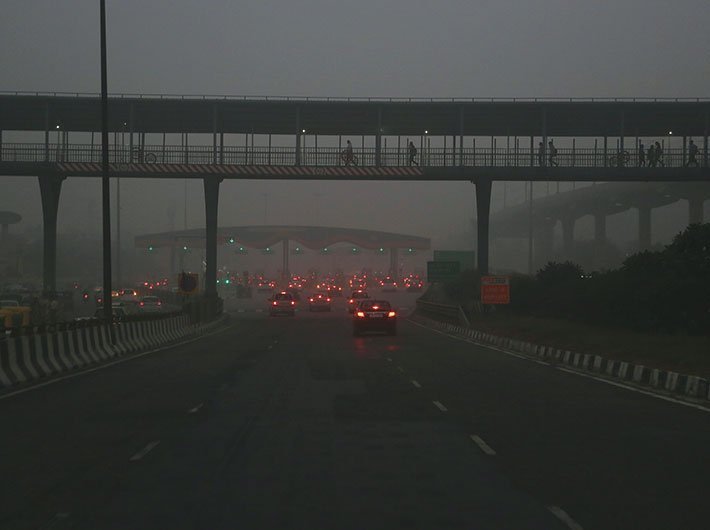
New Delhi now stands 118th, and Mumbai 119th, out of the 140 global cities in consideration. The capital fell six places and the ‘financial capital’ two places, with the overall index of 56.3 and 56.2 respectively. For Delhi, this was primarily due to environment (especially the air pollution) and ever-rising crimes.

“Several cities, such as New Delhi in India and Cairo in Egypt, received substantial downgrades on their scores owing to problems linked to climate change, such as poor air quality, undesirable average temperatures and inadequate water provision,” said the report accompanying the index, released Wednesday.

The annual survey ranks cities on a variety of parameters under the five broad categories: stability, healthcare, culture and environment, education, and infrastructure.

The top ten most liveable cities, for record, are:

1. Vienna, Austria
2. Melbourne, Australia
3. Sydney, Australia
4. Osaka, Japan
5. Calgary, Canada
6. Vancouver, Canada
7. Toronto, Canada
8. Tokyo, Japan
9. Copenhagen, Denmark
10. Adelaide, Australia

While India has made improving its rank on indices like the one for Ease of Doing Business, similar focus and enthusiastic backing is needed to improve life for urban citizens. Prime minister Narendra Modi, reiterating the promise made in the budget last year, said in this address to the nation on the Independence Day that the government would make efforts to improve Ease of Living. That indeed is the need of the hour.

Rising urbanisation due to population pressures and poverty meant that the cities have had scant resources, and thus less priority, for things that really matter – healthcare, culture and environment, education, and infrastructure, but air pollution and messy transport systems hurt all and hurt the poor more.

As India is urbanising at historically high rates, urban governance should be accorded top priority. City governments should be empowered to attend to areas of critical concern.

Comments


Other News

New pathways for tourism growth

Traditionally, India’s tourism policy has been based on three main components: the number of visitors, building tourist attractions and providing facilities for tourists. Due to the increase in climate-related issues and environmental destruction that occurred over previous years, policymakers have b

Is the US a superpower anymore?

On April 8, hours after warning that “a whole civilisation will die tonight,” US president Donald Trump, exhibiting his unique style of retreating from high-voltage brinkmanship, announced that he agreed to a two-week ceasefire with Iran. The weekend talks in Islamabad have failed and the futur

Machines communicate, humans connect

There is a moment every event professional knows—the kind that arrives without warning, usually an hour before the curtain rises. Months of meticulous planning are in place. And then comes the call: “We’ll also need a projector. For the slides.”   No email

Why India is entering a ‘stagflation lite’ phase

India’s macroeconomic narrative is quietly shifting—from a rare “Goldilocks” equilibrium of stable growth and contained inflation to a more fragile phase where external shocks are beginning to dominate domestic policy outcomes. The numbers still look reassuring at first glance: GDP

Labour law in India: A decade of transition

The story of labour law in India is not just about laws and codes, but also about how the nation has continued to negotiate the position of the workforce within its economic framework. The implementation of the Labour Codes across the country in November 2025 marks a definitive endpoint in the process. Yet

Time for India to build genuine resilience in energy security

There is a strip of water barely 33 kilometres wide between Iran and Oman that connects the Persian Gulf to the rest of the world`s oceans. For most of India`s history, it was a distant geographic fact. Since late February, it has been a kitchen problem.   The Strait of Hormuz. T


Archives

Current Issue

Opinion

Facebook Twitter Google Plus Linkedin Subscribe Newsletter

Twitter







