Caring for cancer patients: the expanded network of facilities

Under NP-NCD, 770 District NCD Clinics, 524 Day Care Cancer Centres and 6,410 NCD clinics at Community Health Centres have been set up across the country

GN Bureau | July 21, 2026

#Healthcare   #Health   #Cancer  
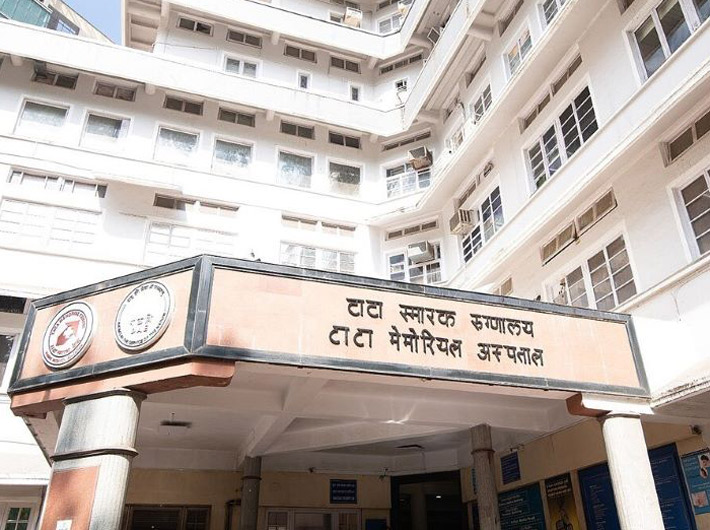
Tata Memorial Centre (TMC) has established six hospitals at Varanasi, Visakhapatnam, New Chandigarh, Guwahati, Sangrur and Muzaffarpur (Photo: Courtesy Wikimedia/Creative Commons)

Health is a State subject, and the primary responsibility for providing healthcare services, including cancer care, rests with the respective state governments. However, the Department of Health and Family Welfare provides technical and financial support to States and Union Territories across the country under the National Programme for Prevention and Control of Non-Communicable Diseases (NP-NCD) as part of the National Health Mission (NHM).

The programme focuses on strengthening infrastructure, human resource development, screening, early diagnosis, referral, treatment, and health promotion for Non-Communicable Diseases (NCDs). Under NP-NCD, 770 District NCD Clinics, 524 Day Care Cancer Centres (DCCCs) and 6,410 NCD clinics at Community Health Centres have been set up across the country.

The union minister of state for health and family welfare, Prataprao Jadhav, stated this in a written reply in the Rajya Sabha on Tuesday.
 
 
Under Ayushman Bharat–Pradhan Mantri Jan Arogya Yojana (AB-PMJAY), eligible beneficiary families are provided health coverage of ₹5 lakh per family per year for secondary and tertiary care hospitalization. The scheme covers cashless treatment for 1,961 procedures across 27 medical specialties, including Medical Oncology, Surgical Oncology and Radiation Oncology, through empanelled public and private hospitals. States/UTs also have the flexibility to customize the Health Benefit Packages to address local healthcare needs.
 
To reduce waiting periods for cancer diagnosis and treatment, population-based screening for common non-communicable diseases, including oral, breast and cervical cancers, is being undertaken under the National Health Mission (NHM) for individuals aged 30 years and above through Ayushman Arogya Mandirs by trained frontline health workers (ASHAs and ANMs). This facilitates early detection and timely referral, thereby reducing delays in diagnosis and initiation of treatment. Further, DCCCs are being established in District Hospitals under a hub-and-spoke model to decentralize cancer care and facilitate timely access to chemotherapy and other day-care oncology services.
 
Under the Strengthening of Tertiary Care Cancer Facilities Scheme, 19 State Cancer Institutes (SCIs) and 20 Tertiary Care Cancer Centres (TCCCs) have been approved across the country to strengthen tertiary cancer care. Further, Tata Memorial Centre (TMC) has established six hospitals at Varanasi, Visakhapatnam, New Chandigarh, Guwahati, Sangrur and Muzaffarpur to provide comprehensive cancer care. Cancer treatment services, including diagnostic, medical and surgical facilities, have also been extended to all 22 new AIIMS. In addition, the National Cancer Institute (NCI), Jhajjar and the second campus of Chittaranjan National Cancer Institute (CNCI), Kolkata provide advanced diagnostic and treatment facilities.

Comments


Other News

Maharashtra FDA cracks down on `health supplements`; seizes stock worth Rs 1.39 cr

The Maharashtra Food and Drug Administration (FDA) has issued a comprehensive state wide compliance order tightening regulations governing health supplements, nutraceuticals, sports nutrition products and foods for special dietary and medical purposes. The order, issued by Commissioner of Food Safety, Tu

States face rising fiscal pressure as spending outpaces revenue

States across India are facing increasing fiscal pressures, with revenue expenditure growing faster than revenue receipts since 2022-23, largely driven by rising subsidies and transfers, according to the annual ‘State of State Finances 2026-27’ report released by PRS Legislative Research.

Global value chains and sustainability

When a country’s factories become part of global supply chains, making parts or products that feed into goods sold around the world, the economy usually looks stronger. Output rises, exports grow, and technology improves. But the research behind this article [Bhayana and Nag, 2026] asks a harder qu

Narrative sovereignty in the digital age

In today’s world, competition between countries is not limited to military strength or economic power. It also takes place through the stories countries tell about themselves and the way others describe them. Social media and digital platforms have made this competition faster and more visible. Whe

The hidden cost of voter-ID link with welfare

On October 30, panchayati raj minister Rajiv Ranjan Singh, better known as Lalan Singh, told a national workshop in Delhi that Aadhaar would no longer be the basis for government schemes. His argument seemed simple enough. Aadhaar centres are now in every locality, and anyone can get a card made for anyb

The silent epidemic in the Northeast

In Mizoram, more than nine in ten people can read. Anyone there can find out how HIV spreads and how to protect themselves. Yet Mizoram has the highest rates of HIV patients in the country. If education were enough, this would’ve been solved long ago, but it was not. The answer tells us something a


Upcoming Conferences


-->

Archives

Current Issue

Opinion

Facebook Twitter Google Plus Linkedin Subscribe Newsletter

Twitter