
Inflation hits people, prices of pulses go sky high

The government though announced measures to curb price rise, it still hasn’t learned from the past

GN Bureau | June 17, 2016

#Inflation   #price rise   #pulses   #tomatoes   #governance  


That time of the year has come again when basic commodities try to shrug off their ‘basic’ tag. Providing sudden unrest to the public’s budget, this trend is invariably seen every year, and so has it now as prices of pulses reach triple figures. 

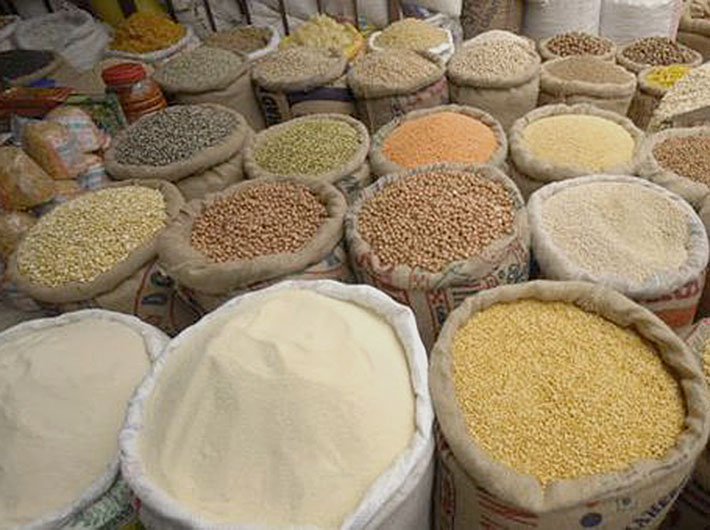
Pinching people’s pockets, the prices of pulses have jumped to as much as Rs 200 per kg. In this category, urad dal is selling at Rs 190-200 per kg while the price of chana dal is touching Rs 100 per kg, and so is masur dal. Moong dal is selling at Rs 125 per kg while tur dal costs Rs 150-160 per kg.
Meanwhile, tomatoes have already been selling anywhere between Rs 50 and Rs 100 per kg for the past few days.

The finance minister Arun Jaitley has held a meeting with ministries of food and agriculture and decided to enhance the buffer stock of pulses from 1.5 lakh tonne to 8 lakh tonne. A number of other meetings among consumer affairs ministry, income tax department, enforcement directorate and intelligence bureau and various state governments, have also been held to address the issue.

Everyone has been assigned specific roles: the enforcement agencies to check hoarding, state governments to sell pulses at subsidised rates from the buffer stock and put a cap on prices, Sebi to suspend trading in chana.

In preventive measures, the Centre has decided to impose 20 percent export duty on sugar and 25 percent on wheat. The government has also approved import of pulses and lentils. Teams would also be visiting Mayanmar and Mozambique for long-term pulses contract. 

While hoarding and middlemen usually remain the main causes of price rise, drought too has affected supplies this year. 

But a lot could have been averted had the government taken these measures much earlier. Similar was the case with drought management; it was only when the situation went out of hands that the governments started scuttering around. For now, the government would need to act swiftly to bring prices under control.

Read our last year's ground report and analysis
 

Comments


Other News

Not just politics, let`s discuss policies too

Why public policy matters Most days, India`s loudest debates stop at the ballot box. We can name every major leader and recall every campaign slogan. Still, far fewer of us can explain why a widow`s pension is delayed or how a government school`s budget is actually approved. That

When algorithms decide and children die

The images have not left me, of dead and wounded children being carried in the arms of the medics and relatives to the ambulances and hospitals. On February 28, at the start of Operation Epic Fury, cruise missiles struck the Shajareh Tayyebeh school – officially named a girls’ school, in Minab,

The economics of representation: Why women in power matter

India’s democracy has grown in scale, but not quite in balance. Women today are active participants in elections, influencing outcomes in ways that were not as visible earlier. Yet their presence in legislative institutions continues to lag behind. The Nari Shakti Vandan Adhiniyam was meant to addres

India will be powerful, not aggressive: Bhaiyyaji

India is poised to emerge as a global power but will remain rooted in its civilisational ethos of non-aggression and harmony, former RSS General Secretary Suresh `Bhaiyyaji` Joshi has said.   He was speaking at the launch of “Rashtrabhav,” a book by Ravindra Sathe

AI: Code, Control, Conquer

India today stands at a critical juncture in the area of artificial intelligence. While the country is among the fastest adopters of AI in the world, it remains heavily reliant on technologies developed elsewhere. This paradox, experts warn, cannot persist if India seeks technological sovereignty.

RBI pauses to assess inflation risks, policy transmission

The Reserve Bank of India (RBI) has begun the new fiscal year with a calibrated pause, keeping the repo rate unchanged at 5.25 per cent in its April Monetary Policy Committee (MPC) meeting. The decision, taken unanimously, reflects a shift from aggressive policy action to cautious observation after a signi


Archives

Current Issue

Opinion

Facebook Twitter Google Plus Linkedin Subscribe Newsletter

Twitter







