
Key takeaways from the Indo-US military logistics agreement

The pact is seen as a major step for both the countries to counter the growing maritime assertiveness of China

GN Bureau | August 30, 2016

#Ashton Carter   #Manohar Parrikar   #China   #agreement   #logistics   #military   #US   #India  
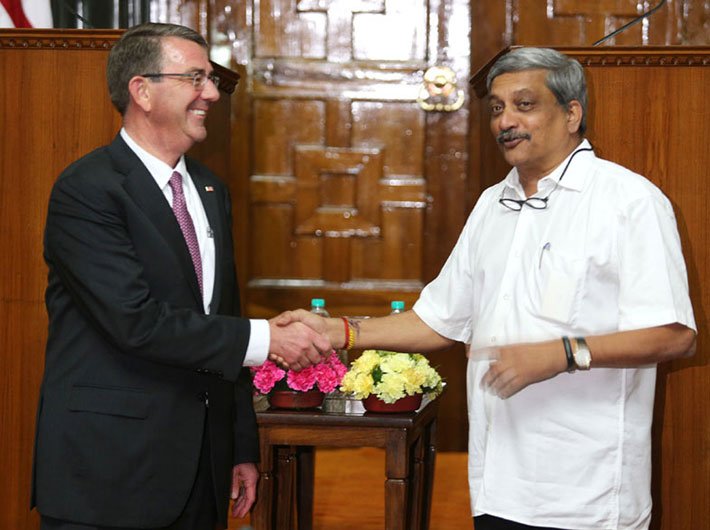
US secretary of defence Ashton Carter with Indian defence minister Manohar Parrikar, in New Delhi in April 2016

India and the US have signed the Logistics Exchange Memorandum of Agreement (LEMOA), which establishes basic terms, conditions, and procedures for reciprocal provision of logistic support, supplies, and services between the armed forces of India and the United States.

The agreement was signed by defence minister Manohar Parrikar and US secretary for defence Ashton Carter, during the former’s three-day visit to the US. The pact will enable the two countries to share military assets and bases and work together on the maintenance of supplies.
 
Key pointers
 
  • The agreement was signed ‘in-principle’ in April this year.
  • The deal aims to enhance the operational capacity of the Indian armed forces, including their response to humanitarian crises or disaster relief.
  • As per the agreement, now American aircraft and warships will be able to access Indian military bases and vice versa for refuelling, repair and other logistical purposes.
  • The pact aims to promote trade opportunities and innovative technologies to the US and Indian militaries.
  • The pact is seen as a major step for both the countries to counter the growing maritime assertiveness of China.
  • The UPA regime, earlier, had opposed signing of LEMOA and two other agreements. Then defence minister A K Antony, was not in favour of signing three foundational pacts with the US: Logistics Support Agreement (LSA or LEMOA), Communication Interoperability and Security Memorandum Agreement (CISMOA) and the Basic Exchange and Cooperation Agreement for Geo-Spatial Cooperation (BECA).
  • The UPA, Left and others were concerned that the LEMOA pact would lead to the establishment of American bases in India. However, allaying these fears, a statement by the Indian government says, “The agreement does not create any obligations on either party to carry out any joint activity. It does not provide for the establishment of any bases or basing arrangements.”
  • Parrikar is currently in the US for a sixth meeting with Carter in a year.
  • The pact aims to provide logistic support, supplies, and services from one party to the other in return for either cash payment or the reciprocal provision of logistic support, supplies, and services.

Comments


Other News

An ode to the cradle of humankind

The Alphabets of Africa: Poems By Abhay K. Vintage Classics, 280 pages, ₹499.00   Abhay K

Ahmedabad district railway network to be expanded

The Cabinet Committee on Economic Affairs, chaired by prime minister Narendra Modi, on Wednesday approved the Ahmedabad (Sarkhej) – Dholera Semi High-Speed Double Line project of Ministry of Railways with total cost of Rs. 20,667 crore (approx.). It will be Indian Railways 1st semi high-speed project

Indian Ocean more contested than ever: Western Naval Command Chief

The Indian Ocean is becoming increasingly contested and strategically significant as the Indo-Pacific emerges as the defining geopolitical theatre of the 21st century, Vice Admiral Krishna Swaminathan, Flag Officer Commanding-in-Chief of the Western Naval Command, has said.   Spe

Why the judiciary needs much more than four more judges

India has a particular form of governance theatre: the bold declaration that appears to be action but is actually a way of avoiding action. The Union Cabinet on May 5 approved a Bill to increase the sanctioned strength of the Supreme Court from 34 to 38. The decision has been touted as a step toward judici

Wisdom stories that don’t preach but encourage reflection

The Foundation Of A Fulfilling Life: Lessons from Indian Scriptures Deepam Chatterjee Aleph Books, 264 pages, Rs 899  

Citizens of the Bay: Why BIMSTEC matters now

The international order is drifting into a dangerous grey zone as the very powers that built today`s multilateral system begin to chip away at it. The United States has increasingly walked away from global rules and forums when they no longer suit its interests, while China has rushed to fill the vacuum on


Archives

Current Issue

Opinion

Facebook Twitter Google Plus Linkedin Subscribe Newsletter

Twitter







