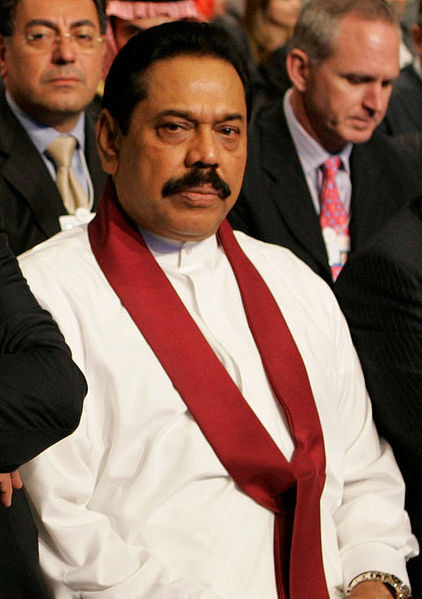
Rajapaksa’s presence during the swearing-in will affect the relationship between BJP and AIADMK. It will be interesting to see how Narendra Modi handles this issue.
The centre-state relations in India have always been a topic of debate: whether it is the FDI in retail, Goods and Services Tax, Teesta treaty with Bangladesh or the creation of the National Centre for Counter Terrorism, the states have often blamed the centre with encroaching on their powers.
Among all Indian states, Tamil Nadu, especially, had a turbulent relationship with the centre all through the decades after independence. While the DMK, a part of most coalition governments at the centre, has been somewhat subtle in its differences, the AIADMK has been at loggerheads with the union government all along, except in 1998 (when it was part of the Vajpayee-led government).
And when it comes to Sri Lanka – or, more precisely, the plight of Tamilians there in the last few years – even though it may have genuine sympathisers in the state, political parties leave no opportunity to exploit the issue to their advantage.
With the BJP deciding to invite the Sri Lankan president Mahinda Rajapaksa (among other heads of the SAARC countries) for the swearing-in ceremony of PM-elect Narendra Modi, the issue has once again come as a handy tool for political parties in Tamil Nadu.
Even though BJP’s decision has caused resentment among its allies in southern state, Chennai-based political commentator Gnani Sankaran says there was nothing unexpected about the invitation: BJP’s alliance with parties in the state was temporary and based on opportunism. Since BJP, now riding on a huge majority, doesn’t have much to lose in the state, it can ignore the concerns of the regional players.
Human rights activist Thirumurugan Gandhi says, “If the BJP takes such a stand we have to retaliate. We strongly oppose the stand.” BJP knows well that the Sri Lankan issue played an important role in wiping out Congress and DMK from the state. “Keeping cordial relations with neighbouring countries is fine but, unlike other countries, Sri Lanka has committed genocide,” Gandhi says. “India is a federal country. So interests of other states must also be taken into account. Moreover, regional interest is national interest. Why to separate the two?”
V Prabhakaran, a student activist and the chief coordinator of Tamil Youths and Students Federation, says not a single representative should come from Sri Lanka to India, let alone Rajapaksa. Prabhakaran warns that “if Rajapaksa comes to India, we will throw out the BJP from Tamil Nadu. All the BJP party offices in the state will be seized.”
Ajit Menon, who teaches at Madras Institute of Development Studies, says “Modi's position is that this is only a swearing-in ceremony and hence he has invited all SAARC leaders. However, I feel it is naive to think that one can totally separate regional issues (sentiments) from foreign policy especially in this case.”
Earlier this year, the UN passed a resolution, asking for an investigation into the human rights violations during the civil war in Sri Lanka in 2009 and recommending that the UN High Commissioner for Human Rights be in charge. India was one of 12 countries that abstained from voting.
“Even if foreign policy compulsions outweigh regional sentiments, Modi should at least use the opportunity now to take a stand and support the earlier resolution,” Menon says. “One should also remember that change in South Africa came, among other reasons, because of international boycotts of the apartheid state. Though the Sri Lankan situation is different, international pressure remains important.”
The AIADMK, DMK, MDMK and other parties have expressed their unhappiness with Modi as it suggests he is being blind to the genocide at the end of the war allegedly committed by the Rajapaksa government. “My guess is that Jayalalitha will not attend though she is close to Modi. Vaiko, though an ally of Modi, is also unlikely to attend,” Menon says.
“I am not sure whether it is an important electoral issue, given that most parties take broadly similar positions on the issue,” Menon adds. In the popular imagination, Sri Lanka remains a pariah state and many issues including the Palk Bay fisheries conflict are reduced to that of Tamil vs. Sinhalese state. “This ignores the fact that Indian trawlers from Tamil Nadu, by fishing in Sri Lankan waters, have had a detrimental impact on Sri Lankan Tamil fishers from the Northern Province. These issues are currently being debated in negotiations between the two countries and sets of fishers.”
Rajapaksa’s presence during the swearing-in will certainly affect the relationship between the new government and Jayalalithaa. It will be very interesting to see how Narendra Modi handles this issue.