
New civil aviation policy to make flying affordable and increase air connectivity

The new policy envisages a fare cap of Rs 2,500 on hour-long flights

GN Bureau | June 16, 2016

#Ashok Gajapathi Raju   #Civil aviation policy  
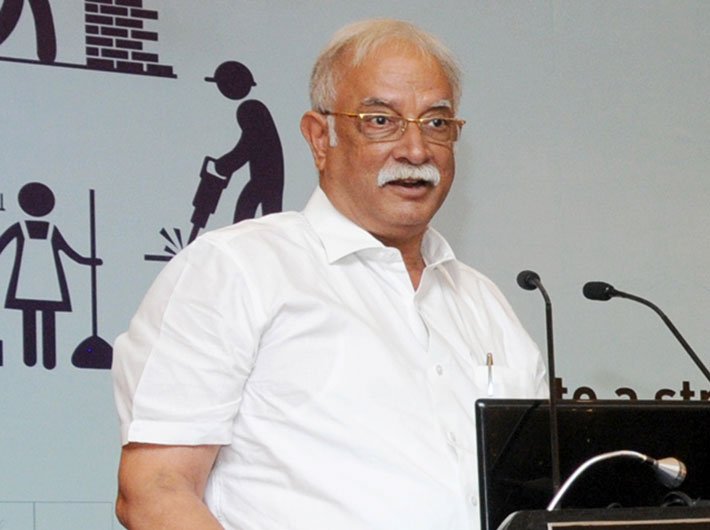
Ashok Gajapathi Raju, civil aviation minister

The union cabinet has approved the new National Civil Aviation Policy 2016 that aims to make flying more affordable and increase air connectivity. Hailing the new policy as a “game changer”, civil aviation minister Ashok Gajapathi Raju said that the country’s aviation sector is poised to become the world’s third largest by 2022.

The NDA government unveiled the draft of the policy in November 2014 and replaced it with another draft in October 2015.

Here are the key highlights of the new policy:

  • The 2004 norm of ‘5/20 rule’ has been scrapped. As per the 5/20 rule, a carrier which has completed five years of domestic operations and had a fleet of 20 aircraft was eligible to fly abroad. But now an airline can commence international operations after operating at least 20 aircraft or 20 percent of their total flying capacity, whichever is higher, on domestic routes. This means, new airlines like Air Asia and Vistara, which began operations in 2014 and 2015 respectively, can fly international.
  •  An open skies policy would be implemented on a reciprocal basis for SAARC countries and countries beyond 5,000 km from Delhi. It means that airlines from such countries will have no restriction on flights to India, and Indian carriers can have as many flights as they want to such countries.
  • To make flying more affordable in tier II and III cities, the policy proposes a regional connectivity scheme. Under this scheme, passengers would be charged Rs 2,500 for an hour’s flight and Rs 1,200 for a 30-minute flight on regional routes. The government would provide financial support to fund airlines’ losses on such un-served routes. It will refund 80 percent of the losses incurred by airlines due to cap on fare on such routes.
  •  To fund the subsidy element, government would be imposing a two percent cess on domestic and international air travel, which is likely to make airfares costlier on longer routes.
  • Around 350 dilapidated or underused airstrips across India have been identified which would be developed into "no frills airports". Revival of such airports would take place at an indicative cost of Rs 50-100 crore.
  • No air traffic control (ATC) approval would be required for helicopters flying below 5,000 feet.
  • Maintenance repair and overhaul (MRO) would now not have to pay royalty to airports where they operate.

Comments


Other News

A 19th-century pilgrim’s progress

The Travels of a Sadhu in the Himalayas By Jaladhar Sen (Translated by Somdatta Mandal) Speaking Tiger Books, 259 pages, ₹499.00  

India faces critical shortage of skin donors amid rising burn cases

India reports nearly 70 lakh burn injury cases every year, resulting in approximately 1.4 lakh deaths annually. Experts estimate that up to 50% of these lives could be saved with adequate access to skin donations.   A significant concern is that around 70% of burn victims fall wi

Not just politics, let`s discuss policies too

Why public policy matters Most days, India`s loudest debates stop at the ballot box. We can name every major leader and recall every campaign slogan. Still, far fewer of us can explain why a widow`s pension is delayed or how a government school`s budget is actually approved. That

When algorithms decide and children die

The images have not left me, of dead and wounded children being carried in the arms of the medics and relatives to the ambulances and hospitals. On February 28, at the start of Operation Epic Fury, cruise missiles struck the Shajareh Tayyebeh school – officially named a girls’ school, in Minab,

The economics of representation: Why women in power matter

India’s democracy has grown in scale, but not quite in balance. Women today are active participants in elections, influencing outcomes in ways that were not as visible earlier. Yet their presence in legislative institutions continues to lag behind. The Nari Shakti Vandan Adhiniyam was meant to addres

India will be powerful, not aggressive: Bhaiyyaji

India is poised to emerge as a global power but will remain rooted in its civilisational ethos of non-aggression and harmony, former RSS General Secretary Suresh `Bhaiyyaji` Joshi has said.   He was speaking at the launch of “Rashtrabhav,” a book by Ravindra Sathe


Archives

Current Issue

Opinion

Facebook Twitter Google Plus Linkedin Subscribe Newsletter

Twitter







