
No pan masala, gutkha in Delhi for a year

All forms of chewable tobacco products are now banned in the national capital

GN Bureau | April 15, 2016

#AAP   #Delhi   #Tobacco ban   #Tobacco   #Arvind Kejriwal  


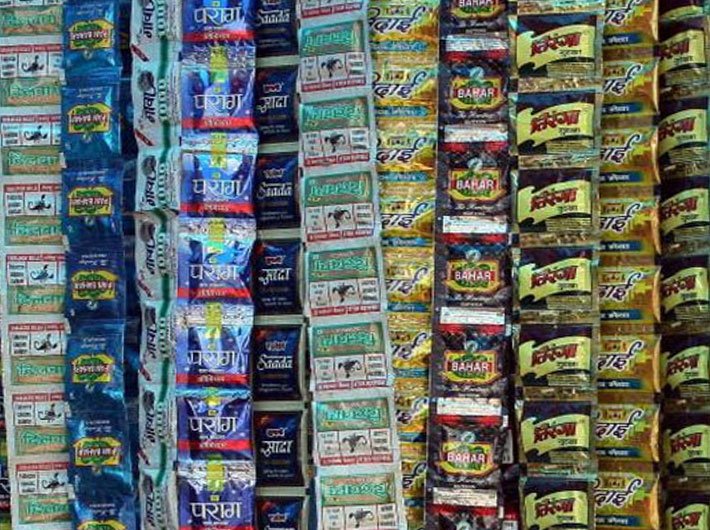
The Delhi government has banned all forms of chewable tobacco, including gutkha, pan masala, khaini and zarda.

The sale, purchase and storage of all forms of chewable tobacco have been banned for a year. This also includes the unpackaged chewable tobacco.

The Delhi government had issued a notification in September 2012 for a ban on 'gutkha' in the city in pursuance of a series of directions from the supreme court. The notification was about only ‘gutkha’. Tobacco retailers had started selling the components of 'gutkha' (betel nut and raw tobacco) in separate pouches, thus defeating the purpose behind the ban. That is why the health department came up with a new proposal for banning all raw chewable tobacco products in Delhi.
 
Delhi is following the footsteps of many other states which have banned the consumption of all forms smokeless tobacco. Assam was the first state to ban smokeless tobacco, including pan masala containing tobacco and nicotine in 2013. Though several states had imposed similar bans under the food safety regulation, Assam was the first one to impose the ban through legislature. The act, thus formed, also banned the manufacturing, advertisement, trade, storage, distribution and sale of smokeless tobacco in the state.

Noticeably, smokeless tobacco accounts for 90 percent of oral cancers. The Maharashtra government strengthened its battle against tobacco consumption by banning the manufacture, storage, and sale of all forms of chewing tobacco in the state in July 2015, for three years.

The ban was also extended to all additives of chewing tobacco, including kharra and mawa.

 A study by Johns Hopkins Bloomberg School of Public Health's Institute of Global Tobacco Control, WHO country officer for India and Centre for Communication and Change-India (CCC-I), in October 2015 shows that 92 percent of people surveyed in Maharashtra, Assam, Bihar, Gujarat, Karnataka, Madhya Pradesh and Odisha, supported the ban on tobacco products.
 

Comments


Other News

New pathways for tourism growth

Traditionally, India’s tourism policy has been based on three main components: the number of visitors, building tourist attractions and providing facilities for tourists. Due to the increase in climate-related issues and environmental destruction that occurred over previous years, policymakers have b

Is the US a superpower anymore?

On April 8, hours after warning that “a whole civilisation will die tonight,” US president Donald Trump, exhibiting his unique style of retreating from high-voltage brinkmanship, announced that he agreed to a two-week ceasefire with Iran. The weekend talks in Islamabad have failed and the futur

Machines communicate, humans connect

There is a moment every event professional knows—the kind that arrives without warning, usually an hour before the curtain rises. Months of meticulous planning are in place. And then comes the call: “We’ll also need a projector. For the slides.”   No email

Why India is entering a ‘stagflation lite’ phase

India’s macroeconomic narrative is quietly shifting—from a rare “Goldilocks” equilibrium of stable growth and contained inflation to a more fragile phase where external shocks are beginning to dominate domestic policy outcomes. The numbers still look reassuring at first glance: GDP

Labour law in India: A decade of transition

The story of labour law in India is not just about laws and codes, but also about how the nation has continued to negotiate the position of the workforce within its economic framework. The implementation of the Labour Codes across the country in November 2025 marks a definitive endpoint in the process. Yet

Time for India to build genuine resilience in energy security

There is a strip of water barely 33 kilometres wide between Iran and Oman that connects the Persian Gulf to the rest of the world`s oceans. For most of India`s history, it was a distant geographic fact. Since late February, it has been a kitchen problem.   The Strait of Hormuz. T


Archives

Current Issue

Opinion

Facebook Twitter Google Plus Linkedin Subscribe Newsletter

Twitter







