
Norwegian Embassy goes green

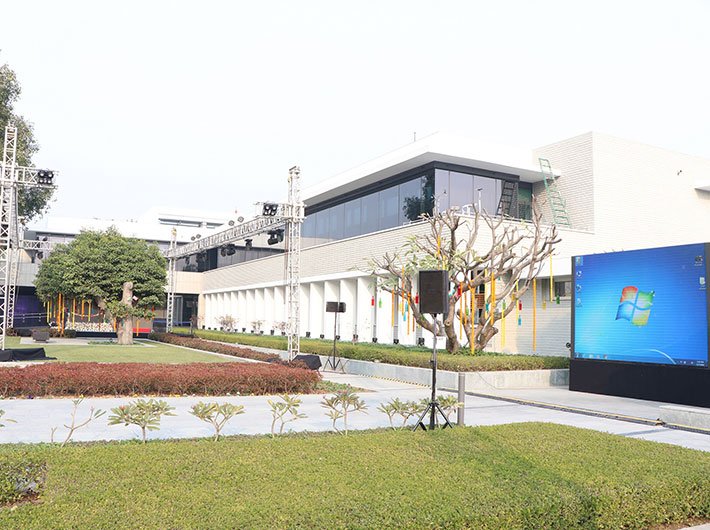
Calling itself as Delhi’s first green embassy, the prime minister of Norway Erna Solberg inaugurated the compound which has been equipped with eco-friendly technologies

GN Bureau | January 8, 2019

#air quality   #Delhi pollution   #embassy of Norway   #Erna Solberg   #green building  


As national capital chokes for clean air, the embassy of Norway has gone green by cutting down on its carbon emission and building a greener workplace for its employees.

 
Calling itself as Delhi’s first green embassy, the prime minister of Norway Erna Solberg on January 7 inaugurated the compound which has been equipped with eco-friendly technologies. The premise has also been awarded with the green rating for integrated habitat tag by the government of India. Till date, only two percent of the building across the country has secured this tag.
 
According to the embassy, the sewage treatment plant (STP) is built within the embassy premises, which will recycle the water that would be used for watering plants. Moreover, it is estimated that rainwater would save approximately one lakh litre of water annually, especially during rainy season.
 
“Ensuring sustainable water management and energy efficiency have been a major concern. The new compound is constructed with wells for rainwater harvesting. Geothermal wells are used for cooling by circulating water in 30 wells sunk 100 meters into the earth. Water is heated using solar panels, which produce 200kWh energy per day. This is equivalent to powering a 40w bulb for almost 7 months or a 3W LED for around 7, 5 years,” reads the official statement issued by the embassy.
 
Total 90 solar plates have been installed in the embassy which is expected to produce 200kw energy per day. “It has been an exciting challenge, not just architectural design, but the whole construction process,” says Terje Gronmo, Norwegian architect. “We have halved the intake of electricity from the New Delhi Municipal Corporation (NDMC),” says an official adding, “although we have increased the embassy area three times, we’re conserving the energy.”
 
“The structure of the building is adapted to the local climate and environmental concerns. 95 percent of the building material used in the construction was purchased from the local market. The handling of materials and the preservation of green areas have also been important, including the environmental concerns for the trees. Trees, probably more than 60 years old, have been shifted, allowing for conservation of as much of the green space as possible,” the official statement says.
 
 “The inauguration today marks the beginning of a new era of cooperation between our two countries. As a green embassy, I hope it can serve as an inspiration for our shared efforts to achieve the green transition and the Sustainable Development Goals. I look forward to seeing our partnership bear more fruits, in business, politics and development,” says Solberg.


Comments


Other News

Not just politics, let`s discuss policies too

Why public policy matters Most days, India`s loudest debates stop at the ballot box. We can name every major leader and recall every campaign slogan. Still, far fewer of us can explain why a widow`s pension is delayed or how a government school`s budget is actually approved. That

When algorithms decide and children die

The images have not left me, of dead and wounded children being carried in the arms of the medics and relatives to the ambulances and hospitals. On February 28, at the start of Operation Epic Fury, cruise missiles struck the Shajareh Tayyebeh school – officially named a girls’ school, in Minab,

The economics of representation: Why women in power matter

India’s democracy has grown in scale, but not quite in balance. Women today are active participants in elections, influencing outcomes in ways that were not as visible earlier. Yet their presence in legislative institutions continues to lag behind. The Nari Shakti Vandan Adhiniyam was meant to addres

India will be powerful, not aggressive: Bhaiyyaji

India is poised to emerge as a global power but will remain rooted in its civilisational ethos of non-aggression and harmony, former RSS General Secretary Suresh `Bhaiyyaji` Joshi has said.   He was speaking at the launch of “Rashtrabhav,” a book by Ravindra Sathe

AI: Code, Control, Conquer

India today stands at a critical juncture in the area of artificial intelligence. While the country is among the fastest adopters of AI in the world, it remains heavily reliant on technologies developed elsewhere. This paradox, experts warn, cannot persist if India seeks technological sovereignty.

RBI pauses to assess inflation risks, policy transmission

The Reserve Bank of India (RBI) has begun the new fiscal year with a calibrated pause, keeping the repo rate unchanged at 5.25 per cent in its April Monetary Policy Committee (MPC) meeting. The decision, taken unanimously, reflects a shift from aggressive policy action to cautious observation after a signi


Archives

Current Issue

Opinion

Facebook Twitter Google Plus Linkedin Subscribe Newsletter

Twitter







