
Reform first, privatise later: Bibek Debroy to railways

“There is a need for rationalisation of passenger trains”

GN Bureau | March 24, 2017

#Indian Railways   #Reforms   #Governance   #Event Report   #Railways   #Bibek Debroy   #Rail Reforms  
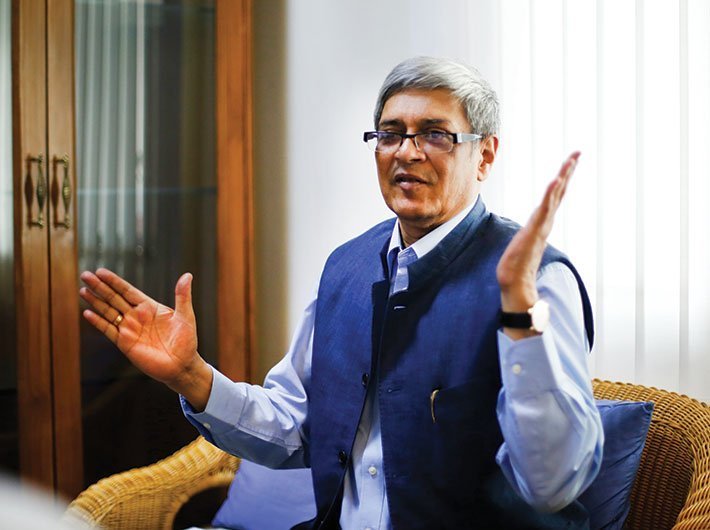
Bibek Debroy
Bibek Debroy

Before privatisation and corporatisation, the Indian Railways need to undertake major reforms including commercial accounting, decentralisation and human resource among others, said Bibek Debroy, economist and member, NITI Aayog at Railways Reforms and Governance Conclave organised by Governance Now on Friday.

Stressing the importance of introducing commercial accounting, he said, “I need commercial accounting not only to attract private sector investment but also because I need to know the kind of return public investment will have.”

In the present system – because of the complicated system of accounting – it’s difficult to ascertain the average rate of return on a typical railways project, he said. In some cases it might be even negative, he added.

“Whether I get access to funds using the World Bank window or some other, those are loans. They have to be repaid, perhaps at an average rate of seven percent. So if I don’t know the rate of return, I will not be in the position to pay back the loan,” he said. The commercial accounting is already being done on a pilot basis in Ajmer and northern zone. 

“There is no particular reason why the transition to commercial accounting will not be possible by 2019. It is only a tool, after that one will require MIS which will take few more years,” he said.

Cautioning about the greater demand for public private participation (PPP), Debroy said, “Most services are already privatised. If we are not talking about services and moving away to something else, or are we talking about management which is also PPP or public assets or are we talking building of assets using the private sector?”

“Remember, the cost of capital obtained by the private sector tends to be higher than that obtained by the public sector. Remember that most of our infrastructure is funded by the debt route; that business cycles have their ups and downs and that banks are incapable of lending money for 20-25 years projects. In that scenario, all private sector calculation goes haywire", he said.

On redevelopment of 400 stations, he said, “I don’t think more than 20 stations have the potential land to be exploited by real estate redevelopment. We may see six to seven stations by 2019 including Surat, Chandigarh, Shivajinagar and Brijwasan.”

He said that there is also a need for rationalisation of passenger trains. “Why should we run slow passenger trains between Delhi and Tundla. It is well connected already.” 

Further, Debroy said that railways is going to set up a regulator.

The decentralisation of decision making is another major exercise underway in the railways. Historically the zones have been functioning in a decentralised manner. Over a period of time, however, Rail Bhawan has become extremely centralised in its decision making, he said.
Even as railways has 1.3 million employees, it has shortage in the core business of running trains, he said.


Comments


Other News

AI: Code, Control, Conquer

India today stands at a critical juncture in the area of artificial intelligence. While the country is among the fastest adopters of AI in the world, it remains heavily reliant on technologies developed elsewhere. This paradox, experts warn, cannot persist if India seeks technological sovereignty.

RBI pauses to assess inflation risks, policy transmission

The Reserve Bank of India (RBI) has begun the new fiscal year with a calibrated pause, keeping the repo rate unchanged at 5.25 per cent in its April Monetary Policy Committee (MPC) meeting. The decision, taken unanimously, reflects a shift from aggressive policy action to cautious observation after a signi

New pathways for tourism growth

Traditionally, India’s tourism policy has been based on three main components: the number of visitors, building tourist attractions and providing facilities for tourists. Due to the increase in climate-related issues and environmental destruction that occurred over previous years, policymakers have b

Is the US a superpower anymore?

On April 8, hours after warning that “a whole civilisation will die tonight,” US president Donald Trump, exhibiting his unique style of retreating from high-voltage brinkmanship, announced that he agreed to a two-week ceasefire with Iran. The weekend talks in Islamabad have failed and the futur

Machines communicate, humans connect

There is a moment every event professional knows—the kind that arrives without warning, usually an hour before the curtain rises. Months of meticulous planning are in place. And then comes the call: “We’ll also need a projector. For the slides.”   No email

Why India is entering a ‘stagflation lite’ phase

India’s macroeconomic narrative is quietly shifting—from a rare “Goldilocks” equilibrium of stable growth and contained inflation to a more fragile phase where external shocks are beginning to dominate domestic policy outcomes. The numbers still look reassuring at first glance: GDP


Archives

Current Issue

Opinion

Facebook Twitter Google Plus Linkedin Subscribe Newsletter

Twitter






