
SC stays order making Aadhaar mandatory for scholarship

The supreme court has reiterated its position that Aadhaar scheme is purely voluntary and it cannot be made mandatory

GN Bureau | September 23, 2016

#scholarship scheme   #Aadhaar   #SC   #supreme court  
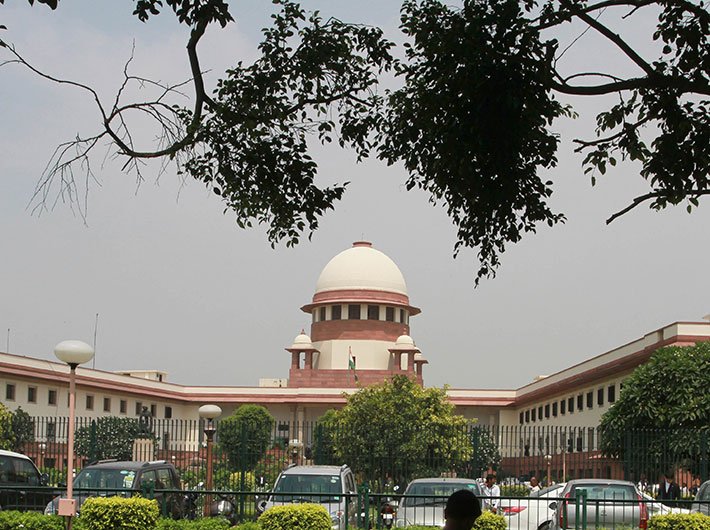
The supreme court of India

The supreme court (SC) has ruled that the national scholarship portal cannot mandate students to submit Aadhaar number for registration. It has reiterated its position, stating that the Aadhaar card scheme is purely voluntary. The court pronounced an interim ruling on September 14 while responding to a petition filed by the All Bengal Minority Students Council. The council contested a communication, dated July 14, sent from the central government to all states asking them to make Aadhaar mandatory for the submission of the application forms for scholarships. The schemes include pre-matric, post-matric and merit-cum-means scholarships.

 
“Having regard to facts and circumstances of the case, the material evidence available on record and the submissions made by the learned senior counsel we stay the operation and implementation of letters... for pre matric, post matric and matric cum means scholarships to the extent that they have made submission of Aadhaar mandatory,” the court ruled.
 
 
The apex court directed the ministry of electronics and IT, which is the second respondent in the case, to “remove Aadhaar as a mandatory condition for student registration at the national scholarship portal and… stay the implementation of clause ‘C’ of the ‘important instructions’ of the advertisement dated August 20, 2016” for the three scholarship schemes.
 
The stay order by the supreme court had very little impact. The scholarship portal continues to show Aadhaar as a mandatory condition for ‘merit cum means based scholarship’ under one of subheads (conditions of scholarship). See document here 
 
The scholarship portal, scholarships.gov.in, in fact, runs a notification on the main page asking students, who don’t have an Aadhaar number but have applied for it, to apply for the scholarship by providing their Aadhaar enrollment number. 
 
Last year, the SC had ruled on October 15 that Aadhaar will not be made mandatory until the court decides so. “We will also make it clear that the Aadhaar  card scheme is purely voluntary and it cannot be made mandatory till the matter is finally decided by this court one way or the other,” the court order said. 
 
After the government brought a money bill on Aadhaar and got it passed in both the houses of the parliament, many, including union ministers, were of the opinion that the law has an overriding effect on the SC’s interim ruling.  In an interview to a national daily on September 20, electronics and IT minister Ravi Shankar Prasad said that the mandatory versus voluntary debate is “meaningless” as now Aadhaar has legislative backing and it has been made clear that people would require Aadhaar to avail government subsidy.   
 
According to Jean Dreze, a development economist, the wording of the order makes it clear that the supreme court would regard Aadhaar being made mandatory for any purpose as “not tenable in law”. 
 
“The effect of this order is to render illegal the government’s proposed directions to make Aadhaar mandatory for a whole range of benefits and services, from pensions and scholarships to railway bookings and so-called direct benefit transfers (DBT),” Dreze said.


Comments


Other News

CAG flags major fiscal lapses in Maharashtra

Maharashtra`s fiscal management has come under sharp scrutiny after the Comptroller and Auditor General (CAG) of India, in its State Finances Audit Report for 2024-25, flagged significant budgetary inefficiencies, accounting irregularities, understatement of key fiscal indicators and widespread governanc

The health sector research we are not doing

Some neglect is loud. This kind is quiet. It sits in research never commissioned, data never collected, questions never asked. In South Asia, that quiet has let the region’s worst health problems stay understudied, underfunded, and out of sight of those who could act.  

Study flags accessibility and last-mile challenges on Mumbai Metro Aqua Line

Mumbai Metro Line 3 (Aqua Line), the city`s first fully underground metro corridor and one of its largest public transport investments, represents a major engineering achievement and has been widely welcomed by commuters. However, the overall commuter experience continues to be constrained by accessibili

Centre intensifies preparedness as El Niño threat looms

Amid uncertainty in the southwest monsoon due to the potential impact of El Niño, the government is addressing the situation with comprehensive preparedness, a clear strategy, and strong ground-level action. While challenges remain, the entire system has been activated in advance and is working proa

India is crossing a climate threshold

On June 28, Delhi recorded a maximum temperature of 41.3°C, four degrees above the seasonal normal. But the “feels like” temperature, which factors in humidity, showed more than 51°C. What the body experienced was very different from what the thermometer recorded.  India`

The Geography of India’s inflation

India today finds itself in an unusual position. At a time when geopolitical conflicts, trade fragmentation, and supply-chain disruptions are reshaping the global economy, the country`s macroeconomic fundamentals remain relatively upwards. Growth remains among the highest in the world, inflation has larg


Archives

Current Issue

Opinion

Facebook Twitter Google Plus Linkedin Subscribe Newsletter

Twitter






