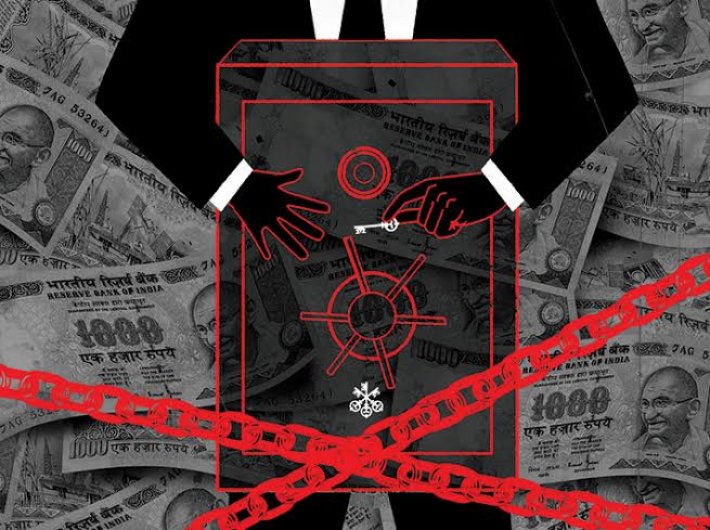
Slush funds overseas a "plunder of the nation": SC

Chides centre over not sharing information of Indian account holders in foreign banks

deevakar

Deevakar Anand | January 19, 2011


The supreme court turned the heat on the centre over its reluctance to share information on Indian slush funds in foreign banks. The court did not mince words about the seriousness of illicit capital outflow from the country, calling it a "plunder of the nation".

On a petition by former law minister Ram Jethmalani and others for retrieving the black money, the  apex court observed having national wealth abroad amounted to "plunder" of the country and it was purely and simply theft of the national money.

The bench of justices B Sudershan Reddy and S S Nijjar was unimpressed with solicitor general (SG) Gopal Subramanium’s reply that government was taking various steps it could to collect information on the money deposited in the foreign banks by Indians under the Double Taxation Avoidance Agreement (DTAA).

To the bench’s remark “We are talking about mind-boggling crime. We are not on the niceties of various treaties," Subramanium expressed limitation in sharing all information saying that the authorities have to go on the basis of mutual agreement with various countries where the money is stashed in banks. The bench said the question of avoiding tax didn’t arise as all it wanted was complete information about the money deposited in the foreign banks by Indians.

The SG also drew the court’s ire for the affidavit filed by him which contained 26 names of Indians having accounts in Germany’s Liechtenstein bank for being signed by merely a director-level officer. The bench fumed that it should have been signed by the finance secretary himself and remarked sarcastically, “It reflects the "seriousness" of the government”.

The bench today also questioned the government for limiting the information provided by it only to the Liechtenstein Bank. Last week the SG had told the court although the centre had obtained information from the German government on the Indians having bank accounts in Liechtenstein Bank, it did not want to reveal it.

Appearing for the petitioner senior advocate Anil Divan contended the issue of tax avoidance and the centre’s plea of DTAA had no relevance as the source of money could be of terror, narcotics or even arms dealing.


Comments


Other News

RBI pauses to assess inflation risks, policy transmission

The Reserve Bank of India (RBI) has begun the new fiscal year with a calibrated pause, keeping the repo rate unchanged at 5.25 per cent in its April Monetary Policy Committee (MPC) meeting. The decision, taken unanimously, reflects a shift from aggressive policy action to cautious observation after a signi

New pathways for tourism growth

Traditionally, India’s tourism policy has been based on three main components: the number of visitors, building tourist attractions and providing facilities for tourists. Due to the increase in climate-related issues and environmental destruction that occurred over previous years, policymakers have b

Is the US a superpower anymore?

On April 8, hours after warning that “a whole civilisation will die tonight,” US president Donald Trump, exhibiting his unique style of retreating from high-voltage brinkmanship, announced that he agreed to a two-week ceasefire with Iran. The weekend talks in Islamabad have failed and the futur

Machines communicate, humans connect

There is a moment every event professional knows—the kind that arrives without warning, usually an hour before the curtain rises. Months of meticulous planning are in place. And then comes the call: “We’ll also need a projector. For the slides.”   No email

Why India is entering a ‘stagflation lite’ phase

India’s macroeconomic narrative is quietly shifting—from a rare “Goldilocks” equilibrium of stable growth and contained inflation to a more fragile phase where external shocks are beginning to dominate domestic policy outcomes. The numbers still look reassuring at first glance: GDP

Labour law in India: A decade of transition

The story of labour law in India is not just about laws and codes, but also about how the nation has continued to negotiate the position of the workforce within its economic framework. The implementation of the Labour Codes across the country in November 2025 marks a definitive endpoint in the process. Yet


Archives

Current Issue

Opinion

Facebook Twitter Google Plus Linkedin Subscribe Newsletter

Twitter