Read an excerpt from the new edition of ‘Pathbreakers’ by Sucheta Dalal and Debashis Basu, featuring long-form conversations with India’s most influential leaders
Pathbreakers: How 10 Visionary Leaders Transformed India by award-winning journalists
By Sucheta Dalal and Debashis Basu
Rupa Publications, 304 pages, Rs 695
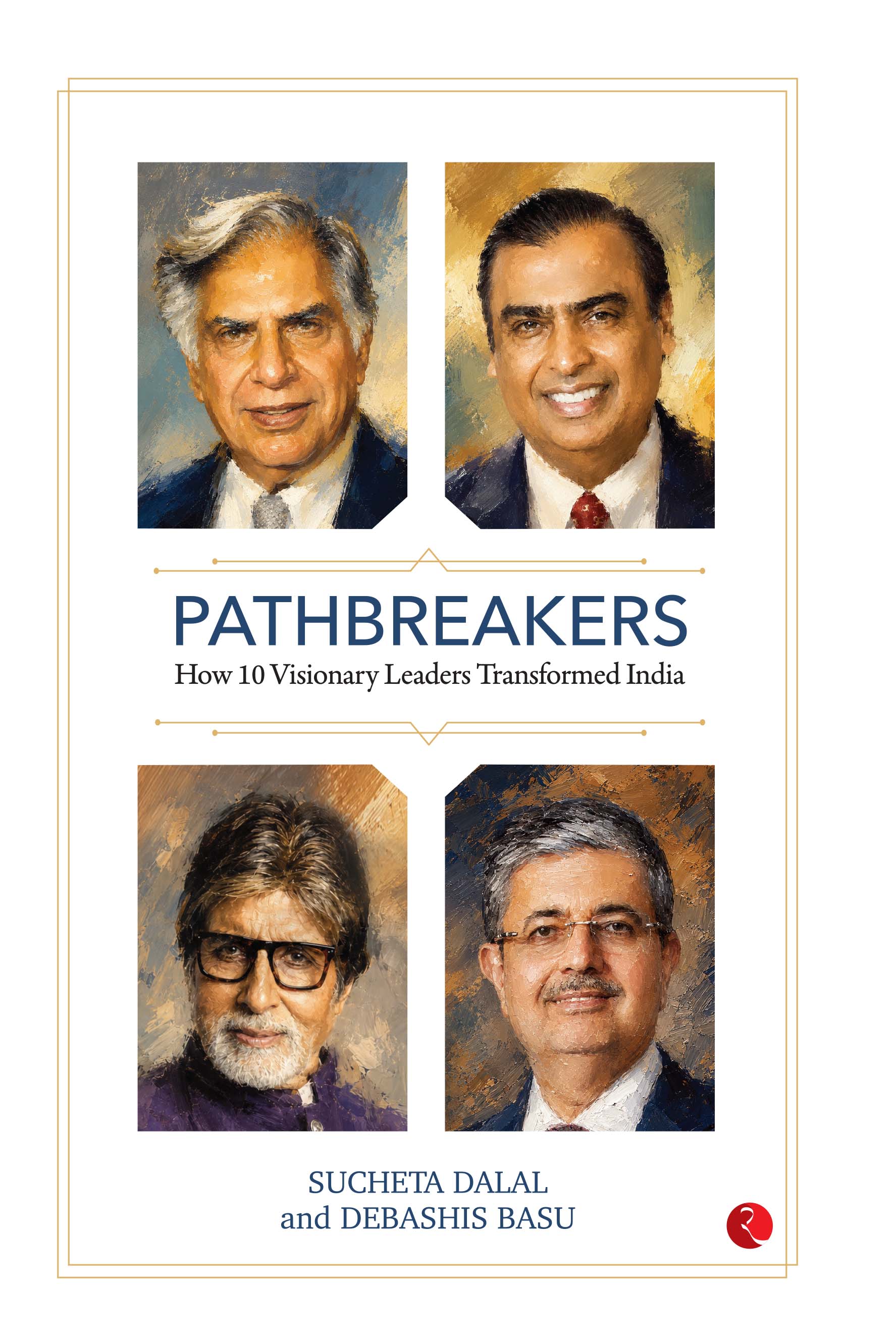
‘Pathbreakers’, by two highly reputed journalists, is a book that goes behind the celebrated names to reveal the choices, setbacks and convictions that shaped 10 of modern India’s most influential leaders. Featuring seven new, deeply candid conversations alongside timeless interviews with icons, this updated edition offers rare insights into ambition, resilience, leadership and the making of institutions that shaped India.
Nearly two decades ago, Sucheta Dalal and Debashis Basu had interviewed them, and the result was ‘Pathbreakers’, a series of long-form conversations with achievers across diverse industries and professions. In 2026, the book returns in a new edition, reinterpreting leadership for a dramatically transformed India.
This updated edition features new in-person interviews with Mukesh Ambani, K.V. Kamath, Deepak Parekh, Uday Kotak, Sanjeev Bikhchandani, Satish Magar and Rajkumar Hirani. The book also revisits the conversations with icons such as Ratan Tata, Amitabh Bachchan and R.H. Patil, which continue to remain relevant to date.
Here is an excerpt from the book, and the interview has been condensed for considerations of space:
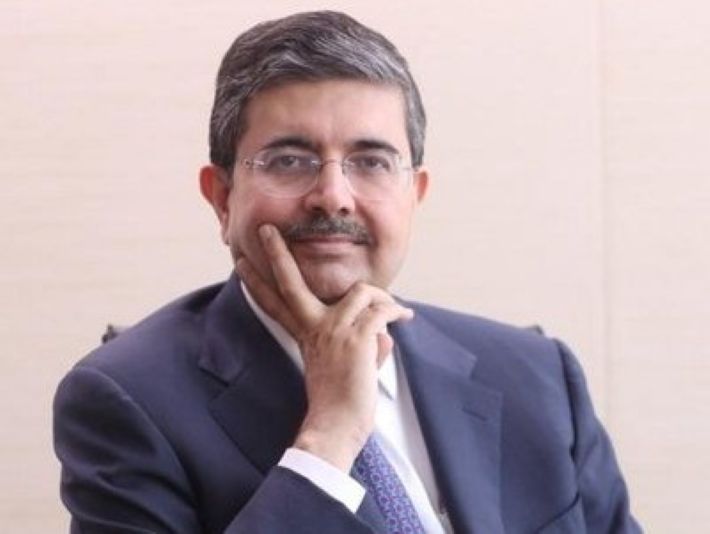
Uday Kotak
‘I constantly ask myself what is the baggage of history and what are the lessons of history.’
In the late 1980s and early 1990s, when non-banking financial services companies were mushrooming to take advantage of the huge gap between deposit and lending rates, Kotak Mahindra Finance was just one of the pack. A decade later, when a big shakeout forced almost every finance company to close down, Kotak battened down its hatches and survived. Along the way, it pulled off the impossible: got Goldman Sachs, the bluest of the blue Wall Street firms, into a joint venture—and that too for a mere 25 per cent stake. He also partnered with Ford Credit for car financing. In 2007, the Kotak group was the rare survivor among the finance companies that started up in the 1980s, having grown into a complete banking financial services business, offering insurance, broking, mutual funds, banking and other services.
In December 2007, Uday Kotak sat across us for an interview and warned that American financial institutions were in a ‘mindset of denial’ about sub-prime crisis. Nine months later, Lehman Brothers vanished. Meanwhile, Kotak had already quietly bought back Goldman Sachs’ stake—paying Rs 333 crore for their 25 per cent holdings in Kotak Mahindra Capital and Kotak Securities—walked away from the most prestigious brand in investment banking. He doubled down on the unglamorous work of building an Indian bank from the ground up. The buyback positioned him nicely, two years before the storm arrived.
Nineteen years on, the bank’s growth under Kotak’s leadership has been remarkable. From a bill-discounting outfit started with '30 lakh in a Sewri godown, what is now Kotak Mahindra Bank carries a market cap of more than Rs 4 lakh crore, a loan book of around Rs 6 lakh crore, and more than 2,200 branches. Until the Reserve Bank rules kicked in, it was the only large Indian bank run by its founder. Kotak never sold control to a foreign partner, has generated over one lakh direct jobs while maintaining strong balance sheets and prudent risk management practices.
The bank has continuously expanded through judicious acquisitions. In 2014 it acquired ING Vysya Bank, valued at approximately $2.34 billion. This not only expanded the bank’s footprint but also diversified its portfolio, adding hundreds of branches and strengthening both retail and corporate banking segments. The bank’s acquisition of Sonata Finance in 2023 strengthened its microfinance operations.
In 2018, Kotak Mahindra Bank sued the RBI in the Bombay High Court over promoter stake dilution rules. The bank tried to use preference shares to satisfy RBI’s mandate to reduce Kotak’s stake to 15 per cent without losing voting rights. The RBI rejected this. An out-of-court settlement in January 2020 allowed Kotak to maintain a 26 per cent stake with voting rights capped at 15 per cent. This dispute then influenced the RBI to raise the promoter cap for all private banks to 26 per cent. In September 2023, Kotak made the significant decision to step down as MD and CEO, four months ahead of schedule, transitioning to a non-executive director role. His son, Jay Kotak, an MBA from Harvard Business School, serves as senior vice president, representing the next generation of leadership.
Kotak’s influence extended far beyond banking through his service as CII president (2020–21), membership in the high-level committee on financing infrastructure, participation in SEBI’s primary market advisory committee, and heading SEBI’s corporate governance committee. He was entrusted by the government to solve the massive implosion of Infrastructure Leasing & Financial Services (IL&FS), a 349-entity conglomerate, serving as the chairman from October 2018 to April 2022. By the time he completed that tenure, over 61 per cent of the group’s '99,000 crore debt had been resolved, preventing what many feared would be an irreversible cascade through India’s financial sector. Kotak was awarded India’s third-highest civilian honour, the Padma Bhushan, in 2026. In February 2026, the Government of Gujarat appointed him chairman of Gujarat International Finance Tec-City Company Limited (GIFT City), India’s first operational International Financial Services Centre.
Beyond finance and public policy, the Kotak Education Foundation, running on what it describes as an ‘Inch Wide, Mile Deep’ philosophy, has chosen depth over breadth. It concentrates its interventions in specific geographies rather than spreading thin across the country. Its programmes today span the Kotak Junior Scholarship and Kotak Kanya Scholarship for meritorious students from economically disadvantaged backgrounds; the Kotak Shiksha Nidhi, a fund specifically created to support approximately 1,500 students who lost parents during the Covid-19 pandemic; the Unnati vocational training and placement programme for unemployed youth; and the Kshamata project, which builds foundational literacy and numeracy skills among teachers and headmasters across four states.
After stepping down from the bank, Kotak launched USK Capital, a personal family office from which he operates his investments and public activities. Uday Kotak’s journey has been remarkable, transforming from a respected banker to one of India’s most influential financial visionaries.
As of March 2026, his net worth stands at approximately US$14.3 billion, #14 among India’s wealthiest individuals. He exemplifies a blend of entrepreneurial spirit, strategic foresight and adaptive leadership in an ever-changing financial landscape. Here is his story.
(This interview was first published in Moneylife, 13 September 2007. Only selected questions/answers are included in this excerpt.)
Q: So if there is going to be a big crisis today, as a lot of people are predicting, you think there will be a quick bounce-back?
UK: I don’t know. As a child, I spent a lot of time with my grandparents in their room. My grandfather was born in 1906, so in 1930 (after the great market crash and the Depression) he was at the peak of his youth. He would share stories of that time with me. I remember him saying, ‘beta, tum ne 1930 ki mandi nahi dekhi’ (son, you didn’t see the Depression of 1930). The mindset was, whatever happened, future is worse—this was the attitude right until 1940 when people began to see the end of the war, followed by a huge amount of spending that led to a revival. But for a period of 10 years, 1929 to say 1940, the world lived through a period where you looked at the future with fear and anxiety.
So what a grandparent tells you, remains somewhere at the back of your mind and shapes one’s reactions in 1992 or 1998. It is almost like muscle memory.
Q: What do you sense now in terms of growth?
UK: I feel that the world is too comfortable. And it’s got used to it for 80 years. This power of central banks to print money is just unbelievable. So there are two things in my mind. If you look at history long enough, you will see that things have gone very wrong in the past. But if you forget the long history, and look at the last 80 to 100 years, things have got better. Therefore, when one says return to mean, the question is: which mean?
Q: How do you see the Indian economy now?
UK: In my view the economy is doing alright. I don’t think we have a major issue. I think we have a pretty decent base growth of, say, 6-per-cent-plus. That’s a given. If at all, the market valuations are expensive compared to the level of growth because you’re seeing nominal GDP grow at only 8-odd per cent.
[The excerpt reproduced with the permission of the publishers.]