
Understanding interim budget

PM Modi led NDA government is gearing up to present this year's budget as elections are round the corner

GN Bureau | January 21, 2019

#Arun Jaitley   #union budget   #interim budget   #central government   #parliment   #Narendra Modi   #India budget   #Budget 2019  
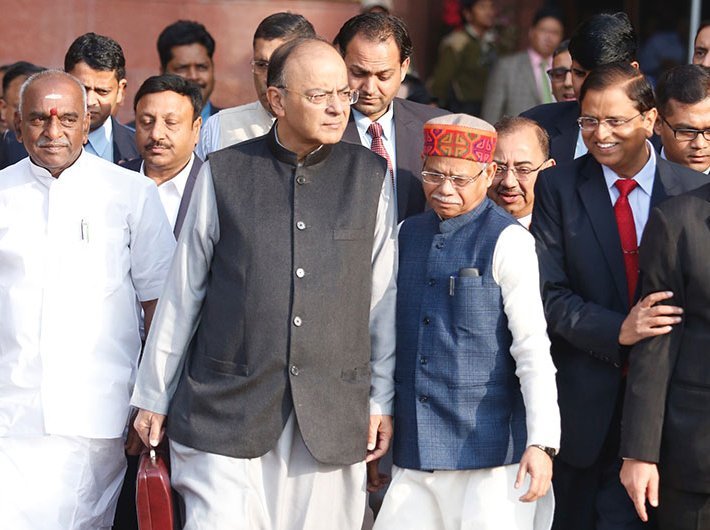
File photo (Arun Kumar)

Narendra Modi-led NDA government is due to present its last budget on February 1, before the 2019 general elections. Finance minister Arun Jaitley, who is currently in US for medical treatment, is likely to present the budget. This will be an interim budget of the NDA government.

Also read: Breaking down some key terms used in budget

But what exactly is an interim budget?
  • An interim budget is presented when the incumbent government is going through an election in the near future. In such a case, propriety demands that the task of framing the full budget be left to the incoming government
  • Through the interim budget, parliament passes a vote-on-account that allows the government to meet the expenses of the administration until the new parliament considers and passes the budget for the whole year.
Interim budget
 
1.       It is only for a period of two to four months until the new government is formed after elections.
2.       It does not contain tax reforms and introduction of new policies and schemes i.e., no financial bill.
3.       The government would still present the complete set of accounts including for both expenditures and receipts.
4.       No heavy discussions are carried out in the parliament during the interim budget.
 
Union budget
 
1.       It is for 12 months i.e., a full financial year.
2.       A full budget includes major policy/legal decisions that would affect the finances/expenditures of the government.
3.       The union budget, which comes with a Finance Act, contains several amendments to various legislations.
4.       The Lok Sabha and Rajya Sabha pass the budget only after discussion and voting on demand for grants.
 
  • The constitution provides for a vote on account, and that says that government can approach parliament to sanction expenditures for a part of the year.
  • The previous 12 interim budgets, since independence, have refrained from altering the financial bill.
  • Interim budget is considered to be crucial for the incumbent government as it is their last chance to attract the voters and make a fervent appeal to the electorate.  


Comments


Other News

What the US–Iran peace deal means for India

After months of rising tensions, the United States and Iran have reached a memorandum of understanding called the "Islamabad Agreement." This agreement allows for the immediate reopening of the Strait of Hormuz without tolls and provides Iran with relief from sanctions, depending on its complianc

V. M. Tarkunde: A legal luminary par excellence

14 Lawyers: Portraits from The Bar By Raju Ramachandran  Juggernaut, 248 pages, Rs. 799  

The Cost of Obesity

The latest episode of Checks and Balances focuses on the ticking time bomb of obesity in India, and Geetanjali Minhas of Governance Now spoke with a panel of experts. You can watch the episode here: https://youtu.be/mH

US-Iran deal: Path to peace or prelude to deeper regional quagmire?

In the midst of deep mistrust, the US and Iran are reported to have reached a framework deal for ending the West Asian conflict. But whether it will result in any meaningful breakthrough or pave the way for any lasting peace in the region, is in the realm of speculation.   During

Lived life, philosophy, spirituality and other enigmas

The Ashes Are Warm: Memories of a Lifetime Spent with UG Krishnamurti By Mahesh Bhatt and Sunita Pant Bansal Rupa Publications, 384 pages, Rs 495  

In Varanasi, fringe expansion vs. core heritage

For centuries, the urban framework of Varanasi was defined not just by its relationship with the sacred Ganga but by its multifaceted network of urban commons. Historic kunds, seasonal talabs (ponds), and open maidans served as the city’s basic ecological infrastructure. Th


Archives

Current Issue

Opinion

Facebook Twitter Google Plus Linkedin Subscribe Newsletter

Twitter






