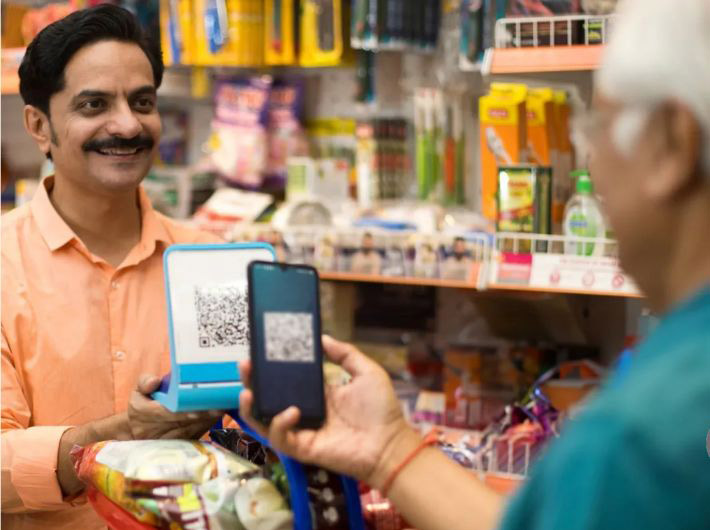
MDR of 0.4% will apply only to merchant transactions above ₹2,000, essential sectors will have a flat MDRof Rs 5
The new UPI framework introduced has no impact on any person to person transactions, and UPI will continue to remain completely free for all person-to-person transactions, irrespective of the amount transferred, the finance ministry clarified on Tuesday.
Payments to merchants up to ₹2,000, along with transactions covered under the zero-MDR framework for small merchants, will also remain free. Consequently, approximately 96% of all P2M transactions will remain unaffected. MDR will apply only to specified merchant transactions above ₹2,000, it said in an official release.
"It is clarified that MDR is neither a tax nor a charge collected by the Government or NPCI. It is distributed among payment ecosystem participants, including banks and payment application providers, to support the operation and continued expansion of the UPI ecosystem."
Introduced under the Payment and Settlement Systems Act, 2007, following detailed deliberations by the UPI Steering Committee, the framework seeks to ensure the long-term sustainability of UPI while protecting individuals and small merchants from additional charges.
What Will Remain Free
All Person-to-Person Transactions: All person-to-person (P2P) UPI transactions will remain completely free, irrespective of the amount transferred. No transaction fee, platform fee or other charge may be imposed on individuals for sending or receiving money through UPI. Therefore, UPI transactions accounting for 70% of the total transaction value will remain completely outside the MDR framework.
Merchant Payments Up to ₹2,000: All person-to-merchant (P2M) transactions up to ₹2,000 will remain free of MDR. Customers will not be required to pay any charge when making such payments through UPI.
Payments Received by Small Merchants: Small merchants including street vendors receiving up to ₹1 lakh per month through UPI QR codes under the Person-to-Person-Merchant (P2PM) category will continue to enjoy zero MDR on all transactions. This provision will protect street vendors, neighbourhood shops and other small businesses from additional payment costs.
What Will Attract MDR
Merchant Transactions Above ₹2,000: A nominal MDR of 0.4% will apply only to P2M transactions above ₹2,000. The MDR will be shared among payment ecosystem participants, including banks, payment service providers and UPI application providers. For transactions of ₹75,000 and above, the MDR will be capped at ₹300 per transaction.
Transactions in Essential Sectors: Transactions above ₹2,000 in essential and thin-margin sectors, including railways, telecommunications, insurance, fuel and agricultural inputs, will attract a flat MDR of ₹5 per transaction. The flat charge will provide cost certainty for critical public services and businesses operating on narrow margins.
Capital Market Transactions: Payments relating to mutual funds, securities, stockbrokers and dealers will attract an MDR of 0.02%, capped at ₹300 per transaction. The lower rate is intended to support continued retail participation in formal financial markets.
Customers Will Not Pay MDR
MDR is a charge within the merchant payment ecosystem. It is not a charge on customers making UPI payments.
Banks have been advised to ensure that merchants do not pass MDR charges on to customers. UPI application providers are expressly prohibited from imposing platform fees or hidden charges.
Individuals will continue to have unlimited free usage, with no monthly quotas, volume restrictions or tiered caps on free UPI transactions.
Daily transaction limits prescribed by banks and NPCI, generally ranging from ₹1 lakh to ₹5 lakh depending on the transaction category, are security and risk-management safeguards. They are not charging thresholds.
Most Merchant Transactions Will Remain Unaffected
Data analysis indicates that MDR will apply to only about 4% of merchant transactions.
This means that approximately 96% of merchant transactions will remain unaffected, as they are either below the ₹2,000 threshold or covered by the zero-MDR framework for small merchants.
The framework therefore protects individuals, micro-enterprises and small businesses while introducing a limited charge on larger merchant transactions.
Support for Small Merchants
A dedicated fund will be established to promote UPI adoption among small merchants. An amount equivalent to 5% of total MDR collections will be contributed to this fund.
The fund will support wider UPI acceptance, sustained usage and the inclusion of small businesses in India’s digital payments ecosystem.
Ensuring the Continued Growth of UPI
The framework has been introduced under the Payment and Settlement Systems Act, 2007, following detailed deliberations by the UPI Steering Committee on the applicable rates, operational arrangements and consumer safeguards.
The framework seeks to strengthen the long-term sustainability of UPI while keeping payments free for individuals and protecting small merchants.
Revenue generated from larger merchant transactions will support banks, payment service providers and UPI application providers in expanding and improving payment infrastructure, including in rural and semi-urban areas.
The framework is also consistent with the recommendation of the Standing Committee on Finance in its 32nd Report, which emphasised the importance of a viable revenue.