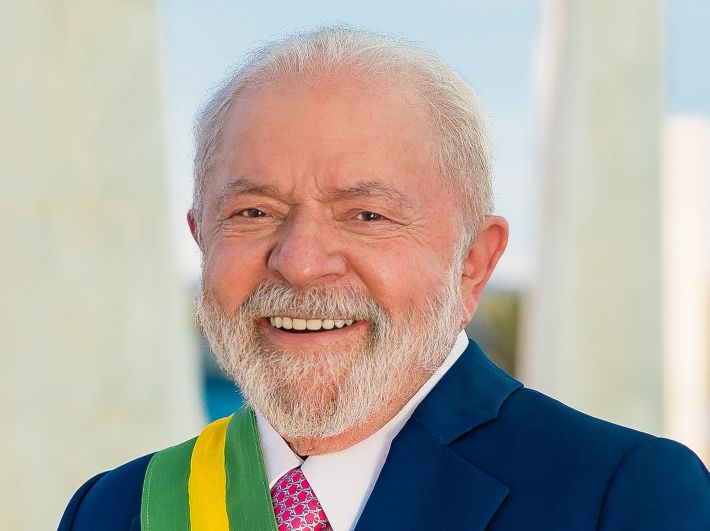
Since Brazil’s return to direct presidential elections in 1985, no candidate who finished second in the first round of polling had ever won the presidency. Luiz Inácio Lula da Silva, now 81, has just done it. What explains the comeback, and what changed in Brazilian politics to make it possible? The answer, one can argue, is social media.
While the results were shaped by several factors, including public mobilisation and voter turnout, and on-the-ground outreach programmes; digital campaigning played a prominent role in the election's final stretch. Lula's victory, in that case, is more than just a historic feat but also a story about political communication and the growing importance of social media in electoral politics. After trailing behind his far-right rival, Flávio Bolsonaro, his digital campaign during the final round brought about several changes to rebuild momentum. Among the most talked-about moves was Lula's decision to get a smartphone (reportedly his first in all these years) and the expansion of WhatsApp-based group, 'Exército do Lula’ (Lula’s Army), which had more than 10 million followers by the election day.
After his first-round defeat, Lula's allies encouraged him to record informal, direct-to-camera videos rather than rely on polished and scripted political speeches. The first of those videos went viral, in which he can be seen urging the public to get on the streets. Then came the three short selfie videos that Lula's team would push in the early hours and set the mood for the social media campaign for the rest of the day. His team called these videos 'little rockets.'
Meanwhile, his WhatsApp channel continued to find more supporters, with people taking the onus to share his speeches, promote hashtags, and circulate memes. He didn't shy away from turning to Generation Z, whose growing political activism and digital mobilisation have recently shaken the political establishment in countries such as Nepal, India, Bulgaria, and France.
What happened in Brazil raises a question that is equally relevant to India. As social media becomes an essential channel for political parties to reach voters, who determines what voters see, what they believe, and which parties receive more attention? Take, for instance, Hungary's recently concluded prime ministerial elections. Viktor Orbán’s 16-year rule in Hungary, which had built a media ecosystem favourable to his government, seemed unshakable heading into the elections. Yet, in April 2026 this year, Orbán was defeated by Péter Magyar and his Tisza Party because of a campaign that relied heavily on social media and direct engagement with voters. Hungary offers a particularly revealing case study because the incumbent government had built an extensive influence over traditional forms of media. The opposition had to find alternative ways to reach voters, and social media became central to that effort.
India's election campaign has already entered the digital age
India does not need to look abroad to understand the political importance of digital communication. During the 2024 general election, parties used social media not merely to publicise rallies and manifestos, but to distribute campaign material, mobilise supporters and reach voters across linguistic and geographical boundaries.
WhatsApp, YouTube, Instagram, Facebook and X (formerly Twitter) form part of an expansive political communication ecosystem. Political parties adapted to this environment in different ways. Short clips, memes, influencer collaborations, livestreams and messages circulated through private groups and online communities become important tools of political campaigning. The ruling party, which has built a substantial digital presence over the years, continues to use live-streams, shorts, reels to reinforce prime minister Narendra Modi’s image in its political messaging. In 2024 General Elections alone, reels on the PM’s Instagram page garnered 2.7 crore views on an average.
The rise of the Cockroach Janata Party offers a clear example of how digital media is reshaping political mobilisation. What began as a satirical response to CJI Surya Kant’s remarks about unemployed youth evolved into a wider protest movement, showing just how online humour and viral content can channel public discontent into a political movement through reels, memes, and online satire. Within weeks, the Instagram channel of CJP crossed more than 15 million followers and currently sits at 24.8 million followers at the time of writing. This is more than the National parties like BJP, which has 10 million followers and the Congress’ 16 million followers on Instagram, drawing attention to a movement that had no conventional party machinery but thrived only because of social media.
Whether it's Modi's selfie video in response to the CJP protest that engulfed the Delhi streets in July, or LoP Rahul Gandhi's 'Chaatron ki Goonj' that, despite being a ground outreach programme, has captivated the attention of youth around the country due to effective digital communication, social media plays a very distinct role in political communication.
How social media is reshaping political campaigning
One of social media's most consequential features is that political content often arrives without looking like political advertising. A campaign on television or radio, or even in print, is easier to recognise as a deliberate attempt to persuade voters. However, a video favoring a certain political leader or a party forwarded on social media through a WhatsApp group or a clip posted by a familiar local influencer on any social media platform can carry a different kind of impact and credibility. This does not mean the voters automatically believe everything shared with them on social media, but it complicates the distinction between political communication, personal opinion, and news.
A message no longer needs to pass through a newspaper editor or television newsroom to reach millions of people. It can travel from a party's digital team to a network of volunteers, influencers, then through family groups, communities, and individual social media accounts. Lula's WhatsApp mobilisation shows how digital networks can be used to organise supporters around a political objective. India's political parties have also invested heavily in messaging networks and digital outreach. Between 2023-24 and 2025-26 alone, the BJP government has spent around Rs 150 crore in digital campaigning including Google India, YouTube, and Meta.
The rise of digital politics has also popularised terms such as ‘WhatsApp University’, ‘BJP IT Cell’ and ‘WhatsApp warriors'. These terms not only reflect the scale of organised online campaigning but also the concerns about how political narratives, unverified claims and partisan messages circulate.
India has faced related concerns about the circulation of fake news, deep-fakes, misinformation and challenges involving moderation of political content. All this highlights the challenges posed by social media messaging and the use of AI-generated material in political campaigning. Videos falsely depicting Ranveer Singh and Aamir Khan criticising Modi circulated online, illustrating how AI and social media could be used to misrepresent public figures. Brazil's election adds another dimension to this debate. Lula has indicated that regulating big digital media platforms will be a priority for the administration. However, a ruling party trying to regulate digital media raises several questions on its own.
When you look at India, the country imposed 65 internet shutdowns in 2025, and nearly half of the 84 shutdowns it imposed in 2024 were due to the protests. The country has recorded more internet shutdowns than any other democracy. While on-the-ground campaigning remains a crucial tool for mobilising voters, social media stands out for its ability to sustain political communication throughout the five-year term, rather than limiting it to the peak election season.
The challenge, therefore, is not simply to understand how social media can be used to win elections, but how it is reshaping the relationship between political parties and citizens between elections. Brazil, Hungary and India demonstrate that digital platforms can help movements challenge established narratives, mobilise supporters and sustain political engagement beyond peak election campaigns. But the same platforms also raise questions about misinformation and unequal representation.