
When there is a compromised CBFC, there is nothing left to say: Nupur Basu

In conversation with journalist and filmmaker Nupur Basu

shubham-gaur

Shubham Gaur | April 19, 2017 | New Delhi

#documentary filmmaking   #Velvet Revolution   #journalist   #Nupur Badu  


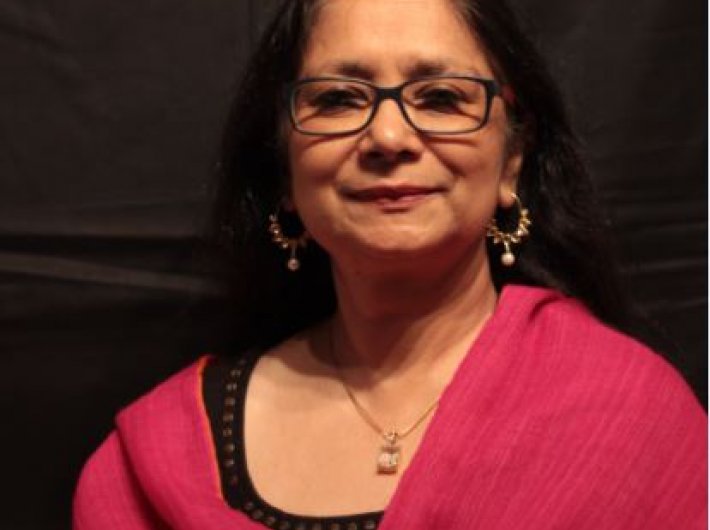
Nupur Basu is a journalist, documentary filmmaker and media educator. Her first documentary, Dry Days in Dobbagunta, depicted the story of Dobbagunta, a village near Nellore district of Andhra Pradesh, where women campaigned against liquor consumption. The film won the Award for Excellence in Television at the IAWRT Festival in Harare, Zimbabwe, in April 1997. Basu is also the executive producer of Velvet Revolution, a collaborative documentary on the experiences of a few female journalists. For this, Basu interviewed senior journalists such as Lyse Doucet, chief international correspondent at BBC, Najiba Ayubi from Afghanistan, Zaina Erhaim from Syria, who now lives in exile in Turkey, and Ritu Sarin, the lead investigator in the Panama Papers probe from The Indian Express.


How did you start your journey of documentary filmmaking?

I started making documentary films in 1995. I was reporting for the World this Week in London in the 1990s. I reported on caste-conflicts and other development issues. While I was reporting, I realised that the power of image is better than any other source of media. An image can speak a thousand words. It can provide a platform to convey real and unbiased news to the people in a smooth format. 

What are the attributes of a good filmmaker?

Firstly, the person should be a good storyteller. He or she should believe in and be committed to his/her stories. Preferably, the story should be about the people. One should nurture the craft and be creatively different from the rest of the world. As a documentary filmmaker, one should try to serve the truth that our Bollywood has not, or cannot, serve.

What are your expectations from Velvet Revolution?

I want this film to compel society to own us. Journalists are no longer owned by civil society as people have become disaffected with the press because of tabloid journalism and corporatisation of the media. I want this film to make people believe again that journalism is the fourth pillar of democracy.

Why do you think there are very few women making films?

How will the number of females flourish if they are killed before they are born? Not only in filmmaking, but females are considerably less in all the fields. My last film, No Country for Young Girls, talked about the distorted sex ratio in India. Regarding filmmaking, we do not have premium film institutions and if some institutions are there, they do not have any encouraging modus operandi for girls. On top of that, women who are working determinedly in this field are denied credit.

Alankrita Srivastava’s film Lipstick Under my Burkha was recently banned by the Central Board of Film Certification (CBFC). Your comments

When there is a compromised CBFC, there is nothing left to say. Many commercial and documentary movies that tried to portray a novel narrative have faced a CBFC ban in the last few years, be it Spectre 007, India’s Daughter or Udta Punjab. Works of art exists in all forms, good, bad and ugly. CBFC should let them come in the public sphere and let the audience decide. 

Could you name some filmmakers who have inspired you?

There were many influential personalities I interviewed when I was a reporter. Amongst them are Dev Anand and Mira Nair, who inspired me. I am also influenced by Ritwik Ghatak and the kind of movies he made. In the area of documentary filmmaking, Michael Moore has been a motivating figure.

Message for budding documentary filmmakers

Perceive the stories that are all around you. Fact, at times, is more fascinating the fiction. This generation has technology on its side. It is all about maintaining a balance between technology and art. 


Comments


Other News

Supreme Court judge strength to go up by four to 37

The strength of the Supreme Court is set to go up from 33 judges to 37 judges, paving the way for a more efficient and speedier justice. The Union Cabinet on Tuesday approved the proposal for introducing The Supreme Court (Number of Judges) Amendment Bill, 2026 in Parliament to amend The Sup

BJP set to capture West Bengal

The political map of the country is set to be redrawn with the BJP set to win the West Bengal assembly elections, apart from Assam and the union territory of Puducherry. In Kerala, meanwhile, the Congress-led UDF is set to regain power. The filmstar Vijay-led TVK has emerged as the front-runner in Tamil Na

Beyond LPG: Is PNG ready for India’s next cooking fuel transition?

India, the second-largest importer and consumer of LPG after China, faces growing pressure due to supply constraints. Most of India`s LPG imports transit through the Strait of Hormuz, a focal point of global turmoil. Given that LPG forms the backbone of household kitchens and the restaurant industry, any s

Maharashtra adopts hybrid model for Census 2026 data collection

The government has initiated preparations for Census 2026 in Maharashtra, introducing a hybrid approach that combines optional self-enumeration with comprehensive door-to-door data collection to ensure complete coverage across the state.   According to senior officials, the Self-

What the nine Indian Nobel winners have in common

A Touch Of Genius: The Wisdom of India’s Nobel Laureates Edited by Rudrangshu Mukherjee Aleph Books, Rs 1499, 848 pages  

Income Tax dept holds Ghatkopar Outreach on new IT Act

The Income Tax Department organised an outreach programme in Ghatkopar, Mumbai, to raise awareness about the key features of the Income Tax Act, 2025, effective April 1, 2026. The initiative is part of a nationwide effort to promote taxpayer awareness, simplify compliance, and strengthen a transparent, eff


Archives

Current Issue

Opinion

Facebook Twitter Google Plus Linkedin Subscribe Newsletter

Twitter






