What is needed is a shift from preservation-oriented thinking to enterprise-oriented policymaking
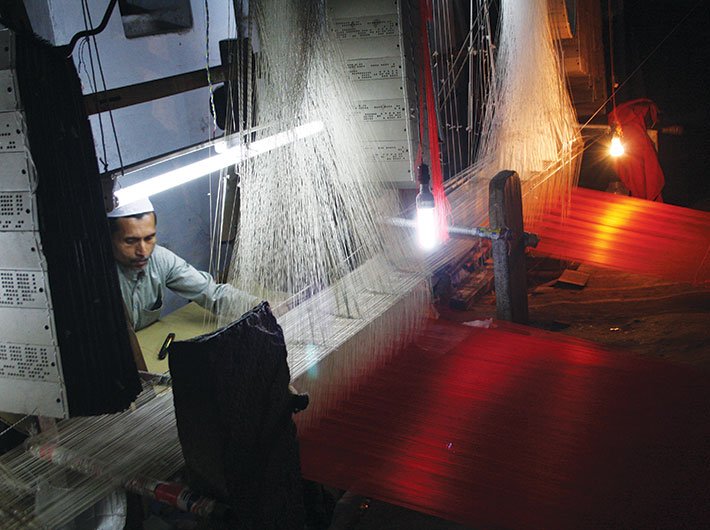
India's economic ambitions are increasingly defined by the industries of the future. Semiconductors, electronics, artificial intelligence and advanced manufacturing dominate policy conversations. Yet one of India's largest employment-intensive sectors continues to occupy a surprisingly marginal place in economic policymaking: the handloom and handicraft economy. This is not because the sector lacks visibility. Indian crafts are celebrated as symbols of cultural heritage, showcased at exhibitions, promoted through tourism campaigns and featured in diplomatic outreach. What remains missing is recognition of the sector as an economic asset rather than solely a cultural one.
A recent study on Economics of Indian Craft (IHD-CCI, 2026) offers an important corrective. Covering Assam, Rajasthan, Tamil Nadu, Uttar Pradesh and West Bengal, the study estimates that the sector supports 61.1 lakh workers across nearly 34 lakh establishments, accounting for approximately 26% of manufacturing employment in the surveyed states. Extrapolated to the national level, this points to a combined workforce of roughly 11.3 million workers engaged in nearly 6.5 million establishments. These are not the characteristics of a niche activity. They point to a substantial economic ecosystem hiding in plain sight.
The challenge has never been visibility. For decades, official surveys have counted artisans, weavers, households and looms which are useful for welfare delivery, but not designed to answer a more fundamental question: what economic role does the handmade economy actually play? The sector has been measured as a community in need of support, not as an ecosystem generating employment, income and value. That distinction shapes everything. A welfare lens produces subsidies and exhibitions. An economic lens produces conversations about productivity, market access and finance.
Despite employing millions, the sector remains trapped in a low-income equilibrium. According to the study, the average monthly earnings hover around Rs 7,000 per worker, well below the prevailing minimum wage benchmarks in many states. Formal bookkeeping remains exceptionally low, and most craft enterprises lack the documentation that conventional lending systems require – formal accounts, collateral, recorded cash flows. As a result, many artisans and enterprises continue to depend substantially on informal borrowing, often at higher cost and with greater uncertainty.
The market access problem compounds these challenges further. Much of the sector continues to operate through intermediary-led marketing arrangements that limit producers' influence over pricing and market outcomes. While artisans generate significant value through their skills and craftsmanship, they often have limited visibility into downstream markets and restricted access to end consumers. India's handicraft exports reached Rs 33,122.79 crore in 2024-25, up from Rs 20,082.53 crore a decade earlier (PIB, Handicrafts at the Heart of India's Rural Economy). Yet strong export performance at the national level has not necessarily translated into greater market power or direct market participation for many artisans.
The persistence of these challenges does not reflect a lack of skill, demand, or cultural relevance. Rather, it reflects structural constraints in data systems, finance, market access, and enterprise development. Addressing this requires a shift from preservation-oriented thinking to enterprise-oriented policymaking. Five priorities stand out.
First, the sector’s data architecture must capture economic realities. Existing data efforts including artisan registrations, cluster directories, and scheme-level surveys excel at tracking demographics, but less so at measuring enterprise value or seasonal incomes. The Handloom Census framework offers an established, comprehensive vehicle for data collection. By extending this existing census model to cover the handicraft sector, and expanding its scope to track business indicators like turnover, cost of raw materials, and enterprise growth alongside basic household data, policymakers can finally institutionalize a true economic picture of the handmade economy.
Second, financial inclusion strategies must reflect enterprise realities. Financing mechanisms should incorporate transaction histories, order books, producer collectives and cluster-based lending as alternative indicators of creditworthiness — mainstreaming approaches that schemes like PM Vishwakarma have already demonstrated for artisan lending.
Third, market access must become a policy priority in its own right — through greater integration with digital commerce, public procurement, export promotion and producer-owned marketing channels that allow artisans to capture a larger share of the value they generate.
Fourth, capacity-building must move beyond craft skill training toward enterprise capabilities: pricing, bookkeeping, branding and digital commerce.
Finally, India must adopt a "whole-of-government" approach to unlock the sector's scale. To bridge the fragmented support systems across the ministries of textiles, MSME, rural development, and commerce, the government should establish an inter-ministerial mechanism focused specifically on the handmade economy to align public procurement, export promotion, and cluster growth under a unified economic strategy.
The handloom and handicraft sector has never been invisible. For years, the government's approach focused on welfare and preservation, and that work has been substantial and commendable. Recognising the handmade economy as a productive economic sector, rather than solely a cultural one could unlock new opportunities for enterprise growth, job creation and export expansion. The challenge is no longer preserving the sector's relevance, but realising its economic potential.
Surbhi Chakraborty, a Research Associate with Pahle India Foundation, is pursuing Ph.D. in Defence and Strategic Studies at Punjabi University, Patiala.