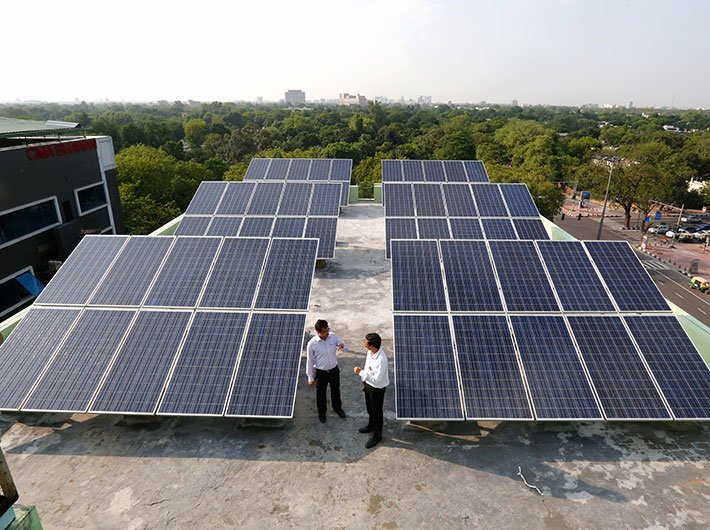
It also ensures long-term financial savings, and contributes to a more sustainable future
By integrating sustainability with financial returns, solar energy is gradually reshaping the way homeowners and developers perceive property investments. Traditionally, property value has been determined by factors such as location, design, connectivity, and infrastructure. However, as energy costs continue to rise and sustainability becomes a global priority, energy-efficient features are emerging as a key differentiator in the real estate market. Among these, solar energy stands out as one of the most practical and impactful upgrades that can significantly enhance property value while reducing long-term operating costs.
The growing adoption of rooftop solar systems reflects a broader shift in consumer behaviour. Today’s homebuyers are not just looking for aesthetically pleasing spaces; they are also seeking homes that offer long-term financial savings and energy reliability. Solar energy addresses both these needs by providing clean electricity while reducing dependence on conventional power sources. In a country like India, where electricity demand is expected to grow rapidly in the coming years, integrating solar infrastructure into residential properties can offer both economic and environmental advantages.
One of the most compelling reasons homeowners are turning to solar energy is its ability to increase property value. Market assessments across various real estate markets indicate that homes equipped with rooftop solar installations can command a premium of approximately 3-5 percent compared to similar properties without solar systems. In areas where electricity costs are higher and solar adoption is more widespread, the value premium can rise to 6-7 percent. For instance, a residential property valued at ₹1 crore could potentially see an increase of ₹3-7 lakh after installing a well-designed solar system. This demonstrates that solar energy is not merely an environmental choice but a tangible investment that strengthens the financial value of a property.
Another critical factor contributing to this increase is the long-term energy savings associated with solar power. Electricity tariffs have been steadily rising, placing an increasing financial burden on households. A typical 3-5 kW rooftop solar system installed in an Indian household can reduce annual electricity expenses by ₹25,000 to ₹60,000, depending on consumption patterns and regional tariffs. When these savings are considered over the lifetime of a solar system which can extend beyond 25 years the financial benefits become substantial. Property valuation models also suggest that every ₹1,00,000 saved annually on electricity bills can add nearly ₹18,00,000 - ₹20,00,000 to the overall property value, making solar installations an attractive investment from both an operational and asset perspective.
Beyond financial gains, solar installations also improve the overall appeal and marketability of a property. Homes equipped with renewable energy systems tend to attract greater interest from buyers who prioritise sustainability and cost efficiency. In many cases, solar-powered homes spend less time on the market compared to conventional properties because prospective buyers recognize the long-term savings they offer. The presence of an existing solar system also eliminates the need for buyers to invest separately in renewable energy infrastructure after purchasing the property, further increasing its attractiveness.
The real estate sector is increasingly recognising the strategic role solar energy can play in shaping the future of property development. Developers are now incorporating rooftop solar systems into residential complexes and commercial buildings to enhance the sustainability profile of their projects. Energy-efficient buildings not only align with global climate goals but also offer a competitive advantage in a market where buyers are becoming more environmentally conscious. As sustainability becomes an integral part of urban development, properties that integrate renewable energy solutions are likely to enjoy stronger demand and higher long-term value.
Another factor driving solar adoption is the rapid decline in technology costs over the past decade. The price of solar photovoltaic modules has dropped by nearly 80-85 percent since 2010, making solar installations significantly more affordable for homeowners. In India, supportive government policies, subsidies, and net-metering mechanisms have further accelerated adoption by improving the financial viability of rooftop solar projects. These developments have created a favorable environment for homeowners and developers to incorporate solar energy into property infrastructure.
Looking ahead, solar energy is poised to become a defining feature of modern housing. As energy security, sustainability, and cost efficiency become increasingly important considerations in real estate, solar-powered properties will continue to gain prominence. For homeowners, investing in solar energy is not just about reducing electricity bills – it is about enhancing property value, ensuring long-term financial savings, and contributing to a more sustainable future. In this evolving real estate landscape, solar energy represents a powerful intersection of environmental responsibility and smart financial planning.
Lalit Gupta is Managing Director, Spectra Solar.