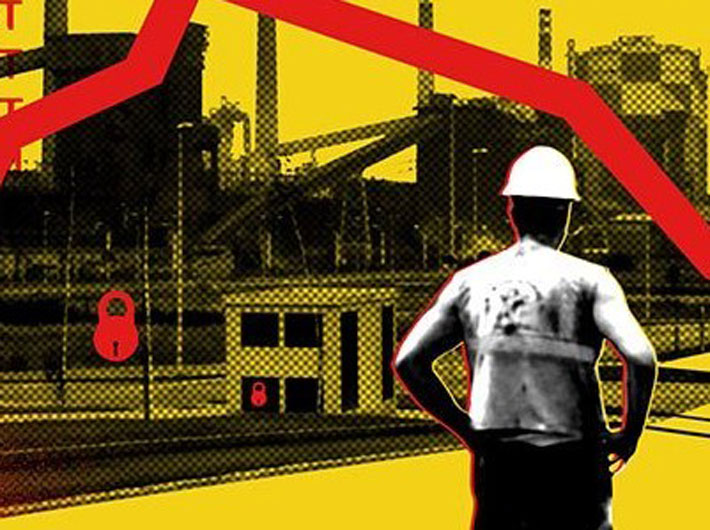
The real test is whether more workers experience the proximity of law in their daily lives through secure wages, social protection, and dignified working conditions
The story of labour law in India is not just about laws and codes, but also about how the nation has continued to negotiate the position of the workforce within its economic framework. The implementation of the Labour Codes across the country in November 2025 marks a definitive endpoint in the process. Yet it also prompts a deeper reflection: whether the reform has increased protection or merely restructured it.
Social structure in India was more dominant over labour than the legal structure, even before any laws came into existence. Occupations were tied with specific castes, and issues were settled within the communities. No state mechanism regulated the work, but it was stable, hierarchical, and had restricted mobility. Such a balance began to change during the colonial period, when labour laws were enacted – not to empower labourers but to punish them. Violations of contract might lead to penalties for workers, limiting their mobility, and even to early protective legislation aimed at guaranteeing productivity rather than benefiting workers.
Freedom came with an inherent change of purpose. The labour legislation became a tool of social justice, grounded in a constitutional vision. The state passed legislation on wages, industrial relations, and welfare, and courts broadly construed the meaning of rights by incorporating livelihood into them. For employees in the formal sector, it meant tangible payoffs, stronger unions, higher wages, and institutionalized bargaining power. However, its reach remained limited, encompassing only a marginal share of India's total workforce.
The real story is reflected in the numbers. Formal employment at the beginning of the 2000s accounted for approximately 8-10% of total employment. This proportion had only risen to approximately 10-12% in the year 2012. Differently put, almost 9 out of 10 employees were not within the effective jurisdiction of the labour law. Formal employment increased to approximately 21.8% by 2022-23, yet in a broader sense of formality, distinct from a redirection of working conditions. A large proportion of labourers remain in precarious work, even though they are formally employed.
Strengths of unions, which were previously a characteristic of the organised sector, have also waned gradually. Their membership, which was approximately 11.6 million in 2010, is projected to have reduced to approximately 10.4 million in 2020. This drop is not only quantitative but also a qualitative change in labour relations, as collective bargaining has weakened and been individualized, leading to an increase in contract-based employment.
Probably the most dramatic change is in the way women are being engaged in the workforce. The rate of women’s participation in the labour force, which had reached approximately 33% in the early 1990s, dropped sharply to 22-23% in 2011-12, puzzling economists. Though participation recovered to about 37% by 2022-23, a significant gap remains. These statistics indicate that legislative protections have not been sufficient to overcome the structural impediments posed by social norms, care burdens, and inappropriate jobs.
Meanwhile, the character of the work has changed. Even today, informal employment remains dominant, accounting for about 74% of non-agricultural employment in recent estimates. This continuity of informality points to one fundamental drawback of the Indian labour law system - it was designed around factory work. Yet, the majority of India's workforce has never been formally employed.
Another twist on this complexity is the emergence of the gig economy. However, it is estimated that gig and platform workers in India numbered approximately 10 million by 2024-25 (NITI Aayog projection, 2022 Policy Brief), a figure the Union Budget 2025 formally recognized and expected to reach 23.5 million by 2029-30. These employees are in a kind of zone, an intermediate state between conventional employer-employee relations, yet reliant on platforms to make a living. Their development has revealed inefficiency of the current legal types and has led to pressure to alter them.
It is against this backdrop that the Labour Codes strive to rebrand the labour law. The reform simplifies coverage by consolidating close to 29 central laws into four codes. The parliamentary proposal for a National Floor Level Minimum Wage (NFLMW) and the introduction of social security for gig workers are signs that the direction toward inclusiveness is set. Meanwhile, the suggested shift toward flexibility is also reflected in modifications to the retrenchment thresholds and amendments to the conditions for union acknowledgement.
It is important to note that whether these changes indicate progress or a compromise ultimately depends on how they operate in practice. The statistics of previous decades provide a lesson: paper laws do not necessarily lead to results on the ground. In India, most workers still work in the informal sector, with no social protection, even decades after welfare legislation. There is little reason to believe that consolidation will resolve this structural dilemma on its own.
The numbers have ultimately led to an ongoing disconnect between the will and the deed. The Indian labour law has been extended several times in its scope, expanding its coverage of workers in factories and acknowledging workers in the gig economy; nevertheless, it has not kept pace with the size of the workforce. The Labour Codes can reduce this gap, but only through implementation as ambitious as the ambition itself.
Ultimately, it does not matter whether there are fewer labour laws in India today than there were a few years ago. The real test is whether more workers experience the proximity of law in their daily lives through secure wages, social protection, and dignified working conditions. The history of labour law reform in India will not conclusively end until the statistics begin to show such a change.
Ayush Kumar Upadhyay is Master’s student in Public Policy and Governance & LLM in Social Policy at Tata Institute of Social Sciences (TISS), Hyderabad.