
Mallya case: banks to learn their lesson

The amount that Mallya failed to repay to banks is more than the total default on education loan in the country at a little over Rs 5,000 crore

jasleen

Jasleen Kaur | March 14, 2016 | New Delhi

#Kingfisher Airlines   #Rajya Sabha   #Vijay Mallya   #Banks   #Banking   #Column  


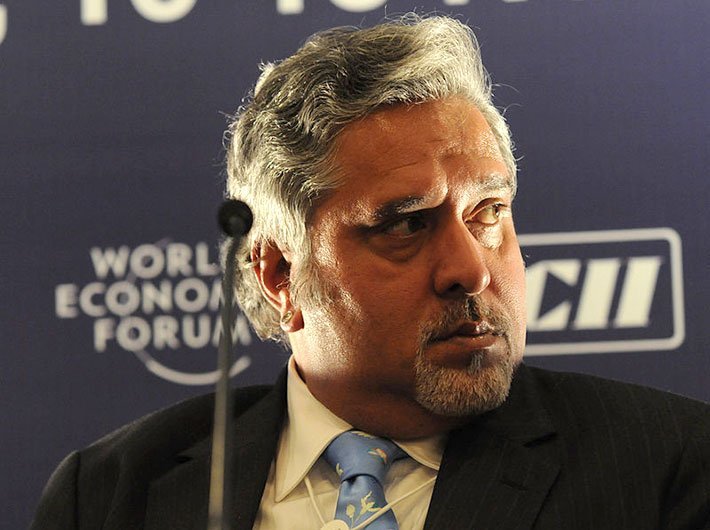
The recent statement from the liquor baron Vijay Mallya indicating he may not return to India at all has another bad news for banks which are putting efforts to recover Rs 7,000 crore from him. 

Putting the entire onus on banks, Mallya has said banks give out loans knowing the risk involved and he should not be made a villain. Of course he should not be. After all his intentions were best, as he claims and it is a bank which decides who gets the loan. It is not the first instance where banks are running after a business giant for recovery of loans. But it seems they have not learnt the lesson yet.
 
Not an easy road ahead for Indian banks

The poor accountability mechanisms have reduced the banking sector, specifically the state-run banks, to weak financial institutions burdened with huge debt of non-performing assets.

Easy loan to big companies, without monitoring the end use of funds, has been some of the reasons for the poor state of banks. Though, the picture changes completely when it comes to giving or recovery of loans from poor farmers. Even today, poor farmers are forced to commit suicide if they fail to pay off small loans.

No one can be blamed alone in the entire episode of Rs 7,000 crores scam. While a clear case of default and fund diversion and financial irregularities happened way back in December 2011 by Mallya. It was only in November 2015, when the State Bank of India (SBI), leading lender in the consortium, tagged him as wilful defaulter.

Only in March this year, SBI, which heads the consortium of 17 lenders to the Kingfisher Airlines, sought arrest of Vijay Mallya, when the bank approached Debt Recovery Tribunal. It sought action against him defaulting on loans over Rs 7,000 crore.

It was considered to be a strong action, but it was little too late. Banks filed petition in the supreme court to ensure Mallya does not flee from the country. But the liquid baron, who was already tipped off about the banks moving court, had already left the country.

It created a huge political uproar with political parties blaming each other for creating an easy path for Mallya to escape. But the entire story reflects how easy it is to manipulate things and make mockery of India law and judiciary for at least some people in the country.

Mallya is accused of defaulting Rs 7,000 crore. According to an estimate this is more than the total default on education loan in the country at a little over Rs 5,000 crore. It would be difficult for anyone to accept that the government and investigating agencies were unaware that the system was manipulated.

So far Mallya has not showed any willingness to repay. He has managed to use the judicial system to delay the loan repayment to banks.
While there is a clear chance that banks recovers only a fraction of their several thousand crores of dues as have been the story in the past.

Picture will be clearer in the coming months when we will see how severely Rajya Sabha member Vijay Mallya is dealt with. But the only hope one can have is that the banks learn a lesson this time and do not repeat the same mistake again.

Comments


Other News

Is the US a superpower anymore?

On April 8, hours after warning that “a whole civilisation will die tonight,” US president Donald Trump, exhibiting his unique style of retreating from high-voltage brinkmanship, announced that he agreed to a two-week ceasefire with Iran. The weekend talks in Islamabad have failed and the futur

Machines communicate, humans connect

There is a moment every event professional knows—the kind that arrives without warning, usually an hour before the curtain rises. Months of meticulous planning are in place. And then comes the call: “We’ll also need a projector. For the slides.”   No email

Why India is entering a ‘stagflation lite’ phase

India’s macroeconomic narrative is quietly shifting—from a rare “Goldilocks” equilibrium of stable growth and contained inflation to a more fragile phase where external shocks are beginning to dominate domestic policy outcomes. The numbers still look reassuring at first glance: GDP

Labour law in India: A decade of transition

The story of labour law in India is not just about laws and codes, but also about how the nation has continued to negotiate the position of the workforce within its economic framework. The implementation of the Labour Codes across the country in November 2025 marks a definitive endpoint in the process. Yet

Time for India to build genuine resilience in energy security

There is a strip of water barely 33 kilometres wide between Iran and Oman that connects the Persian Gulf to the rest of the world`s oceans. For most of India`s history, it was a distant geographic fact. Since late February, it has been a kitchen problem.   The Strait of Hormuz. T

Will an oil price shock crash the global economy?

As tensions rise between Iran and Israel, the potential for ongoing disruption in the Strait of Hormuz has driven global energy markets very unstable. With crude prices climbing towards $140 per barrel, the world is facing its most significant oil shock since 1973.   However,


Archives

Current Issue

Opinion

Facebook Twitter Google Plus Linkedin Subscribe Newsletter

Twitter







