In spite of regulations, what is hindering the proper and safe disposal of e-waste in India?
Old computers, mobile phones, refrigerators, television sets, all need to be discarded at some point. The end-of-life of such products needs proper waste management system. This is important since such devices contain over 50 types of hazardous materials. These include heavy metals like lead, cadmium, mercury and toxic chemicals like poly chlorinated biphenyls (PCB) and brominated flame retardants (BFR). Alongside they have valuable materials like copper, glass, platinum, gold, plastics, metals, and rare earth metals. A proper disposal system should ensure safe disposal of harmful substances, as well as an efficient recovery of usable materials.
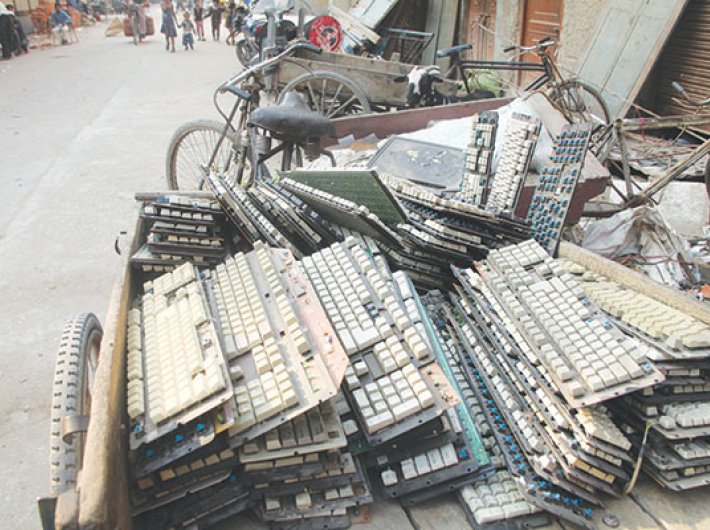
Currently, over 95% of e-waste is collected and recycled in small shanty operations which creates toxicity of soil and water, besides putting workers at health risk. Often the operations concentrate on ‘cherry-picking’ usable materials like copper, gold and glass, while dumping the rest. These informal sector operations recycle and dispose most of the estimated one million tonnes of e-waste produced annually in India, and employ thousands of workers including women and children.
To shift these hazardous operations to environmentally sound ones, the government had notified E-waste (Management and Handling) Rules in 2011, which came into force in 2012. The attempt was to carve out a ‘green’ channel of waste collection and divert waste from the informal to the formal sector. These rules recognised the best international practices, and extended the producers responsibility beyond end-of-life of products to include the collection and disposal of waste. Hence, a company manufacturing computers needed also to ensure that these are disposed of properly. EPR (extended producer responsibility), as this is called, is the core of the Indian rules, and puts the onus onto the producer/manufacturer of such goods. The producer is also required to set up collection centres and ensure the waste is channelised to an authorised recycler.
Unfortunately, as per independent evaluations, the industry has fallen short of its commitment. Despite rules being made in full consultation with the electronics and electrical industry, they have not made the required investments to set up ‘green’ collection and recycling networks, even though they have the requisite international experience of doing so. On the other hand, 138 licences have been granted to independent recyclers, but without the collection systems in place. This has resulted in a ‘business as usual’ scenario, where licensed recyclers are collecting e-waste from the same informal sector channels, rather than create new ones. It is problematic since once waste is in the informal sector there is no way to ensure that it will be dealt with safely. In fact, bulk users continue to auction e-waste to the highest bidder, rather than to authorised recyclers, despite legal restrictions. Some licensed recyclers are reportedly only collecting waste and exporting it to companies internationally for recycling. Hence precious materials which could be locally recovered are sent out, adding no incentive for new local networks. Another problem has been the illegal imports of e-waste, in violation of both international and Indian regulations. Much of the waste comes in as ‘mixed metal scrap,’ and escapes detection.
The Rules of 2011 have not been successful. The reasons include a reluctance to regulate by the state pollution control boards (data filed in an ongoing case in the national green tribunal in Delhi shows the dismal efforts of most of them), unwillingness by the industry to invest, and the grant of recycling licences without the requisite proper collection networks in place. Another crucial reason is the lack of effort to involve the informal sector in the new proposed systems. This is necessary, since a lack of a baseline cost of this sector makes them competitors. Creating cooperation instead of competition by involving them in collection and disassembling operations could be a way of implementing this. Though a couple of waste-pickers collectives have come forward to obtain licences, it has been a difficult task for them.
Currently a new amended law (2015) is on the table as a draft. However, implementing a safe e-waste disposal system in India will take more than a good law. This law is not merely an emissions and discharge control environmental legislation, it also attempts to create a new collection and recycling infrastructure. This will require hand-holding, problem solving, and a cooperative approach of stakeholders like the municipalities, other local bodies and the pollution regulators. It will also need willingness to comply by the industry, and reskilling of informal sector workers to enable their participation. Finally, it needs a massive awareness effort to educate consumers and especially bulk users to dispose waste in a proper manner.
Agarwal is director of Toxics Link.