NGOs and others stepped forward as Covid-19 challenges threatened to undermine public health management
The union government enforced a nationwide lockdown on March 25, 2020 to curb the spread of coronavirus as it was causing large-scale infection and disease. Challenges of pandemic management and levels of distress were revealed during this time.
The fear of Covid spread like wildfire and a necessity was felt to teach people about Covid-appropriate behaviour. Civil society of India, true to its values, came forward to help people across the country. Civil society, often known as the “third sector”, is a frequently used term, but it is rarely understood. It is the wide array of non-governmental and not-for-profit organisations that have a presence in the public.
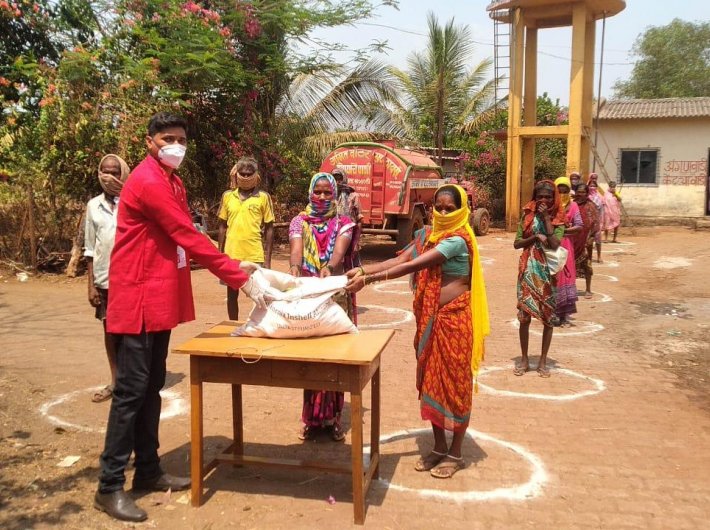
Despite inadequate resources and emphatic permission to venture out, all the civil society organisations (CSOs), be it new or old, small or large, urban or rural, came out in large numbers in true spirit of volunteerism. They offered water, food, first aid, ambulance, medical supplies, etc. to people.
All the commercial activities came to a standstill and many migrant workers, who had been invisible so far, returned back to their hometowns with little or no access to food, transport and medical aid in case of any accident or injury.
CSOs have played a crucial role in the hard times of the pandemic. Consider the roles that CSOs have been playing during the COVID-19 pandemic in India:
Supporting Migrant Workers
Sadly, the public health emergency turned into brutal police action on some inter-state borders and highways. CSOs left no stone unturned to help migrant workers, who were provided with water, food, temporary accommodation, first aid, footwear etc., as they were walking hundreds of miles barefoot in the scorching sun on the tarred roads of highways. CSOs facilitated their passage across various state borders in order to reduce exposure to infection.
Standing in Solidarity with Farmers
The support went beyond awareness generation and food relief; CSOs supported small farmers to access interest-free credit. They also made sure that the several food and direct cash transfer initiatives launched under PM Garib Kalyan Yojana reached the right people.
Building a network for Healthcare
Another wave struck with vengeance towards the end of March 2021. There was a severe shortage of testing facilities, medicines, hospital beds, oxygen cylinders and ICU beds to cater to the increasing demand. Crores of people got infected and lakhs of people died due to inadequate medical resources. Yet, the CSOs bravely continued the food relief camps, awareness generation and medical supply programmes.
The second wave of Covid-19 was even more devastating than the first wave. It particularly excruciated the poor and the marginalised whose scanty resource base barely supported the long drawn battle against the peril of the pandemic.
Protecting Children
Many lives were lost, many children lost their parents. Many financial assistance programmes were launched for such students by the central government, state governments and many civil societies. Several CSOs played a vital role in building the capacity for the guardians of the orphaned children. CSOs also supported such children through psychosocial care.
CSOs committed to providing access to a quality education for children impacted by Covid-19. More than 1.5 billion children around the world are affected by school closures due to the pandemic, impacting around 90 percent of the world’s student population.
The pandemic has been tough for everyone. It has brought a particular set of challenges, especially for socially vulnerable families. During lockdowns, children were deprived of social interaction and communication, which caused emotional exhaustion and fatigue.
Repurposing
To carry new mutual initiatives, many established CSOs have shifted their work from longer-term projects to emergency relief. Some of them partnered with government authorities in order to distribute aid to their local networks, others are stepping out to fill gaps left by the state.
CSOs that typically work on democracy issues and human rights are repurposing to address the immediate public health crisis. Such repurposing usually takes place in times of humanitarian crisis and CSOs successfully reach out to vulnerable communities.
Civil Society Organizations played a remarkable role during the pandemic by providing the necessary guidance on the protection and promotion of human rights, tracking and monitoring compliance, urging state to fulfill its human rights obligations and providing services. While the future of our supposed normal life might appear unforeseeable, the only thing that can be said with true conviction is that the joint efforts of our society have been a glimmer of hope. If we want to triumph, we have to continue making collective efforts and accelerate them to defeat the virus.
Shashi Prakash Singh is a social worker, who recently received appreciation for his “Outstanding Performance in Educating Poor Children Across India” from Bollywood celebrity and philanthropist Sonu Sood. He has also been awarded with the International Glory Award-2021.