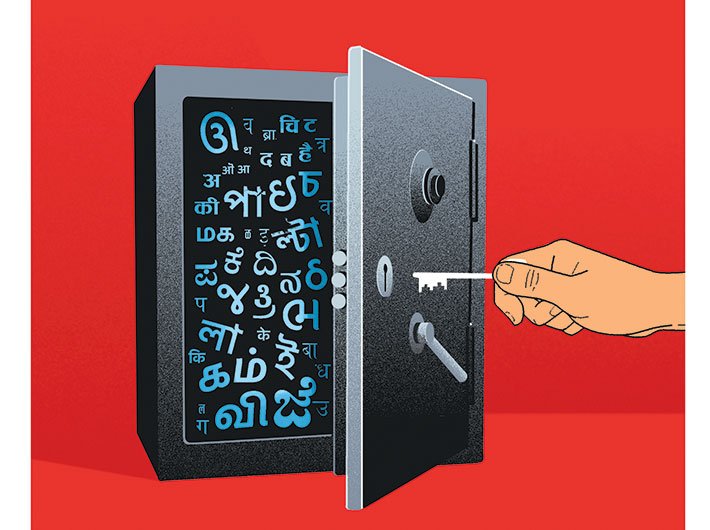
Like tangible property, failure to enforce IP is as good as giving up the right to the asset, and start-ups need to invest in protecting IP if they want to survive.
The term ‘start-up’ allows for a certain leniency in expectations. It refers to a company that is a “a fledgling business enterprise”. A ‘start-up’, as defined by the government in the Start Up India scheme, is entitled to various concessions, including reduced income-tax liability and cutting down red-tape in other compliance requirements.
The framework for start-ups has been one of protection: Protection against bureaucracy, protection against tax; protection against delays.
Intellectual property has been a vexing problem for start-ups. Most start-ups have adopted defensive strategies, mainly trying to stay out of legal trouble, focusing on not infringing third-party IP rights. These defensive strategies are in keeping with the protectionist model of start-up development. However this framework fails when start-ups have to step up to enforce their rights, because the culture around start-ups has not enabled thinking of IP as an asset, and has instead focussed on minimizing liability caused by third-party IP.
History has taught us that this is not a promising strategy for business growth.
Take the case of Coca Cola. The formula for the manufacture of Coca Cola has been a secret for the past 125 years. It is curious that Dr. John Pemberton sought to keep it confidential when he invented the formula in 1886, rather than filing for a patent for it. The first US patent for any invention was granted in 1790, so clearly Dr. Pemberton and the people he subsequently sold the formula to, made a conscious decision to maintain the formula as a trade secret rather than filing a patent application which would give them monopoly for 20 years after filing, but would require the application to be published, making the formula known.
This was a sophisticated, well thought-out choice for a start-up in the 1890s, but one that continues to sustain the business of the company.
On the other hand, there are companies like Linux, who have made their software available for free under an open source licence, but earn revenue from add-ons and premium services that their clients may need to optimise the free software. The choice to make the software available under an open source licence was made when the company was started in 1991.
The lessons from Coke and Linux are surprisingly simple. Start-ups need to think about IP as a business asset alongside their business plans. Not afterwards.
Thinking about IP defensively has many problematic consequences. Start-ups miss the boat on protecting inventions for which they could have patent protection, because patents and designs have to be applied for before public use. Secondly, businesses often do not have a realistic idea of what they can seek protection for, leaving them feeling cheated and their business plans at risk when a competitor uses the same business method, which by itself cannot be patented by any party in India. Thirdly, they are at higher risk of being exploited by larger, more developed businesses which are able to negotiate agreements with them where the start-up’s IP is at risk.
Start-ups need to identify, protect, and most importantly enforce their IP against infringers. People often resort to the familiar trope that Indian courts are slow and that legal action is expensive, but no one would make that argument if a trespasser entered their building and threatened to divest them of property. Like tangible property, failure to enforce IP is as good as giving up the right to the asset, and start-ups need to invest in protecting IP if they want to survive.
Consider the case of prominent Indian start-up Reverie Language Technologies. Reverie is known for its pioneering language technology software solutions that allow Indians to access various services such as operating a set-top box, using their phones in the user’s language of choice.
A company based in China and India posing as a customer obtained trial software for its mobile phones from Reverie. After obtaining the trial software, they stopped communicating with Reverie and used the trial software for lakhs of its products without payment. Reverie sued this company before the Delhi high court and was able to obtain an injunction and to conduct raids on several factories and offices of the infringing company, finding incriminating evidence against them. Reverie’s willingness to enforce its IP sent an important message to all
potential customers that there would be consequences for infringement of IP.
Under Indian law, consequences of IP infringement are serious. Apart from the disruptions caused to an infringer’s reputation and business by raids and injunction orders, infringement could entail payment of damages. These damages would be assessed on the basis of actual use of IP as well as punitive damages for infringement, which could together run into crores of rupees.
However, a company will have confidence to enforce its IP only if it has clarity on the rights and entitlements, and the sooner start-ups seek legal advice, the better it is.
Sometimes, a founder could realise that she has stumbled on a million-dollar idea, and decide to centre all her business around protecting that idea. However, even when this does not happen and the IP report card looks bleak, start-ups could realise that while they cannot protect their main operations as IP, they could still go ahead with the business, understanding this vulnerability and planning business accordingly. On the other hand, a company could decide to be IP-free and generate revenue from advertising, “freemium” and add-ons. But these choices have to be made consciously and have to inform business operations.
There is no ‘secret formula’ for a start-up to secure IP protection and we should not look for one. Start-ups should behave like any other business and think of IP as an asset-building activity and not as a risk-mitigation measure. Awareness of IP, good legal advice, and making important philosophical choices for the company are key, as history has taught us.
Sukumar, a Delhi-based intellectual property lawyer, is co-founder of iProbono India, which provides pro bono legal assistance to individuals and civil society organizations in India. She is a court-appointed mediator for trademark matters.
(The article appears in the August 15, 2018 issue)