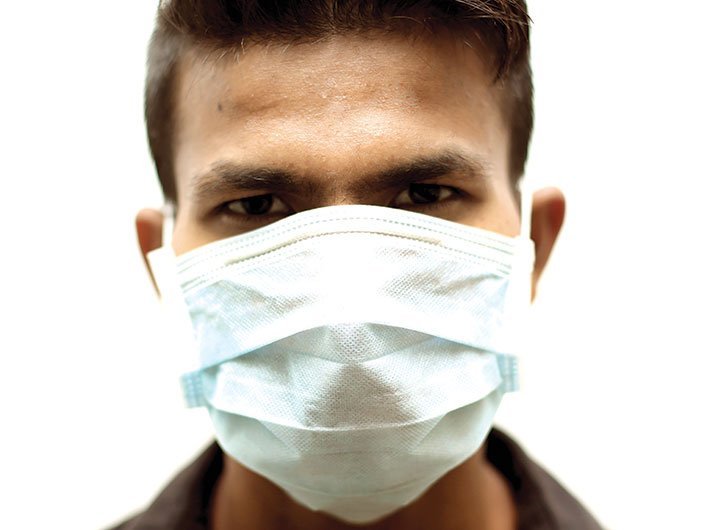
Part of what makes TB so difficult to eliminate in India is that it is not simply a health problem. It is a governance problem
India set itself an extraordinary deadline. While the rest of the world aimed to eliminate tuberculosis by 2030, India said it would do it by 2025, five years ahead of the global target. That deadline has now passed. We are in 2026, and tuberculosis is still the leading infectious disease killer in this country. The question worth asking on World TB Day is not just whether we missed the target, but why we keep celebrating the numbers while quietly ignoring the gaps.
The WHO Global TB Report 2025 carries data that India can, in parts, be proud of. TB incidence has dropped from 237 cases per lakh in 2015 to 187 per lakh in 2024 — a 21% decline, nearly double the global average. Treatment coverage has jumped from 53% to 92% in the same period. India diagnosed a record 26.18 lakh TB patients in 2024. These are not small achievements. They reflect real investment and real political will, at least on paper.
But India still accounts for 25% of all TB cases in the world. It still carries 28% of all TB deaths globally. One lakh cases continue to go undetected every year, meaning one lakh people are walking around, unknowingly transmitting a disease we officially claim to be eliminating. The mortality rate of 21 per lakh is still seven times the 2025 target of 3 per lakh. If we are going to be honest, the numbers tell two stories simultaneously — and we have been very selective about which one we tell.
Part of what makes TB so difficult to eliminate in India is that it is not simply a health problem. It is a governance problem. It is a poverty problem. It is, in many cases, a nutrition problem. Nearly 60% of people with TB symptoms in India seek care first from a private provider. That sounds like a matter of individual choice, but it is actually a statement about the public health system — specifically, about how much people trust it. Private providers often diagnose faster, but they also notify inconsistently, treat variably, and rarely follow up. When a patient stops mid-treatment because they cannot afford to keep returning, drug resistance grows quietly in that gap. India now accounts for nearly 32% of all MDR-TB cases in the world. That is not a coincidence; it is a consequence.
The Pradhan Mantri TB Mukt Bharat Abhiyan launched in 2022 brought something genuinely innovative to TB care: the Nikshay Mitra programme, where individuals and organisations could adopt TB patients and provide nutritional support. Over 2.59 lakh Nikshay Mitras have been registered, and nearly 18 lakh support kits have been distributed. The idea behind this — that TB recovery depends on food as much as medicine — is sound and grounded in public health evidence. Malnutrition weakens immunity; it is one of the single biggest drivers of TB vulnerability in India. The question is whether a programme driven by voluntary adoption is sustainable policy or whether it is outsourcing a state responsibility to goodwill.
There is also the question of where TB is concentrated. It is disproportionately a disease of overcrowded slums, of migrant labour quarters, of tribal districts, of households without ventilation or clean water. These are essentially structural conditions. No amount of AI-enabled X-ray machines — however impressive — can offset the disease burden created by the housing conditions that make transmission near-inevitable. India has introduced new molecular diagnostics, shorter six-month treatment regimens for drug-resistant strains, and digital surveillance tools. The technology pipeline is genuinely promising. But technology deployed into an unaddressed social context does not eliminate disease. It manages it.
The 2025 deadline was always ambitious. Some public health scholars argued from the beginning that it was more political than epidemiological. What matters now is not the missed deadline itself — targets can be revised — but what we learn from the gap between ambition and outcome. The lesson is not that India tried and failed, the lesson is that elimination requires treating TB as a social determinant issue, not just a clinical one. It requires fixing how the private sector integrates with national notification systems. It requires nutrition security, housing standards, and wage support for patients undergoing the long treatment courses. It requires consistent political attention even when TB is not making headlines.
World TB Day is commemorated every year partly to ensure that attention does not drift. There is a tendency, once a disease stops feeling like a crisis, for it to fade from policy priority — even when 300,000 people are still dying from it every year in one country alone. India's progress is real and worth acknowledging. But the celebration should be proportionate. We are not at the end of this story. We are, at best, somewhere in the middle of it, and the next chapter depends on whether the political will that built the infrastructure also extends to the harder, less visible work of addressing why so many people essentially remain vulnerable in the first place.
Tivisha Wanchoo is a Master's student of Public Policy and Governance at Tata Institute of Social Sciences, Hyderabad, with interests in governance, public health policy, and gender studies.
References:
1. World Health Organization. Global Tuberculosis Report 2025. Geneva: WHO; 2025. https://www.who.int/teams/global-programme-on-tuberculosis-and-lung-health/tb-reports/global-tuberculosis-report-2025
2. Ministry of Health and Family Welfare, Government of India. India records 21% decline in TB incidence — WHO Global TB Report 2025. Press Information Bureau; November 2025. https://www.pib.gov.in/PressReleasePage.aspx?PRID=2189415
3. Ministry of Health and Family Welfare, Government of India. World Tuberculosis Day 2025 — Towards a TB-Free India. PIB; March 24, 2025. https://www.pib.gov.in/PressReleasePage.aspx?PRID=2114549
4. DD News / Ministry of Health and Family Welfare. India records 21% decline in TB incidence, nearly double global rate: WHO Report. November 2025. https://ddnews.gov.in/en/india-records-21-decline-in-tb-incidence-nearly-double-global-rate-who-report/
5. eHealth Magazine. Top Insights on India from the WHO Global TB Report 2025. November 21, 2025. https://ehealth.eletsonline.com/2025/11/top-insights-on-india-from-the-who-global-tb-report-2025/
6. Insights on India. Major Impediments to Ending TB in India: Challenges & WHO 2025 Insights. November 13, 2025. https://www.insightsonindia.com/2025/11/13/global-tb-report-2025/
7. Central TB Division, MoHFW / Nikshay Dashboard. Community Support Data — Ni-kshay Mitra Programme. As of March 23, 2025. https://dashboards.nikshay.in/community_support/overview
8. Pradhan Mantri TB Mukt Bharat Abhiyan. About PMTBMBA — Nikshay Mitra Initiative. Ministry of Health & Family Welfare, Government of India. https://tbmuktbharat.gov.in