Supply-side interventions—energy diversification, agricultural efficiency, and logistics optimization—must complement traditional demand management tools
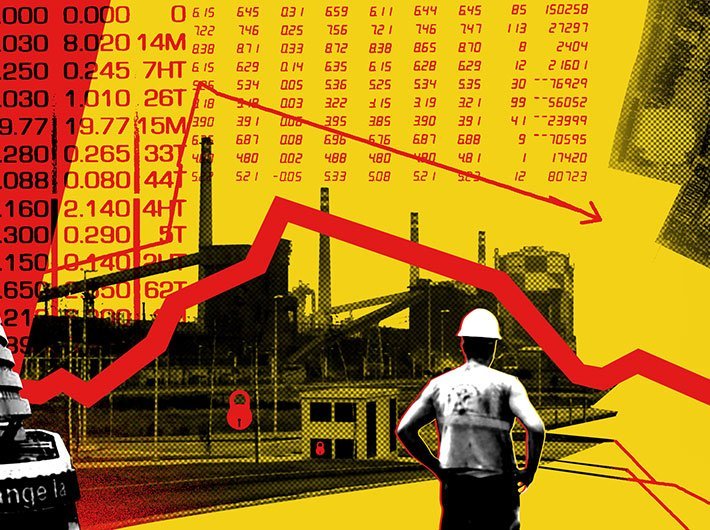
India’s macroeconomic narrative is quietly shifting—from a rare “Goldilocks” equilibrium of stable growth and contained inflation to a more fragile phase where external shocks are beginning to dominate domestic policy outcomes. The numbers still look reassuring at first glance: GDP growth hovering around 6–6.5%, inflation broadly within the 4±2% target band. But beneath this surface stability lies a structural tension that resembles a milder form of stagflation—slower momentum coupled with persistent price pressures. Not a crisis, but a constraint.
Imported Inflation and the Oil Shock Transmission
The most immediate trigger of this shift is imported inflation, particularly via energy prices. India imports nearly 85% of its crude oil, making it acutely sensitive to geopolitical disruptions. Recent spikes in global oil prices toward the $90–100 per barrel range have begun feeding into domestic inflation through multiple channels—fuel, transportation, fertilizers, and ultimately food. This is not merely a first-order price effect. The second-round impacts are more concerning. Higher logistics costs raise input prices across manufacturing and services, while elevated fertilizer costs transmit into food inflation with a lag. Indeed, India’s CPI inflation—while averaging near 5%—has been disproportionately driven by food and fuel components, which together account for over 50% of the consumption basket. The policy dilemma is clear: this is cost-push inflation, not demand-pull. Traditional monetary tightening is less effective against such supply-side shocks. Raising interest rates does little to reduce imported oil prices, yet it risks compressing domestic demand. As a result, policymakers are forced into a reactive stance, absorbing inflation rather than decisively controlling it.
Weak Monetary Transmission in a Credit-Driven Economy
Compounding the problem is the weakening effectiveness of monetary policy transmission. While the Reserve Bank of India has maintained a relatively tight policy stance, the pass-through to real economic activity remains uneven. India’s financial system is increasingly characterized by heterogeneous credit channels—public sector banks, private lenders, NBFCs, and fintech-driven lending platforms. This fragmentation dilutes the transmission of policy rates.
For instance, despite cumulative rate hikes of 250 basis points since 2022, lending rates have adjusted asymmetrically, and credit growth has remained robust at 14–16% year-on-year. This creates a paradox: monetary tightening coexists with strong credit expansion. Household borrowing—particularly unsecured retail loans—has surged, supporting consumption even as real incomes face pressure from inflation. The result is a form of policy leakage, where interest rate adjustments fail to fully restrain demand. At the same time, investment growth remains uneven. Private capital expenditure has not accelerated proportionately, reflecting lingering uncertainty and global headwinds. Thus, the economy exhibits a dual structure: consumption sustained by credit, but investment constrained by risk—hardly a foundation for high-quality growth.
External Shocks and the Limits of Domestic Policy
What distinguishes this phase from earlier cycles is the increasing dominance of external variables over domestic macroeconomic outcomes. Exchange rate pressures, capital flow volatility, and global commodity cycles are now central to India’s economic trajectory. The rupee, while relatively stable compared to peer currencies, has required active management through foreign exchange interventions. Episodes of capital outflows—estimated at over $15 billion in recent months—have forced the central bank to balance currency stability with liquidity conditions. This effectively shifts the policy focus from inflation targeting to exchange rate smoothing, even if unofficially. Fiscal policy faces similar constraints. The government remains committed to a fiscal deficit target of ~4.5% of GDP, but rising subsidy burdens—especially on fuel and fertilizers—limit consolidation efforts. Any attempt to shield consumers from global price shocks through tax cuts or subsidies risks widening the deficit, while fiscal tightening could dampen growth further.
This interplay creates a classic stagflationary tension:
• Growth is moderated by external uncertainty and policy constraints
• Inflation persists due to supply-side shocks
• Policy space—both monetary and fiscal—is increasingly restricted
However, unlike the stagflation of the 1970s, India’s situation is more nuanced. Growth remains positive and relatively strong by global standards, and inflation, while elevated, is not runaway. Hence the characterization: “stagflation lite”—a condition of constrained expansion rather than outright stagnation.
India is not entering a macroeconomic crisis, but it is entering a more complex regime where the old playbook offers diminishing returns. The coexistence of ~6% growth and ~5% inflation may appear benign, but it masks deeper structural frictions—imported inflation, weak policy transmission, and rising external dependence. The key risk is not immediate instability, but policy fatigue. When central banks cannot effectively control inflation, and governments cannot freely stimulate growth without fiscal trade-offs, the economy settles into a lower-efficiency equilibrium. Over time, this can erode real incomes, compress savings, and dampen investment sentiment. Avoiding this outcome will require a shift in strategy. Supply-side interventions—energy diversification, agricultural efficiency, and logistics optimization—must complement traditional demand management tools. Strengthening monetary transmission and deepening financial markets will also be critical. Ultimately, India’s economic resilience will be tested not by its ability to grow in stable conditions, but by its capacity to sustain momentum amid persistent global shocks. The current phase of “stagflation lite” is not an endpoint—but it is a warning signal.
Naman Mishra is Doctoral Researcher, Bennett University, Greater Noida. Palakh Jain is Associate Professor, Bennett University, and Senior Visiting Fellow, Pahle India Foundation.
Views are personal, and do not reflect the opinions of the organizations.