Data on every front show how institutions fail half of the population: it’s time to make a course correction
Every year on the 8th of March, governments issue statements, corporates run campaigns, and social media fills with tributes to women's resilience and achievement. International Women's Day has become a moment of visibility. What it has not become, at least not consistently, is a moment of accountability. And hence we need to ask a question that celebratory rhetoric tends to avoid: not whether India honours its women, but whether India’s institutions are structurally built to include them. The evidence drawn from official government data suggests they are not, and that this failure has consequences far beyond the women it excludes.
Democratic governance rests on a foundational premise: that institutions derive their legitimacy from the people they represent. By that standard, India has a structural problem. Women constitute nearly half the population; however, they remain marginal actors across legislatures, bureaucracies, judiciaries, and public health systems. The consequences are not confined to women alone. Gender-blind institutions produce gender-blind policy, and gender-blind policy fails society at large. India has no shortage of gender equality legislations. What it has is a shortage of the institutional will to implement it, as an accumulating body of data from the NFHS-5, PLFS 2023–24, and NCRB 2023 show.
Mapping the Exclusion
Women's representation in the Lok Sabha has grown from 5% in 1952 to approximately 13–15% today, a gain of barely 10 percentage points over seven decades. In the 18th Lok Sabha (2024), only 74 of 543 MPs are women. At the state level, only 9% of MLAs are women on average, and no state legislature crosses 20%. On top of that, states like Rajasthan, Uttar Pradesh, and Bihar remain in single digits.
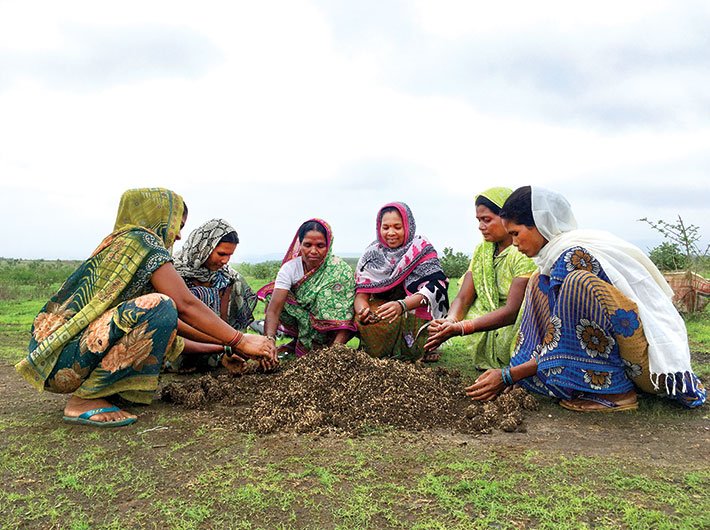
Local governance, however, tells a more hopeful story. The 73rd Constitutional Amendment mandated one-third reservation for women in Panchayati Raj Institutions, producing a genuine grassroots shift. India now has 1.4 million women as elected PRI members, which accounts for 46% of the total percentage. Twenty states have legislated 50% reservation. Yet even this figure is partial. The Ministry of Panchayati Raj and UNDP jointly documented the gap: while it is relatively easy to legislate representation, it is more difficult to create conditions suitable for the actual participation. Women are elected because seats are reserved, then frequently excluded from real governance by patriarchal norms, lack of training, and entrenched assumptions about authority.
What Changes When Women Govern
The Panchayati Raj system is effectively a three-decade natural experiment in gendered governance. Ministry of Panchayati Raj data consistently shows women-led gram panchayats prioritising drinking water, sanitation, and roads. These are the public goods whose absence disproportionately burdens the rural women. States with higher female representation in local governance show measurably different patterns of public investment. NITI Aayog's SDG India Index 2023–24 notes India's gender equality score improving from 36 in 2018 to 49 in 2023–24, but at the same time notes that women's participation in institutional decision-making remains the slowest indicator to change.
The Economic Mirage
The PLFS 2023–24 reports Female Labour Force Participation rising to 41.7%. However, when looked carefully, it reveals distress absorption and not structural empowerment. The increase in FLPR is concentrated almost entirely among rural self-employed women which accounts for unpaid family workers in agriculture, working without contracts or social security. In urban areas, the share of women ineligible for social security benefits increased from 50.9% to 54.6%. Meanwhile, NFHS-5 shows that 89.2% of women hold bank accounts which is an indicator of success of Jan Dhan Yojana. But the employment gap between men (71%) and women (22%) remains among the widest in the world. An account without any economic agency is a symbol, not a solution.
Employer attitudes compound this problem: 28% of business managers have stated that hiring women disrupts the working environment. The Maternity Benefit (Amendment) Act 2017 worsened the dynamic by placing the entire cost of extended maternity leave on employers. It therefore created a financial incentive to avoid hiring women of childbearing age altogether.
On International Women's Day, the dominant narrative is one of progress, and some progress is real. But the data above demands a more honest reckoning. The same year that India celebrates rising female labour force participation, its urban working women are losing access to social security. The same decade that sees campaigns for women's empowerment also sees the Maternity Benefit Act become a tool of exclusion. Progress on paper and regress in practice can coexist and in India, they frequently do.
Reserved Seats, Deferred Justice
The Nari Shakti Vandan Adhiniyam (2023) reserves 33% of Lok Sabha and state assembly seats for women. It is the result of three decades of efforts, introduced and lapsed multiple times since 1996. But the implementation is contingent on delimitation and a fresh Census, which means that a change cannot be expected before 2029-30. The delay is not administrative coincidence: immediate implementation would have displaced roughly 183 sitting male MPs. By linking implementation to delimitation which will expand the total number of seats, the government has found a way to add women without removing anyone already in place.
The Act also omits a sub-quota for OBC women, who constitute nearly 40% of the female population. Without a quota for OBC women, reserved seats risk being captured by women from elite, upper-caste backgrounds which might lead to descriptive representation without any substantive change.
Violence and the Failure of Redressal
The NCRB recorded 4,48,211 cases of crimes against women in 2023. Rising cases numbers sometimes are read as sign of improved reporting confidence. But NFHS-5 reveals that 32% of ever-married women have experienced violence from their husbands, and only a fraction reaches the police. The criminal justice system does not function as a neutral redressal mechanism, instead it frequently reinforces the very norms that enable abuse.
The Nirbhaya Fund which was created to address sexual violence is a case study of institutional failure, as by 2019 nearly 90% of the ₹3,600 crore Nirbhaya Fund remained unspent by states. One-Stop Centres, designed for integrated medical, legal, and psychological support frequently lack basic infrastructure, employ contractual staff with limited job security and remain poorly integrated with police and helpline systems.
In workplaces, the POSH Act 2013 shows the same pattern. Complaints in listed firms increased by 6.2% in FY25, but pending cases nearly tripled from 174 in FY22 to 455 in FY24 with financial services accounting for 46% of pendency. In medium and small enterprises, Internal Complaints Committees are often dysfunctional or structured to protect ownership. The law exists. The enforcement infrastructure does not.
The Intersectional Blind Spot
India's gender framework persistently treats 'women' as a uniform category. NFHS-5 data shows how misleading this is. Anaemia prevalence among Scheduled Tribe women stands at 67.1%, against 48.2% in the general category; female-headed ST households face a poverty rate of 58.3%, against 17.2%. Conviction rates in rape cases involving Dalit women are estimated at under 1%, compared to 25% for upper-caste complainants, thereby reflecting both police reluctance to register complaints and judicial bias. Women with disabilities face a further layer of exclusion as 55% lack literacy skills, their labour force participation stands at 23%, and the RPwD Act 2016 contains no substantive provision for the intersection of disability and gender.
Toward Institutions That Actually Work
India’s gender equality problem is not, at its root, a legislative failure. The laws exist. The failure is institutional – a failure of enforcement, of design, and of political priority. The Ministry of Women and Child Development receives 0.54% of the Union Budget, a number which signals more honestly than any policy document how peripheral these concerns remain. NITI Aayog's own WCD Division has acknowledged the need for mid-course correction on gender equity in flagship schemes but the fact that correction is needed after the fact itself shows that gender responsive budgeting was absent since beginning.
Three things need to change. First, economic policy must move beyond distress-driven LFPR figures and invest in care infrastructure estimated at 2% of GDP to reduce the domestic burden that keeps women out of formal employment. Second, the Nari Shakti Vandan Adhiniyam must be operationalised without strategic delay, and with an OBC sub-quota so that reserved seats translate into substantive representation. Third, the criminal justice system from police station culture to family courts must be reformed so that laws designed to protect women are not quietly neutralised by the institutions supposed to uphold them.
The Panchayati Raj experience shows what becomes possible when women hold decision-making power. The question is whether India's higher institutions have the political will to act on thirty years of that evidence. Moving women from the margins of policymaking to its centre is not a political concession. It is what good governance requires.
International Women's Day is a useful moment of reflection, but reflection is not reform. The 8th of March arrives each year. The data documented here does not change just because a day has been designated to honour women. What should change is institutional action: budgets that reflect stated commitments, laws that are enforced and not merely enacted, and governance structures that treat women's participation not as an aspiration but as a design requirement. Until that happens, Women's Day will remain what it largely is – a date on the calendar and not a turning point in policy.
Tivisha Wanchoo and Tulsi Kumari are Master’s students of Public Policy and Governance at Tata Institute of Social Sciences, Hyderabad. Their interests include governance, gender studies and public institutions.