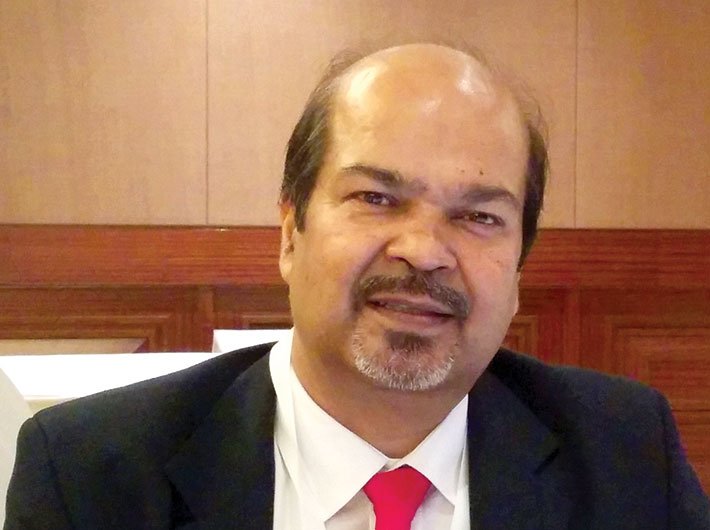
The first council created three years ago under the National Skills Development Corporation, ASDC plans to create India’s largest driver training system. Its CEO tells Sopan Joshi how.
So many people unemployed, yet an estimated driver shortage of 20 lakh. What explains this?
India is full of such paradoxes. There are several reasons for this, but I’d like to point out a couple. One, there is no connect between academia and industry. Mostly, people go through an education for the sake of a degree. It is non-specific and does not prepare them for any vocation. Two, there is no aspirational value attached to jobs that require working with your hands. Which parents will want their child to become a commercial driver?
How does this play out?
I was in Kerala with the state’s labour minister. I proposed that Kerala can become a hub for training drivers in the same way that it is a hub for nurses. He said, “No, no. No drivers from Kerala.” He said Keralites consider themselves as having gone up the value chain of skills. So while service technician or design engineer may be okay in terms of popular appeal, driving is not. Even people who are not well off don’t want to get into this occupation, because a driver’s life is very uninspiring. Bad food, no on-road amenities, poor salaries, staying up at odd hours, loneliness, constantly dealing with poor road conditions, a lot of paperwork and, worst, no possibility of a promotion or better future. And yet everybody wants a driver.
How do other countries manage?
Australia has a shortage of drivers. Drivers demand very high wages. In India, that doesn’t happen because of our large population. If you do not find a well-trained driver, you can always make do with a semi-skilled person who is desperate for a job.
How do you deal with this?
Attach aspirations to blue-collar jobs. Drivers in India typically begin as ‘cleaner’ or ‘khalasi’, which is a life full of humiliation. We are trying to attach some dignity to it. Call them drivers’ assistants.
Isn’t that just an effort to make it sound better? Cosmetic?
That is just the starting point to take out the menial connotation. We are talking about upgrading the job itself. Cleaning a vehicle is merely a part of an assistant’s job, which is about maintaining the roadworthiness of the vehicle. With a little training, they can handle the paperwork and can be trained to inspect the vehicle regularly. We now have trucks with GPS systems, so knowing how to use that will be an added skill. We are also developing ways to counsel those getting into driving to know the career prospects.
What are these prospects?
There is a great demand for personal chauffeurs today, for whom driving is merely one of the duties, as they work like personal assistants. They are paid very well, anything from '30,000 upwards, depending on the person’s skill and personality. Well trained drivers who man the newer, more sophisticated buses and trucks are the highest paid category of drivers (there are reports of salaries as high as '70,000 a month). Urban taxi services are mushrooming in all our cities (notwithstanding a few unfortunate incidents recently). With effective training and certification, this is an area of opportunities.
Who are your clients?
There is no clientèle. We are addressing an ecosystem. We have several stakeholders, including the government, automobile manufacturers, automotive parts manufacturers and transport companies. We have more than 2,400 centres of 170 certified training delivery partners across the country. Their skills are tested by about 500 independent assessment partners, who certify those who clear the tests.
What is the demand for such certificates?
It will take a little more time to say anything with certainty. The initial feedback is positive. There are cases of drivers getting a raise after undergoing training, or getting a better-paying job. A person having a service technician certificate from ASDC can land a job at an automobile dealership or service centre. n
[email protected]