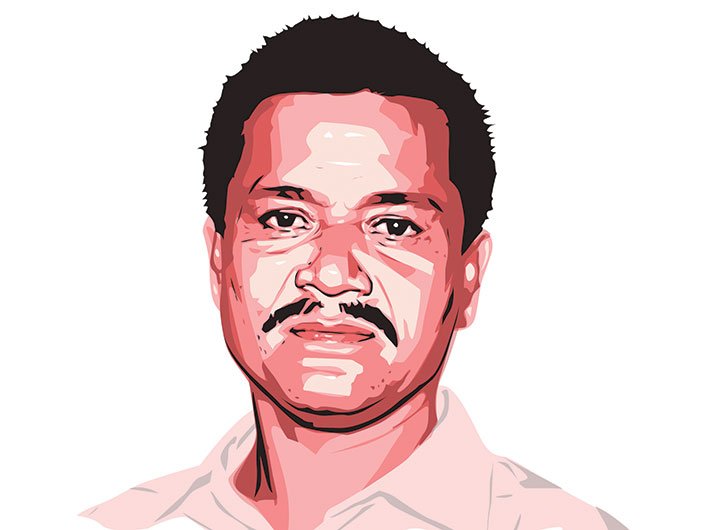
ULFA leader Anup Chetia is back in India and engaged in peace talks with the government.
Anup Chetia, one of the founders and the general secretary of the banned United Liberation Front of Assam, is back in India and engaged in peace talks with the government. Also known as Golap Baruah and Bhaijan, he was extradited from Bangladesh in November, and was later released from Guwahati jail on bail. Chetia had been arrested in Dhaka in December 1997 for illegally entering Bangladesh and illegal possession of foreign currency. He eventually spent 17 years in Bangladesh jails. He was first arrested in March 1991 in Assam but was released by then chief minister Hiteswar Saikia. He went underground after that, leading the struggle to press various demands for Assam, resulting in various cases with Assam police for alleged killing, kidnapping and extortion.
On February 29, Chetia and ULFA chairman Arabinda Rajkhowa met union home secretary Rajiv Mehrishi in North Block and they decided to resume in mid-March the tripartite talks also involving the Assam government. During one of his Delhi visits for the talks, Chetia found time to speak with Chandrani Banerjee. Excerpts from the interview:
There have been so many ups and downs in your struggle. Any regrets?
I definitely look back and think it could have been much better and less of a struggle if the peace process [had] started back in 2011. Better late than never, therefore I am positive even now.
How are the current peace talks moving? Do you think there will be a concrete outcome soon?
I am very hopeful. The talks are moving towards a very positive direction. We have asked for three major things and the government is ready to consider them. However, the final rounds of the talks will happen in the middle of March and probably then we could come up with something solid and positive.
What are the three things, as you say, that you have pressed for?
We have asked for the betterment of farmer community, bhoomi adhikar [land rights] and comprehensive economic development… these are some of the issues which are on the platter. After the third round of talks the outcome would be much clearer.
Paresh Baruah, a member of your breakaway group, is not part of this peace process. He still believes in armed struggle. Do you think it is going to adversely affect the process?
Yes, Paresh is not part of it. I have struggled for long and opted for armed struggle myself so I have nothing to say about his faith and ideology. However, it would surely be good if he could be part of our group. But the entire issue of involving him depends on the government. The government has to take a call and work on it. If any breakthrough is achieved with him that would certainly be a good way forward.
Your struggle as the ULFA leader has been long and tiring. Are you any closer to achieving what you set out for?
We are here on the negotiating table. We have fought for development and growth. We have reached a stage [where we can] talk with the concerned authorities about it. I guess the outcome is here for all of us to see.
Do you think that ULFA could have put forward the demands without an armed struggle?
No, there was no option at that time. We had tried to draw attention towards the issues that were crippling us. However, that hardly helped us in any way. Lastly we decided to pick up arms and launch an armed struggle.
Can ULFA now work in tandem with the government for a better Assam?
Well, the government is positive and receiving us well. I think when the negotiation happens in positive environment positive results come out of it. I am very hopeful.
Do you agree with the negotiations methods and policies of government?
Yes, I do agree with the way talks are moving ahead. I find a lot of positivity and that is the strength of the talks.
Is the government faltering on any aspect of the talks?
I do not think so. The government is forthcoming in paying heed to the problems and in finding solutions; so the fault lines have been taken care off.
What are the issues that Assam suffers from?
Economic development. Economic development surely affects the overall development process. We need development in health, education and the social sector.
You had to deal with the investigative agencies in India and Bangladesh. How was your experience?
It wasn’t bad so far. They were cooperative. I can say just this much.
You were jailed abroad for a long period. Did you lose hope of returning home some day?
The Indian jails are different from the jail of Bangladesh. There were higher restrictions. But I was treated differently, as I was considered a political prisoner.
(This interview was published in March 16-31, 2016 issue)