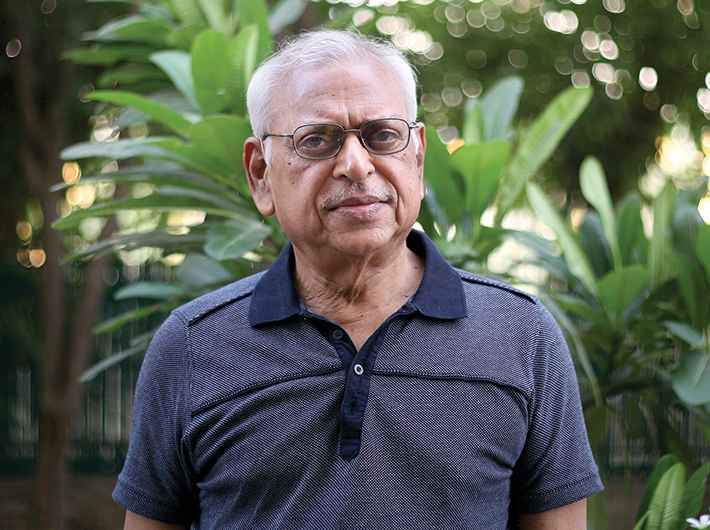
Today judiciary anyway is taking the lead role, what is wrong if it does that officially, asks TN Mishra, the CBI chief in 1998-99
The supreme court hauled the central bureau of investigation (CBI) over coals for letting the political executive dictate its probe report on the coal block allocation scam calling the investigating agency a “caged parrot” singing its master’s tune. “It pains us to see the CBI director accept that regular interaction between investigating officer and ministry official continues. Is the job of the CBI to interact or interrogate?” asked the court.
In the backdrop of recent developments, including resignation by law minister Ashwani Kumar and railway minister Pawan Kumar Bansal, Governance Now spoke to TN Mishra, the CBI director in 1998-99, who defied the political executive and raided industrial houses like the Reliance. Mishra says financial autonomy is the key to CBI’s operational autonomy. Edited excerpts:
Why did CBI director Ranjit Sinha go to law minister Ashwani Kumar and let his office dictate the coal scam probe progress report? Did he have the option to say no?
Of course, he had the option to say no but not everyone can say no. If he had said no, he would have been in deep trouble. The law minister would have found a way to get back to him through the DoPT that has the administrative control over CBI. Minister of state for personnel V Narayanasamy, through his officials, would have dealt with him.
The CBI chief must have been in a very precarious position. There are no clear-cut instructions (or) rulebook on who exactly has control over the agency or who can or cannot oversee its investigation. It can be argued that the political executive cannot interfere in the investigation but then obviously the non-political executive can (for example, solicitor general and other officials). And how are the non-political executives appointed? Of course, by the political executive.
So you see the connection. Ashwani Kumar was not tactful enough. Instead of vetting the report himself, he could have very well done it through the office of the DoPT.
Ranjit Sinha said the CBI was part of the government and it did not occur to him that he was doing anything wrong. Your comments.
He said what is correct. Of course, the CBI is part of the government. Tell me if the CBI director is chosen by the political executive, is it then possible for him to remain apolitical? Having said that, I must say Ranjit Sinha, whatever his background, had the guts to say the truth.
He was forced to say the truth by the supreme court.
True, but then he could have easily prevaricated. He could have said anything vague like the law ministry gave general directions and nothing specific. But he chose to tell the truth giving out the names and also part of the probe report that was tampered with. He has done tremendous service to the organisation and the people of the country.
The supreme court has asked the government to come up with a law that will make the investigating agency truly autonomous. What do you think will the government come out with?
If the government is not serious in giving CBI any autonomy, and that is what I think the situation is, it would form a committee with a mandate to come out with a solution. The committee would not be given a deadline and thus the issue will go into cold storage. Soon everyone will forget, including the court and the media, and the CBI will continue to remain a caged parrot singing its master’s tune.
What is the solution then?
The only way out I think is to let the judiciary have an oversight on the CBI. Today the judiciary anyway is taking the lead role. So what is wrong if the judiciary does it officially? In CrPC, if you see, the investigation part is overseen by the court, with no role of the executive in it.
BJP leader Arun Jaitely has said one way to make the CBI independent is to let it appoint a panel of lawyers independent of the government. What do you think of his suggestion?
This will be possible only when the CBI has financial autonomy. Only if it is made a statutory body like CAG or EC and has consolidated funds of its own that it will be able to hire independent lawyers. In the present situation, it has to run to DoPT to get approval for each proposal. For every day-to-day functioning, it has to turn to the government. In such a scenario, how can its lawyers be independent? Remember, whoever pays the piper calls the tune.
You did not go to the prime minister when you had to raid big industrial houses like Reliance during your tenure as CBI director...
I did not and I had to face the consequences. I fell foul of the government on four-five matters, since I took a line that was in the interest of the country. I was then called by the government and very tactfully told that I was expected to be in leash and do as told. I told them I would not toe their line and asked them to remove me. However, I assured them that I would not go to court or the media. And hence I was removed as the CBI chief within a year of my tenure. But then, they were magnanimous enough to put me in many other crucial positions.